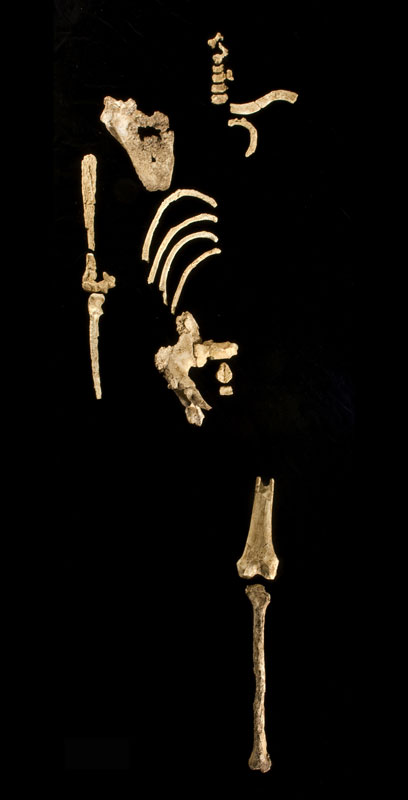
"Kadanuumuu" - Woranso-Mille, Ethiopia

Features January 1, 2011

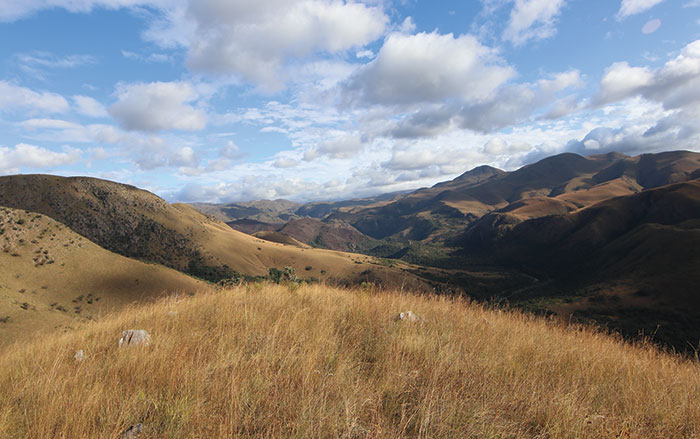
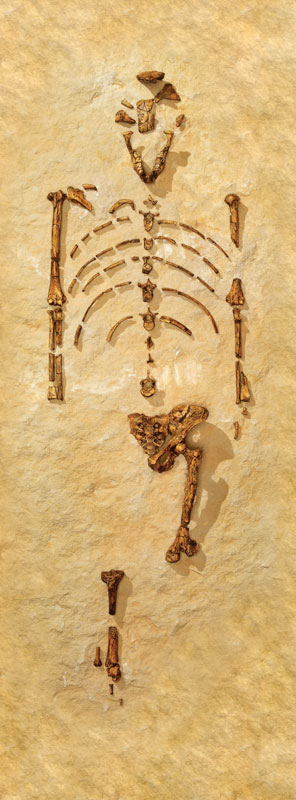
For the last 35 years, the short-legged “Lucy” skeleton has led some scientists to argue that Australopithecus afarensis didn’t stand fully upright or walk like modern humans, and instead got around by “knuckle-walking” like apes. Now, the discovery of a 3.6-million-year-old beanpole on the Ethiopian plains—christened “Kadanuumuu,” or “Big Man” in the Afar language—puts that tired debate to rest. The new fossil demonstrates these early human ancestors were fully bipedal.
SHARE:

For the last 35 years, the short-legged “Lucy” skeleton has led some scientists to argue that Australopithecus afarensis didn’t stand fully upright or walk like modern humans, and instead got around by “knuckle-walking” like apes. Now, the discovery of a 3.6-million-year-old beanpole on the Ethiopian plains—christened “Kadanuumuu,” or “Big Man” in the Afar language—puts that tired debate to rest. The new fossil demonstrates these early human ancestors were fully bipedal.

Many dozens of A. afarensis fossils have been uncovered since Lucy was discovered in 1974, but none as complete as this one. Kadanuumuu’s forearm was first extracted from a hunk of mudstone in February 2005, and subsequent expeditions uncovered an entire knee, part of a pelvis, and well preserved sections of the thorax.

“We have the clavicle, a first rib, a scapula, and the humerus,” says physical anthropologist Bruce Latimer of Case Western Reserve University in Cleveland, Ohio, one of the co-leaders on the dig. “That enables us to say something about how [Kadanuumuu] was using its arm, and it was clearly not using it the way an ape uses it. It finally takes knuckle-walking off the table.” At five and a half feet tall, Kadanuumuu would also have towered two feet over Lucy, lending support to the view that there was a high degree of sexual dimorphism in the species.
More Top Discoveries of 2010

  • Features September/October 2026

    A Change in Fashion

    Hoards of lavish gold and silver neck rings buried on an English hill reflect dramatic social change

    Read Article
    Torc hoard
    Photo © 2026 The Trustees of the British Museum
  • Features September/October 2026

    Cultivating Fields of Stone

    Peru’s ancient farmers used intricate rock maps to plan for the future

    Read Article
    Courtesy Patricia Aparicio Martínez
  • Features September/October 2026

    Where Was Ancient Egypt Born?

    Archaeologists are reimagining a time before the first pharaohs

    Read Article
    Courtesy Robert Słaboński/Tell el-Farkha Expedition
  • Features September/October 2026

    2,000 Years Under the Sea

    The story of Greece’s famed Antikythera wreck is finally being revealed

    Read Article
    © ESAG/UNIGE