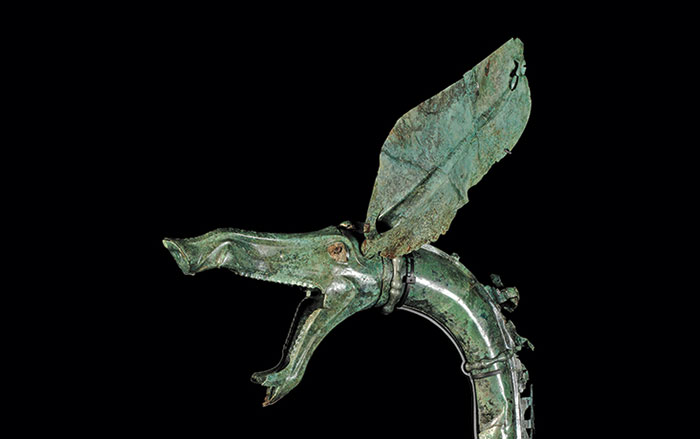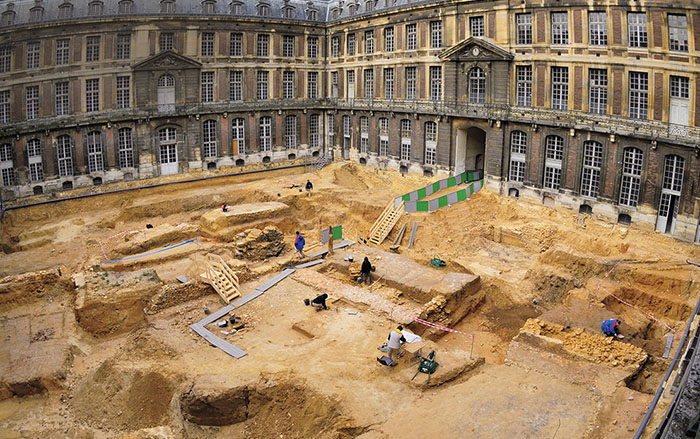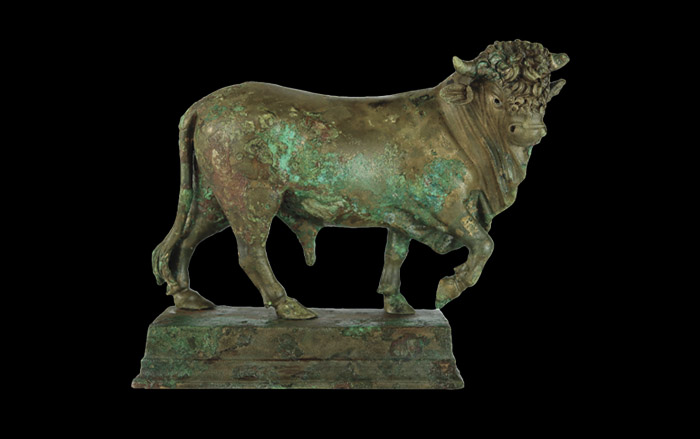



Elderly and ailing, a potter named Georges-André Colas penned a six-page letter to the Regional Archaeological Service of Burgundy in October 2008. “Dear Sir or Madam, although I am aware of the tremendous scientific interest of the deposit of bronzes of Couan, I hesitated for a long time to make it known, because of the legal consequences of the circumstances of its discovery,” he began. “However, I wanted to do it while I was still alive.”
Thirty-one years earlier, in 1977, wrote Colas, he had taken a metal detector to a field in the oak-forested Morvan massif of east-central France. He knew that fragments of ancient masonry had been found on the property in the 1950s, suggesting a possible archaeological site. Detecting a faint signal, he grabbed a shovel and dug down about two and a half feet, where he struck a bronze bucket with a jar inside containing 871 Roman coins. Colas decided it would be best to return to explore further under the cover of darkness.