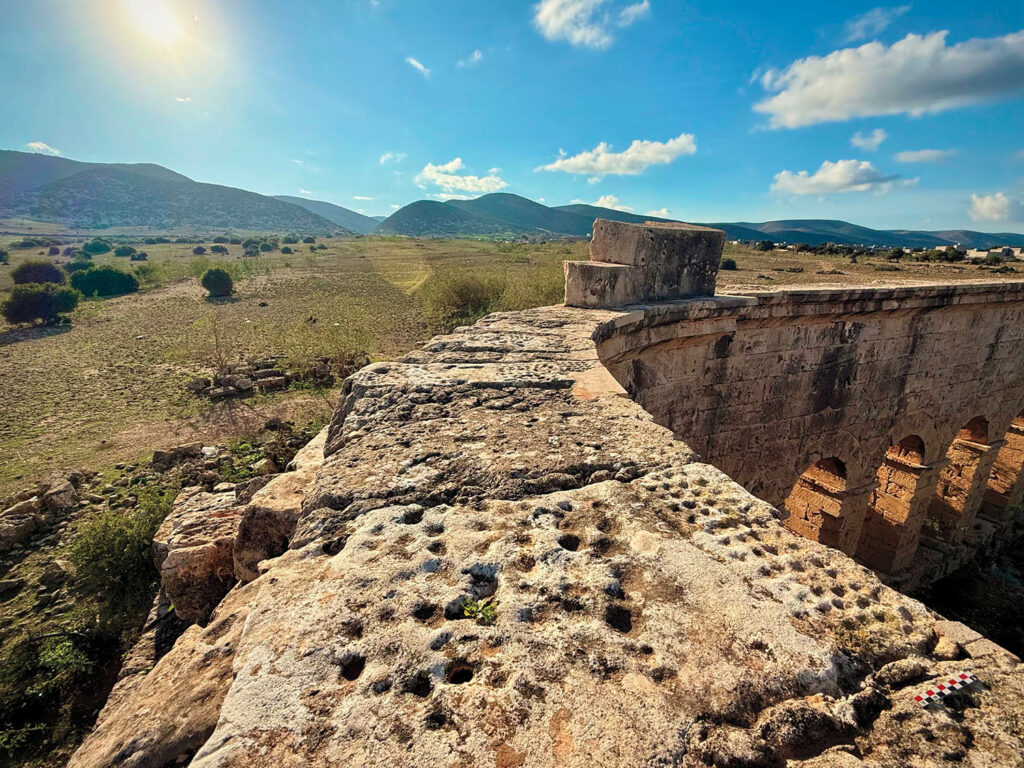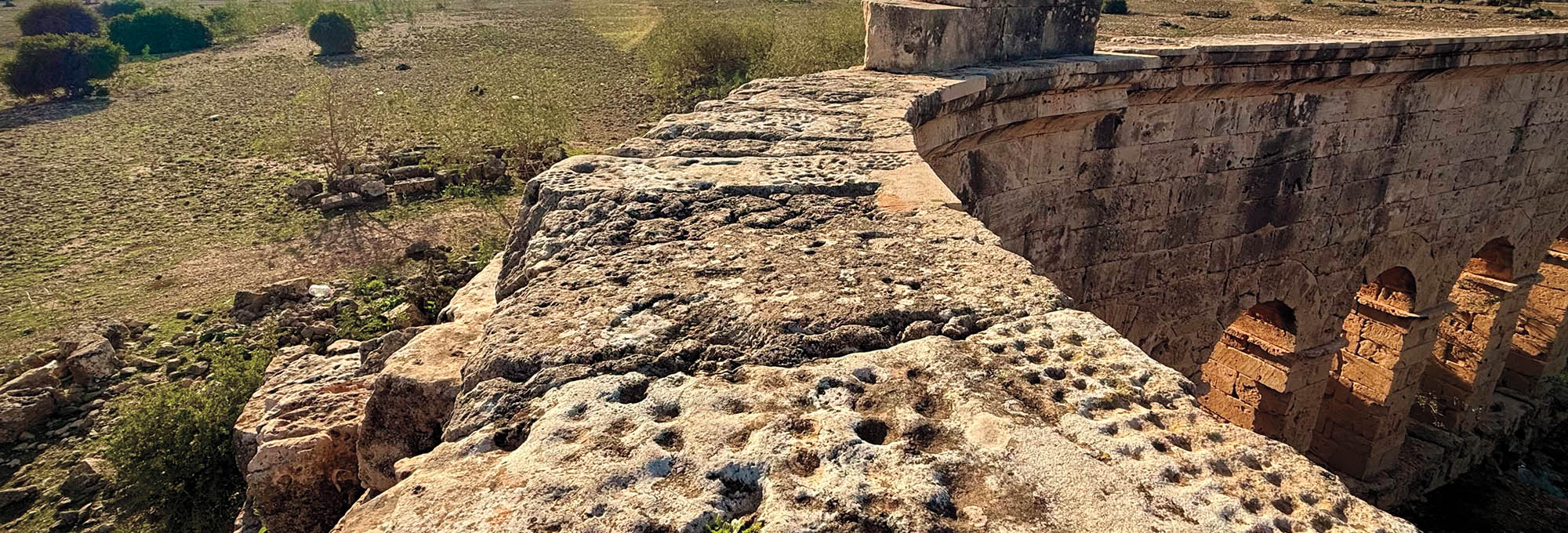
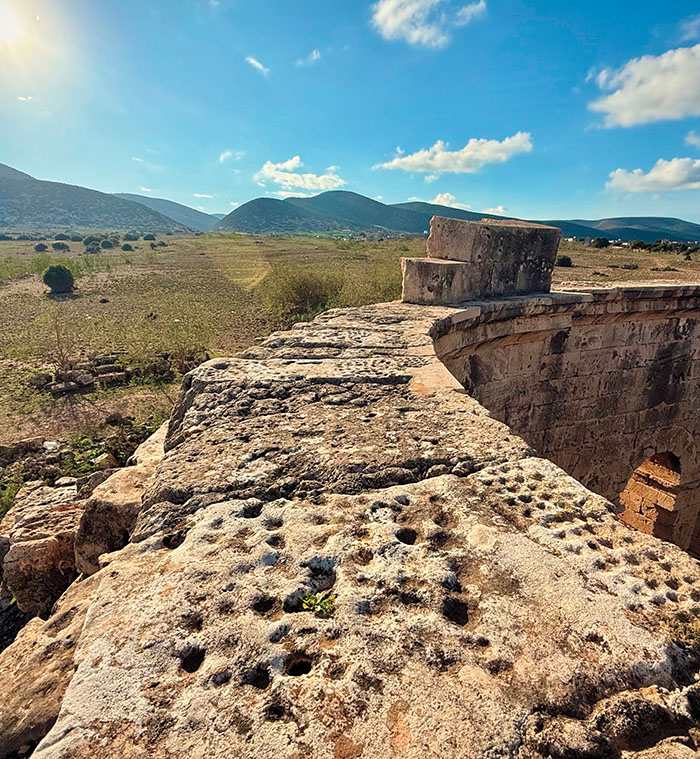
Sheep and goats have grazed in the ruins of the ancient city of Ptolemais in northeastern Libya for centuries. According to archaeologist Zosia Kowarska of the University of Warsaw, gaming boards carved into the city’s ruins may have been created by shepherds to pass the time while tending their flocks. She has documented some 120 boards in Ptolemais as part of the Polish Archaeological Mission led by University of Warsaw archaeologist Piotr Jaworski. While most of the boards consist of circular depressions arranged in square or rectangular patterns, a few feature intersecting grid lines. Kowarska says that precisely dating the boards is not yet possible. She notes, however, that the fact that the boards are carved into the ruins indicates that they were etched sometime after Ptolemais was destroyed during the Arab conquest of the region in the seventh century a.d. “Many of the boards are located on the tops of surviving walls that provide good visibility over the surrounding landscape and grazing areas,” Kowarska says. “Even today, shepherds often sit on these ruins.” It’s unclear exactly which games were played on the boards, but their layout is similar to those used in strategy games that originated elsewhere in Africa, such as seega and mancala, and to the grids that many locals still draw to pass the time.