
The Book of Gifts and Rarities details a bewildering array of opulent possessions exchanged by medieval Islamic potentates, most prominently rulers of the Abbasid Caliphate (a.d. 750–1258), which was based in Baghdad. The catalog was assembled in the late eleventh century in Egypt by an official of the Fatimid Caliphate (a.d. 909–1171). The enumerated offerings include a bird carved from ruby mounted on a two-foot-long emerald rod, a racehorse bearing a 100-pound gold saddle, and 1,000 maids of honor, each holding a gold goblet containing 1,000 silver coins. Some descriptions veer even further into the fantastical, such as the skin of a snake large enough to swallow an elephant, a trio of birds that squawk and screech when served poisoned food or drink, and a 14-foot-tall enslaved girl with eyelashes the length of fingers and teeth as white as lightning.
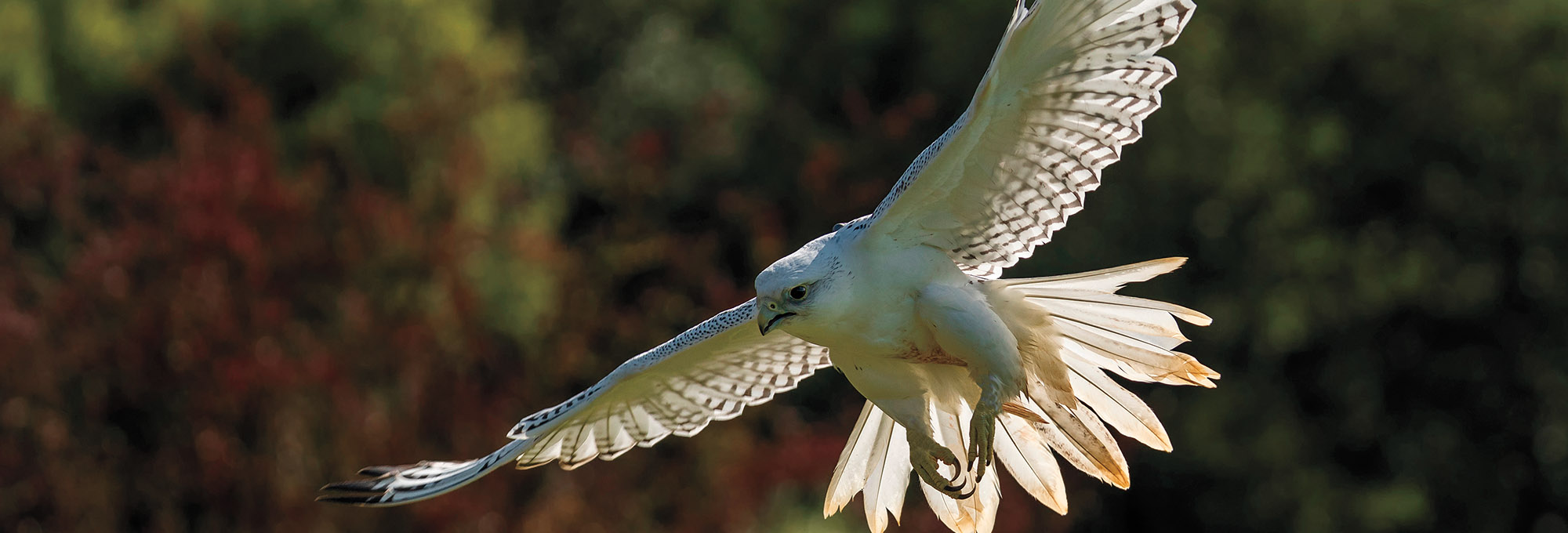
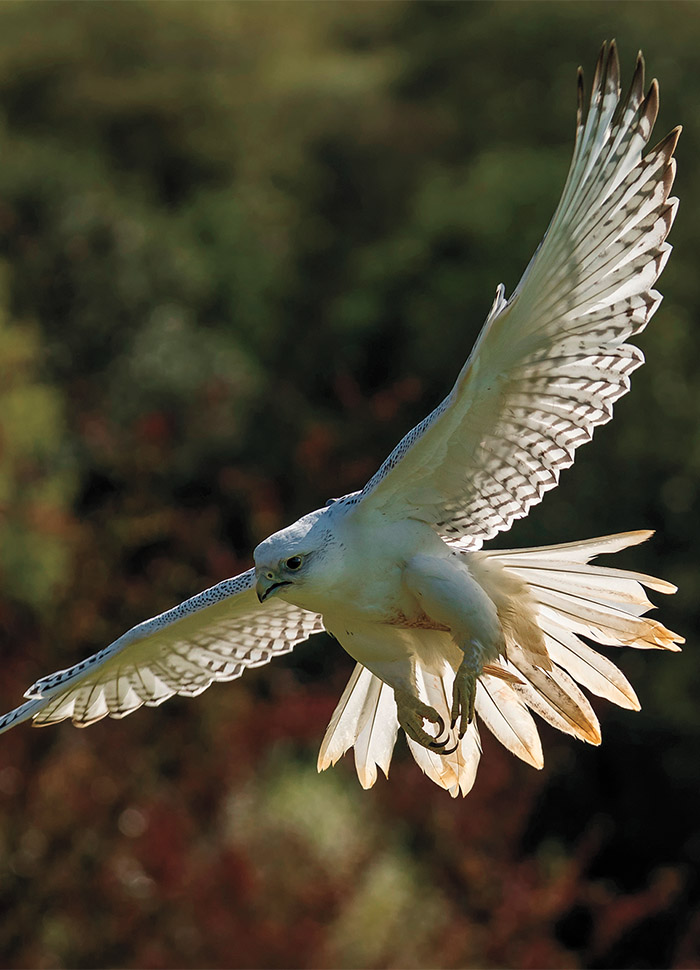
While studying this fascinating text in search of gifts of exotic animals, historian Sam Ottewill-Soulsby of the University of Tübingen observed that a particular type of bird kept appearing. “There are loads and loads of exotic animals in the book. There are giraffes, and there’s a wonderful description of a zebra that explains in some detail why this is the best zebra ever,” he says. “As I was going through it, I noticed that there are a lot of falcons, and they’re described as very unusual and fancy.” Between a.d. 869 and 911, the compendium reports, at least 172 falcons were presented to Abbasid caliphs. Ottewill-Soulsby deemed these accounts reliable, as the book’s author would have had access to Abbasid archives while on assignment in Baghdad.