

COPENHAGEN, DENMARK—Scholars think the seven late Iron Age buildings at Lejre, including a large hall that may have been used for feasting, inspired the Beowulf legend. The buildings, thought to have marked the site of the earliest Danish royal capital, were in use between A.D. 500 and 1000. The bones from hundreds of pigs, cows, sheep, goats, deer, chickens, ducks, and geese have been uncovered, along with a silver figure of the Nordic god Odin, jewelry, gold, and pottery. “For the first time, archaeology is giving us a glimpse of life in the key royal Danish site associated with the Beowulf legend,” said Tom Christensen of the Roskilde Museum and director of the Lejre project. The epic tale of Beowulf is thought to have been set in the fifth or sixth century, and brought to England by Anglo-Saxons in the eighth century.
Was Denmark’s Royal Hall the Setting for Beowulf?
News August 27, 2013
Recommended Articles
Off the Grid September/October 2026
Xunantunich, Belize
Learning to draw monkeys at an ancient Maya art academy

Letter from Ireland September/October 2026
A War Between Friends
How IRA volunteers survived the Irish Civil War in a secret mountain hideout

Features September/October 2026
A Change in Fashion
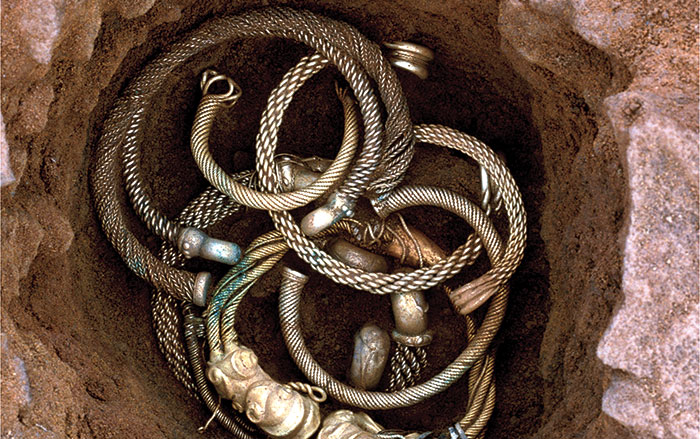
Hoards of lavish gold and silver neck rings buried on an English hill reflect dramatic social change
Features September/October 2026
Cultivating Fields of Stone
Peru’s ancient farmers used intricate rock maps to plan for the future

More to Discover
-
Features July/August 2013
The First Vikings
Two remarkable ships may show that the Viking storm was brewing long before their assault on England and the continent
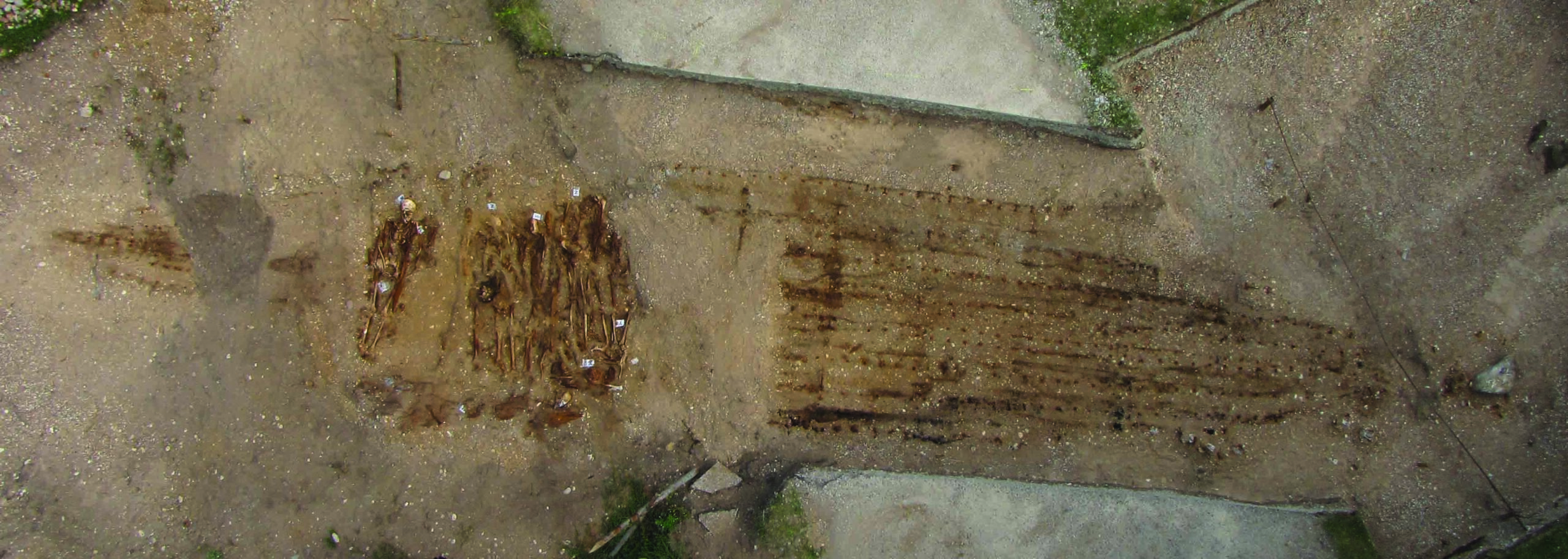 Courtesy Liina Maldre, University of Tallinn
 -
Features July/August 2013
Miniature Pyramids of Sudan
Archaeologists excavating on the banks of the Nile have uncovered a necropolis where hundreds of small pyramids once stood
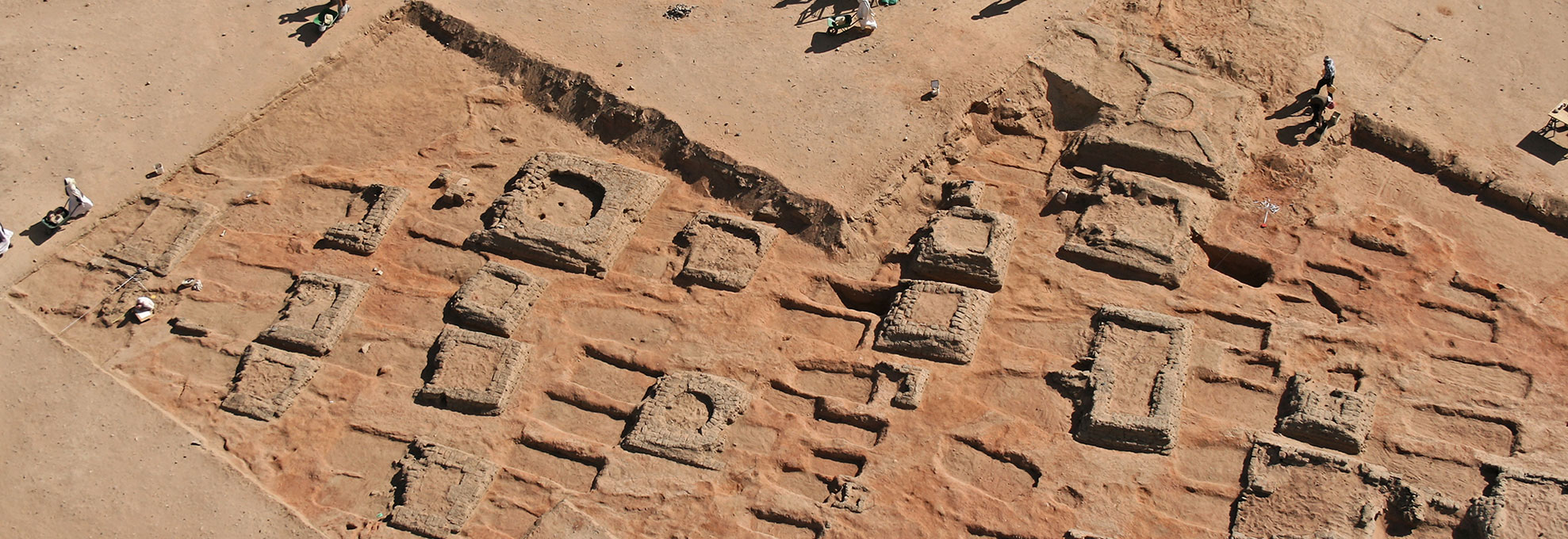 (Courtesy B-N Chagny, SEDAU/SFDAS)
 -
Letter from China July/August 2013
Tomb Raider Chronicles
Looting reaches across the centuries—and modern China’s economic strata
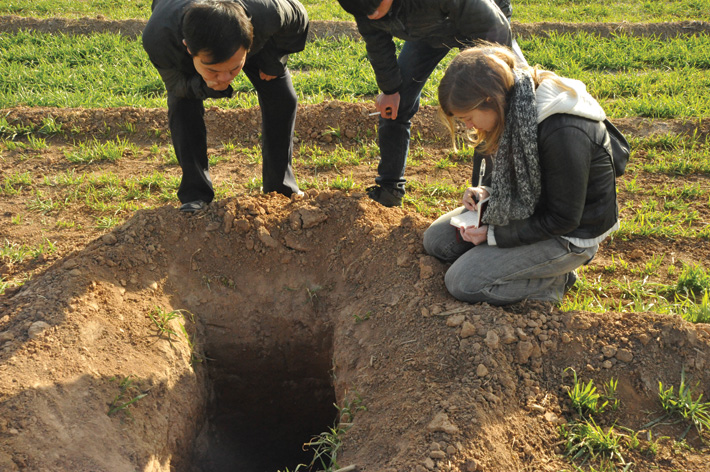 (Courtesy Lauren Hilgers, Photo: Anonymous)
 -
Artifacts July/August 2013
Ancient Egyptian Sundial
A 13th-century limestone sundial is one of the earliest timekeeping devices discovered in Egypt
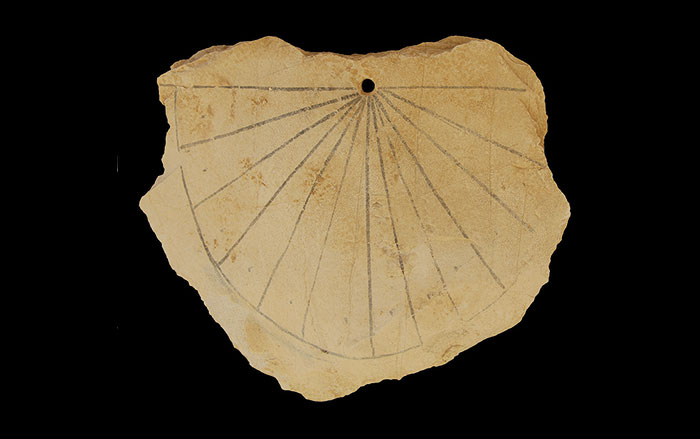 (© The Trustees of the British Museum/Art Resource, NY)