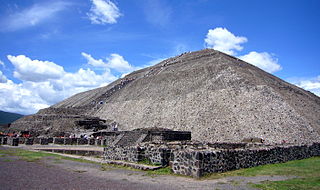
MEXICO CITY, MEXICO—A three-year study of Teotihuacán’s Pyramid of the Sun led by Arturo Menchaca of the National Autonomous University of Mexico suggests that dry conditions on the south side of the structure could lead to its collapse. His team placed detectors under the center of the pyramid to track how muons, which originate in space, passed through the building. What they found is that the density of the earth in the pyramid is at least 20 percent lower on one side than on the other. “I can use slightly moist sand to make a sandcastle. If I leave it exposed to the sun and touch it when it is dry, then it crumbles,” Menchaca told New Scientist.
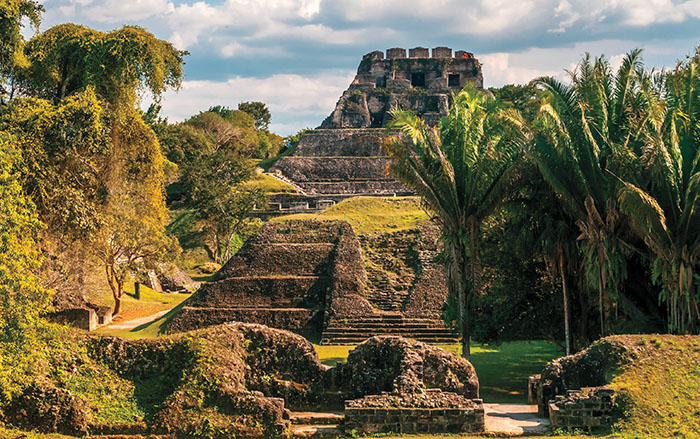
The Problem at the Pyramid of the Sun
News March 11, 2014
Recommended Articles
Off the Grid January/February 2026
Prophetstown, Indiana
Letter from France January/February 2026
Neolithic Cultural Revolution
How farmers came together to build Europe’s most grandiose funerary monuments some 7,000 years ago
Features January/February 2026
The Cost of Doing Business
Piecing together the Roman empire’s longest known inscription—a peculiarly precise inventory of prices
Features January/February 2026
The Birds of Amarna
An Egyptian princess seeks sanctuary in her private palace
-
Features January/February 2014
Stone Towns of the Swahili Coast
Along 2,000 miles of the East African coast, the sophisticated trading centers of the medieval Swahili reveal their origins and influences
(Samir S. Patel) -
Letter from England January/February 2014
The Scientist's Garden
Excavations in an English garden reveal the evolution of the nation's culture across thousands of years
(Adam Stanford, Aerial-Cam) -
Artifacts January/February 2014
Limestone Eagle
(Matthew Helmer) -
Digs & Discoveries January/February 2014
French Revolution Forgeries?
(Courtesy Davide Pettener/Paolo Garagnani)