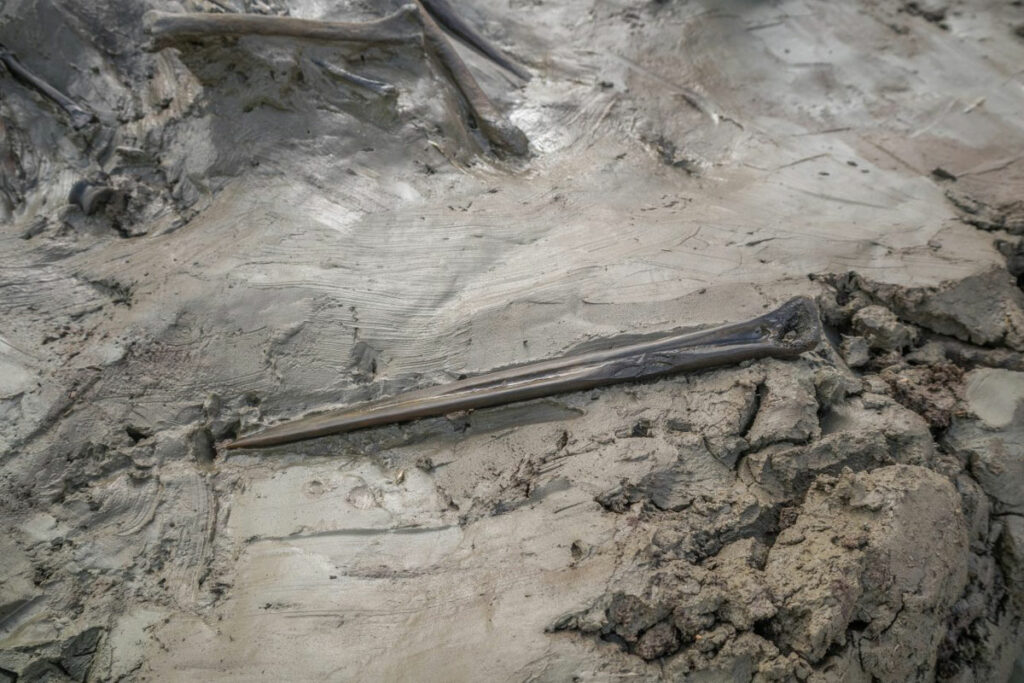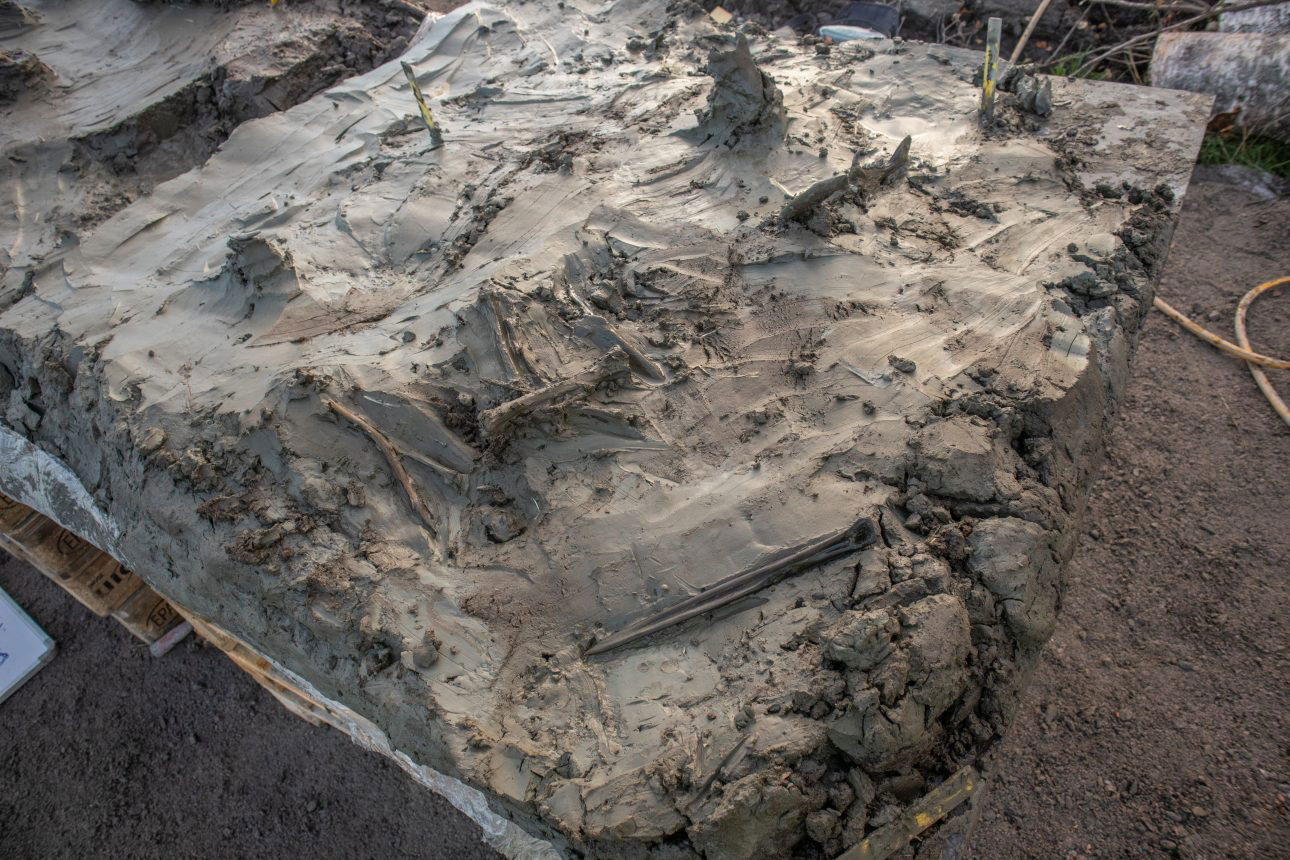
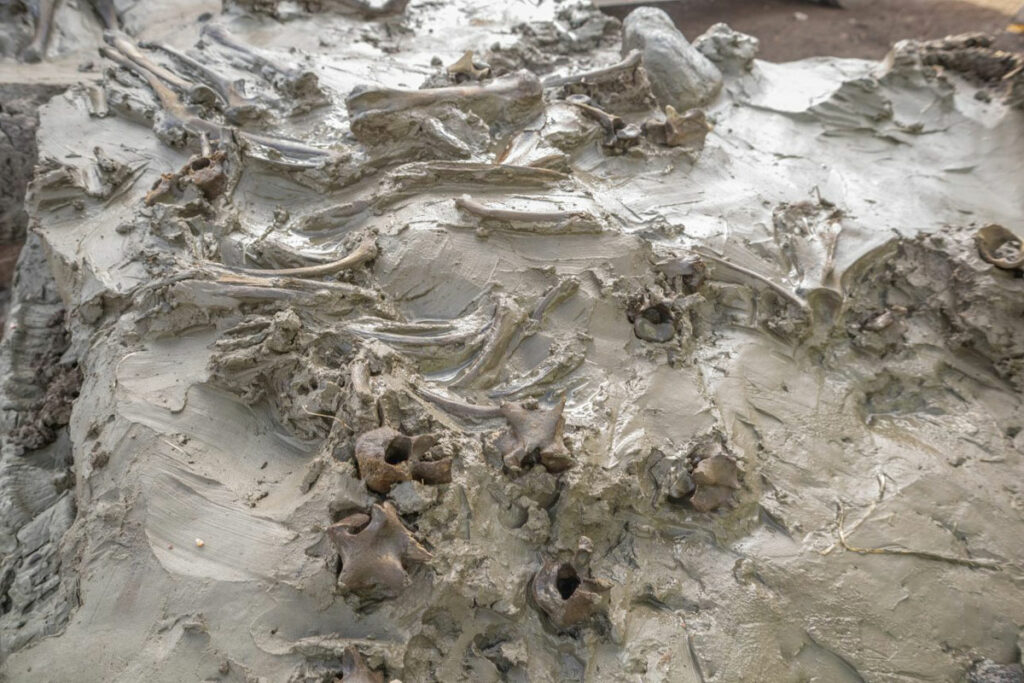
STOCKHOLM, SWEDEN—According to a La Brujula Verde report, well-preserved dog remains and a polished bone dagger have been recovered from waterlogged sediments in the Logsjömossen wetland near Sweden’s Baltic Sea coast. The dog remains have been dated to about 5,000 years ago, when the site was a clear, shallow lake. Initial examination of the bones indicates that the muscular dog was about 20 inches tall at the shoulder, and died between the ages of three and six. The dagger, made of elk or deer bone, measures almost 10 inches long. It was found among the dog’s legs. Archaeologist Linus Hagberg of Arkeologerna said that the dog’s body may have been wrapped in a bag weighted with stones to sink it in the lake as an offering. “It had been deliberately lowered to the depth,” Hagberg said of the bundle. “The use of dogs in ritual practices during this period is a known phenomenon, but each discovery of this nature adds new nuances,” he explained. Hagberg and his colleagues will analyze the dog bones to determine the animal’s age, diet, and where it lived. “The life history of this dog can, in turn, tell us more about how the people who owned it lived and sustained themselves,” Hagberg said. The sediments also yielded wooden stakes and posts that probably held platforms or walkways along the shore, stones that may have been used as net weights or anchors, and a structure made of woven rods that likely served as a fish trap. To read about dogs buried with a woman in a bog more than 2,000 years ago, go to "Denmark's Bog Dogs."