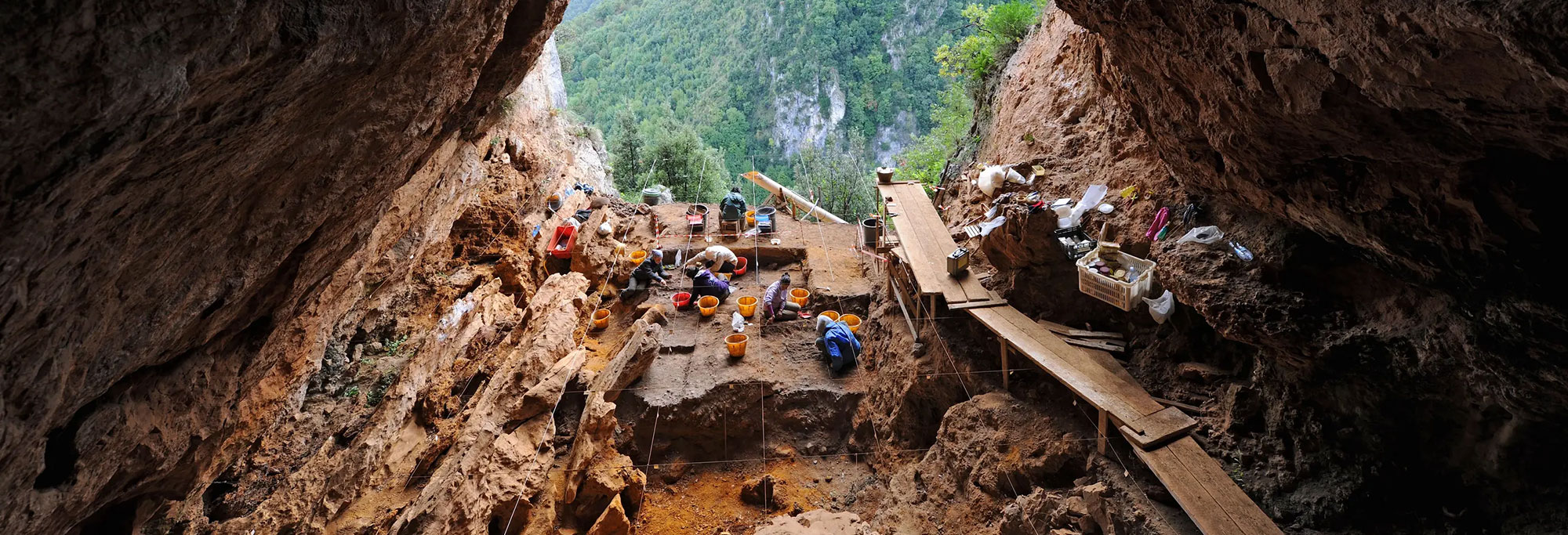
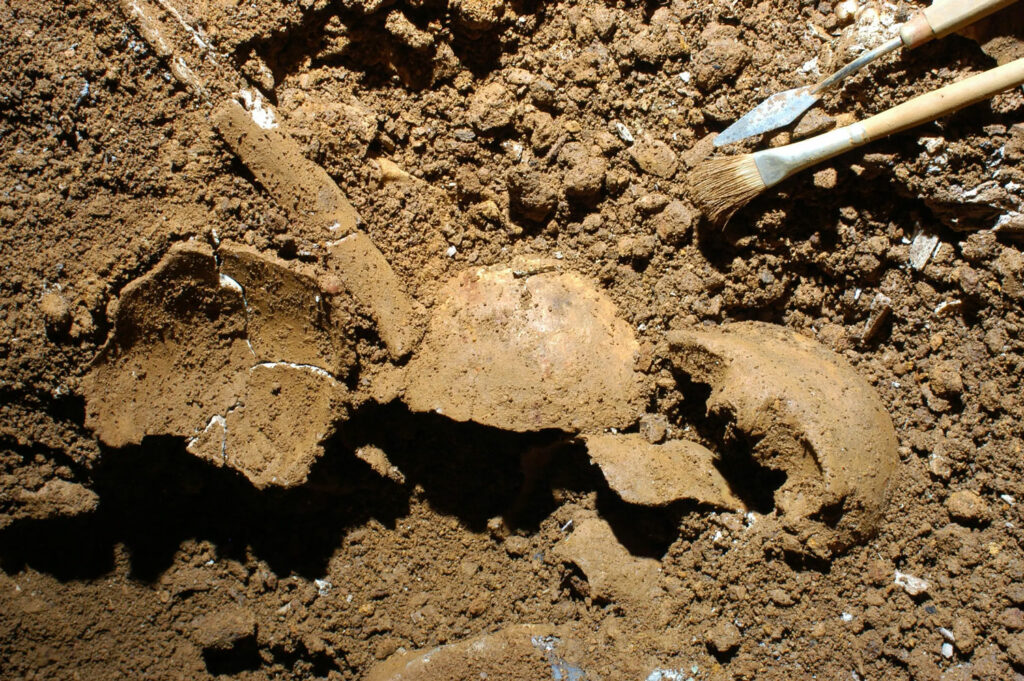
LEIPZIG, GERMANY—According to a Live Science report, evidence of first-degree incest has been detected in the genes of a boy who was buried some 3,700 years ago in Grotta Della Monaca, a cave in southern Italy. The genomes of all 23 individuals whose remains were identified among the fragmented and mixed-up bones in the cave were analyzed in order to gain a better understanding of the group. The study, led by Francesco Fontani of the Max Planck Harvard Research Center for the Ancient Mediterranean, was able to identify the genetic sex of 10 females and eight males. The researchers also discovered a variety of mitochondrial DNA, inherited from mothers, and Y-chromosome DNA, inherited from fathers, indicating that the group included a mix of people with different backgrounds. For example, some members of the group were related to Early Bronze Age groups in Sicily, while two of the individuals had ancestors from northeastern Italy. Overall, like many Europeans, the group members were also descended from European hunter-gatherers, Neolithic Anatolian farmers, and steppe pastoralists. Two cases of parents and offspring were also identified, but one boy was found to have many runs of homozygosity, or chunks of similar genetic material. Additional investigation into his genome showed that he was the son of a man who had also been buried at the site, and the man’s own daughter. Her remains were not found, however. “This exceptional case may indicate culturally specific behaviors in this small community, but its significance ultimately remains uncertain,” said archaeogeneticist Alissa Mittnik of the Max Planck Institute for Evolutionary Anthropology. Read the original scholarly article about this research in Communications Biology. To read about a recent genetic study of a later period in Italian history, go to "Ancient DNA Revolution: The Empire's Genome."