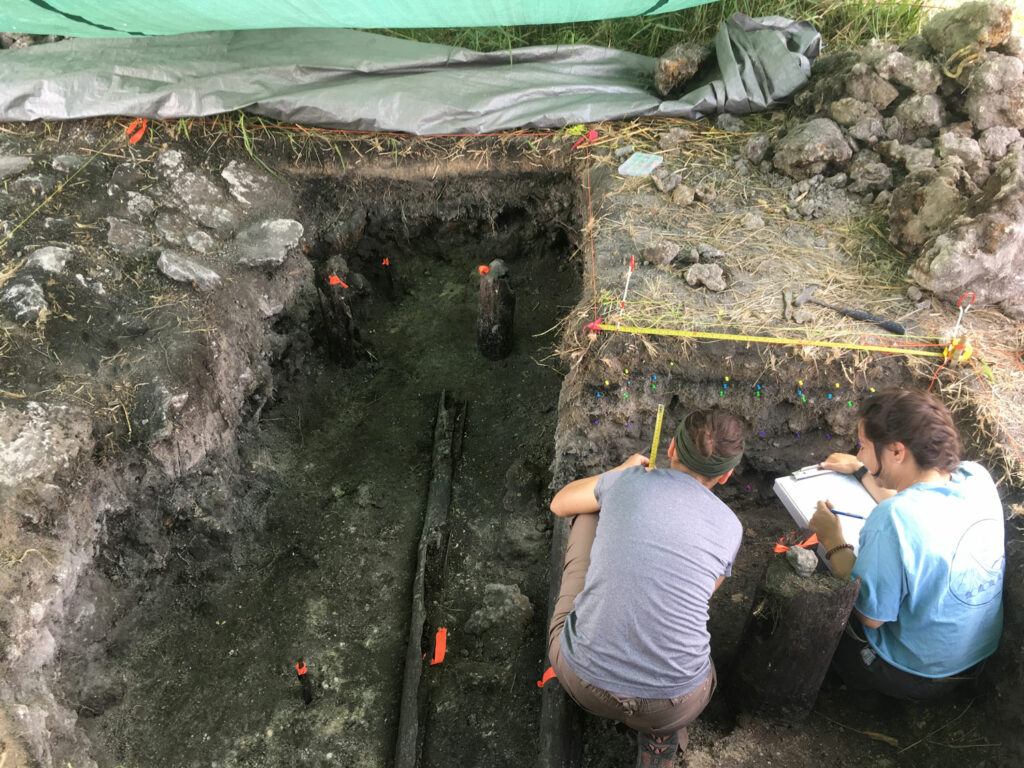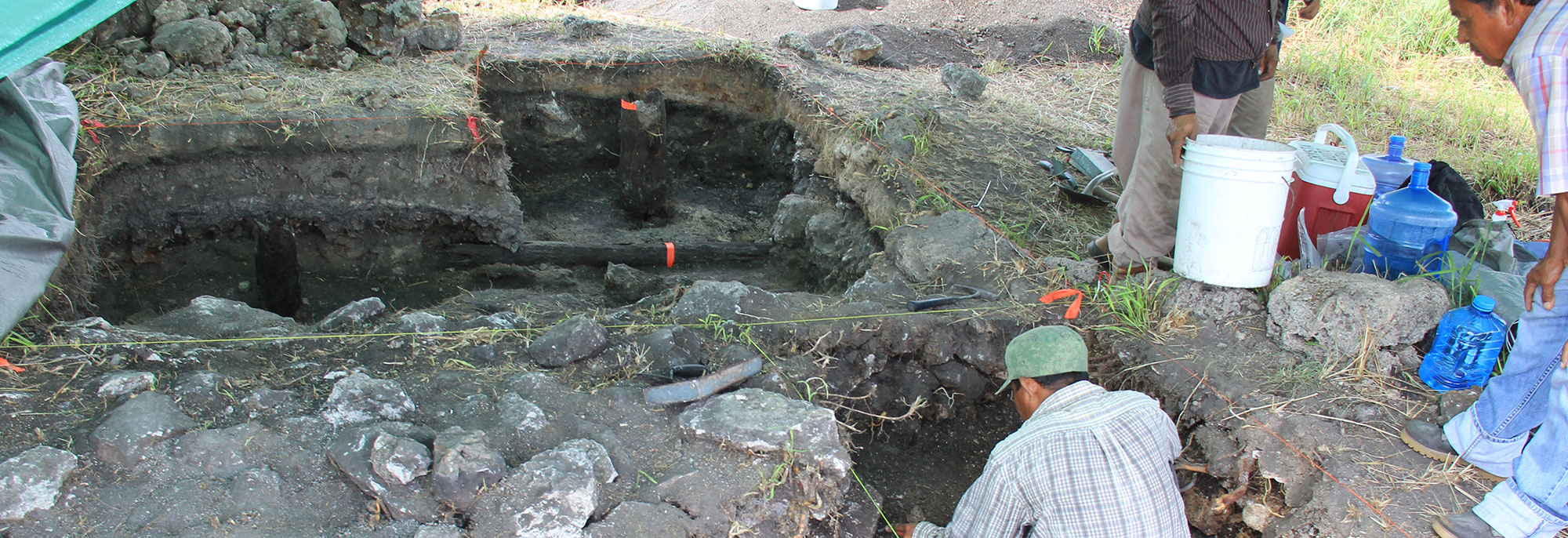
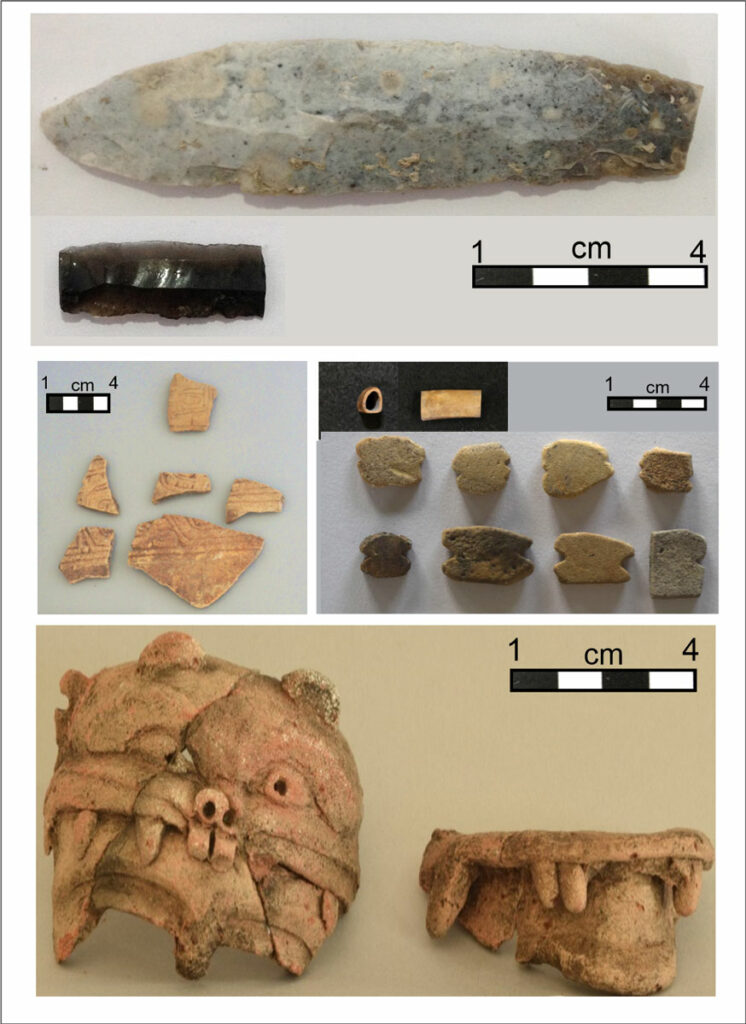
NEW YORK, NEW YORK—An excavation team at the Birds of Paradise wetland field complex in northwestern Belize has uncovered a Maya site occupied between a.d. 800 and 1500, after Maya urban centers had been abandoned, according to a statement released by New York University (NYU). “Our most exciting finding is the remarkable preservation of wooden architecture in a tropical wetland,” said NYU archaeologist Lara Sánchez-Morales. She and her colleagues found these wooden structures after using lidar equipment to map the area. They identified eight earthen mounds, which likely supported large structures, and a large limestone platform. “We still don’t know how large this wetland population was or how it functioned,” Sánchez-Morales said. “Our next steps include expanding excavations to understand how the Maya built with rare woods, how they fed themselves, and how this wetland settlement fit into a region undergoing widespread abandonment,” she added. Read the original scholarly article about this research in Proceedings of the National Academy of Sciences. To read about a Maya ruler's tomb unearthed at the site of Caracol in Belize, go to "Return of the King," one of ARCHAEOLOGY's Top 10 Discoveries of 2025.