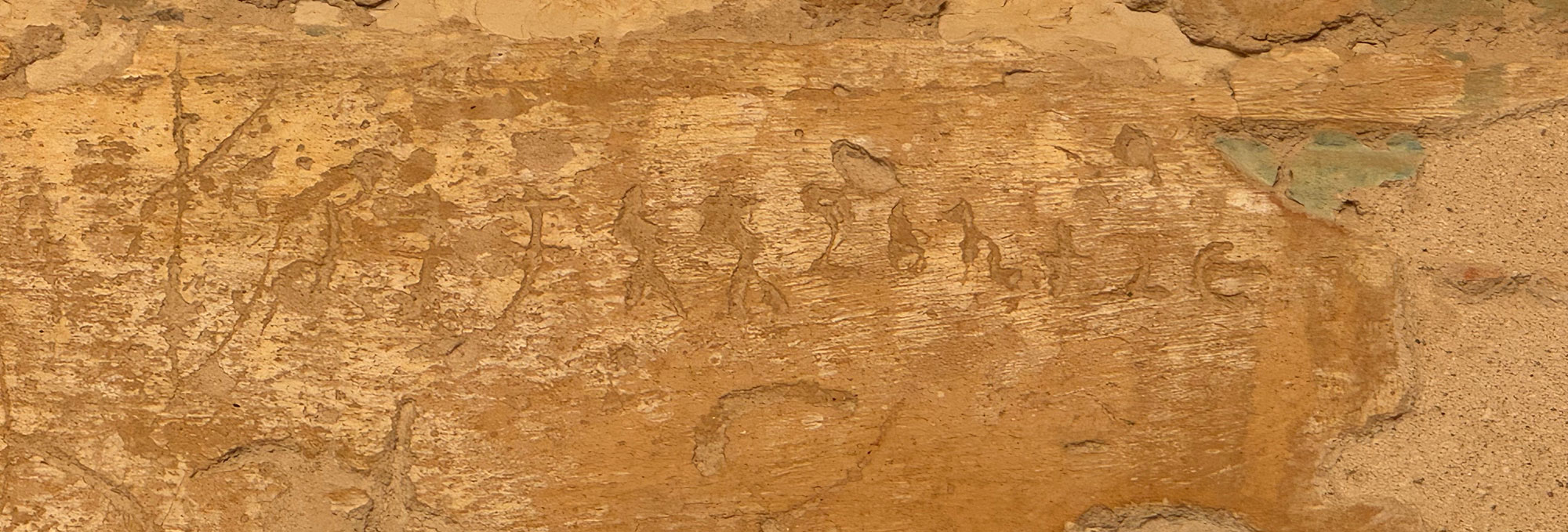
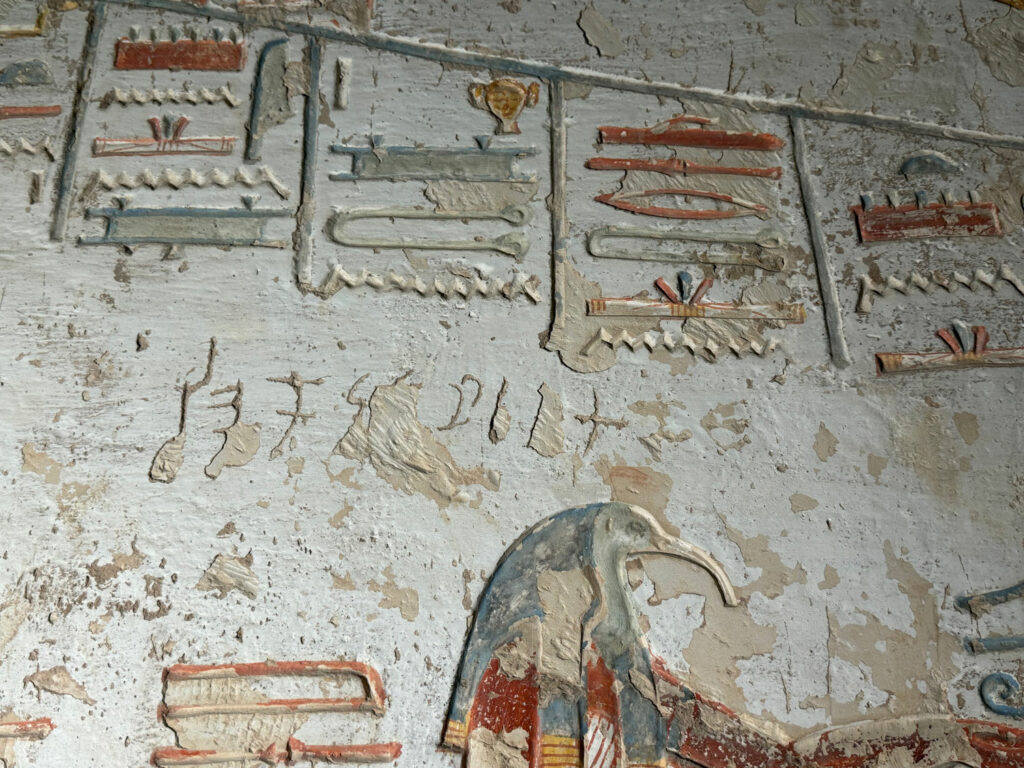
CHENNAI, INDIA—Live Science reports that about 30 inscriptions written in three ancient Indian languages have been studied in six different tombs in Egypt’s Valley of the Kings. Ingo Strauch of the University of Lausanne said that these inscriptions have been dated to between the first and third centuries A.D., when Egypt was a province of the Roman Empire and a tourist destination. One inscription, written in Sanskrit, was left by a man named Indranandin, who identified himself as a messenger of King Kshaharata. “It is possible that Indranandin arrived by ship at Berenike [on the east coast of Egypt], perhaps together with other Indians, and from there continued inland to the Valley of the Kings,” Strauch said. Half of the inscriptions, including the name “Cikai Korran,” which was found eight times in five different tombs, were written in the Old Tamil language of southern India. Charlotte Schmid of the French School of the Far East said that Korran tended to put his inscriptions high up on walls. For example, his name appears more than 16 feet above the entrance to the tomb of Ramesses IX (reigned 1126–1108 B.C.). Korran may have been traveling as a mercenary or a merchant, Schmid said, but it is not clear who he was. To read about the tomb of an 18th Dynasty king, go to "The Case of the Missing Pharaoh," one of ARCHAEOLOGY's Top 10 Discoveries of 2025.