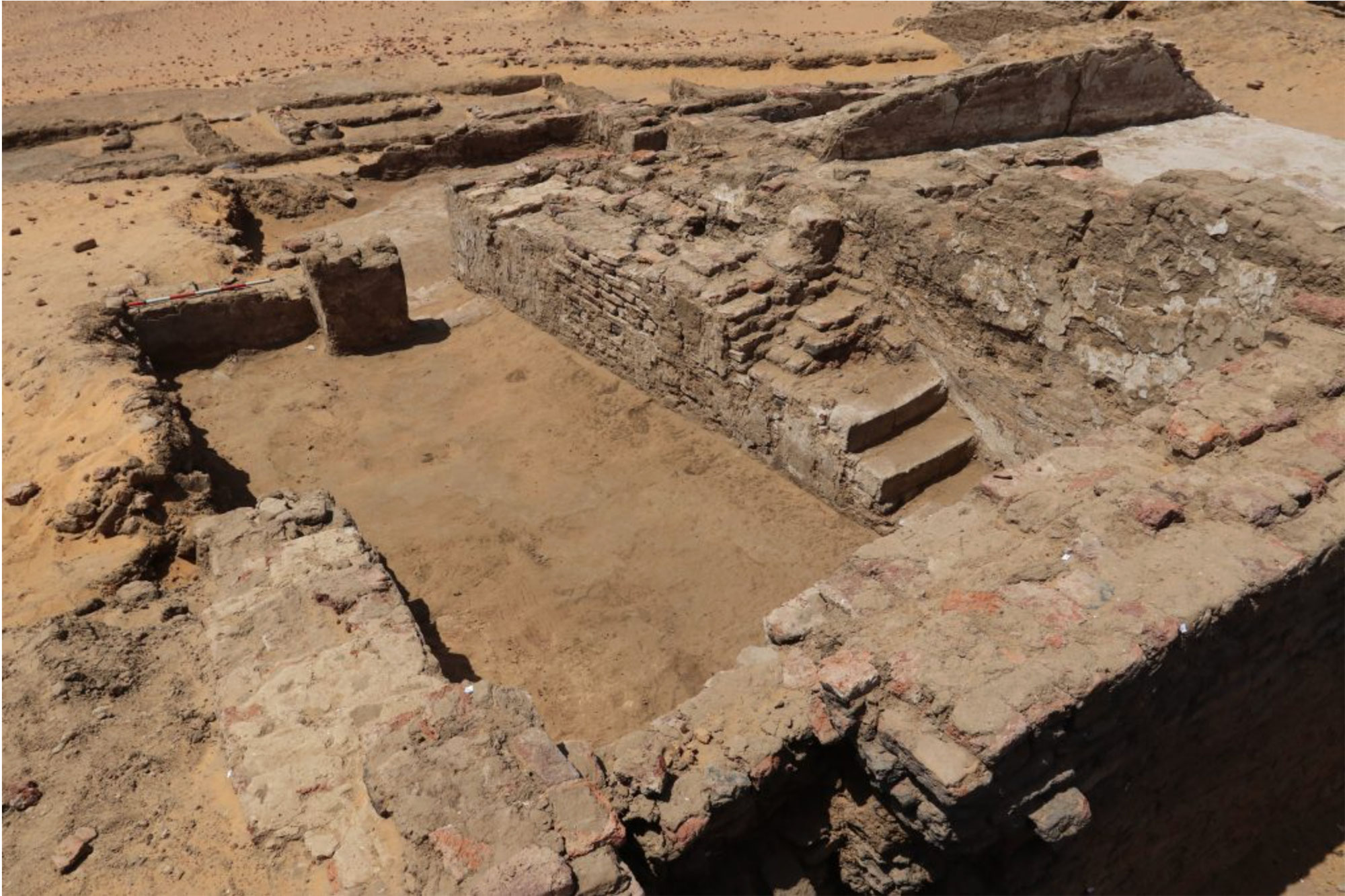
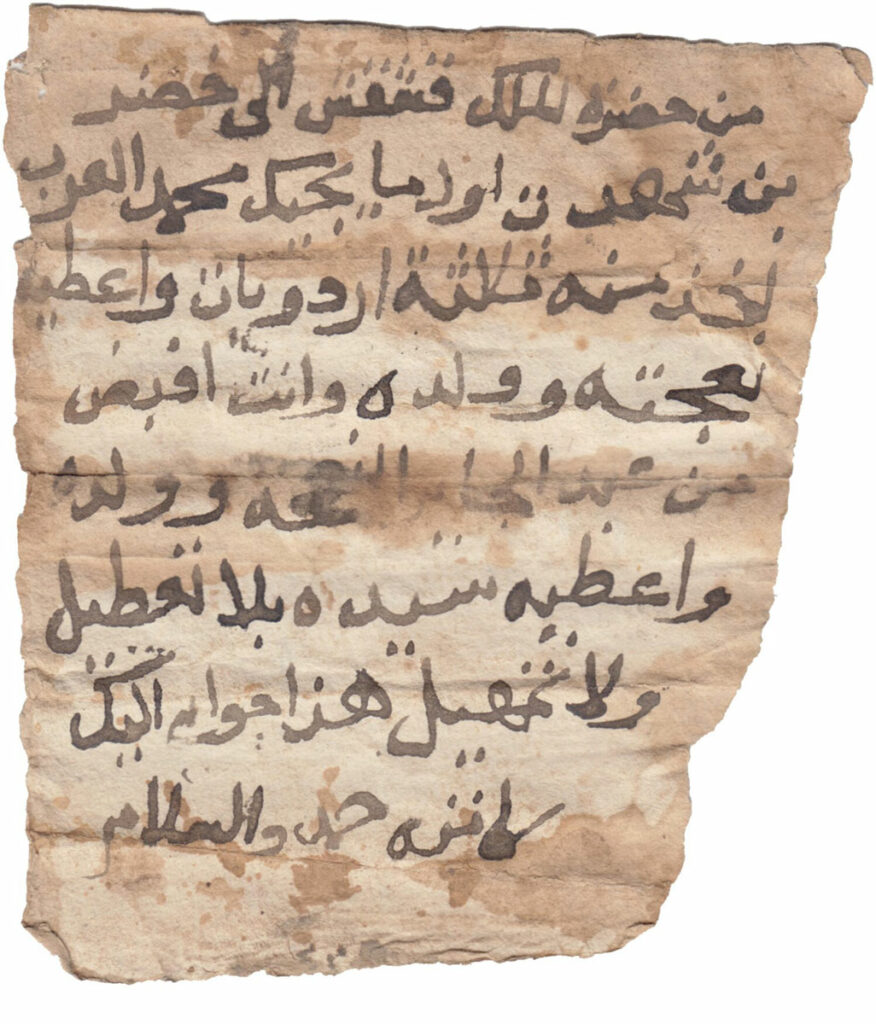
WARSAW, POLAND—Science in Poland reports that a medieval document has been recovered at a large residential structure at the site of Old Dongola in Sudan by a team of researchers from the University of Warsaw. The text, written in Arabic on paper, is an order issued by King Qashqash, a ruler thought by some to be a legendary figure known only from mention in a nineteenth-century work. The building where the document was found also contained textiles made of cotton, linen, and silk; objects made of ivory and rhino horn; amulets; and more than 20 letters and administrative and legal documents. Team member Tomasz Barański said that the language and handwriting of the order indicate that Arabic was not yet fully established in medieval Dongola. “The use of non-standard grammatical forms and the rather unsophisticated hand should not be surprising, particularly in an environment where Arabic had not yet become a native language,” he said. “Moreover, the irregular shape of the sheet of paper on which the order was written suggests that this text may have been only a draft of the actual document.” Read the original scholarly article about this research in Azania: Archaeological Research in Africa. To read about inscribed stone blocks unearthed at Old Dongola that likely date to the seventh century b.c., go to "A Surprise in Sudan."