

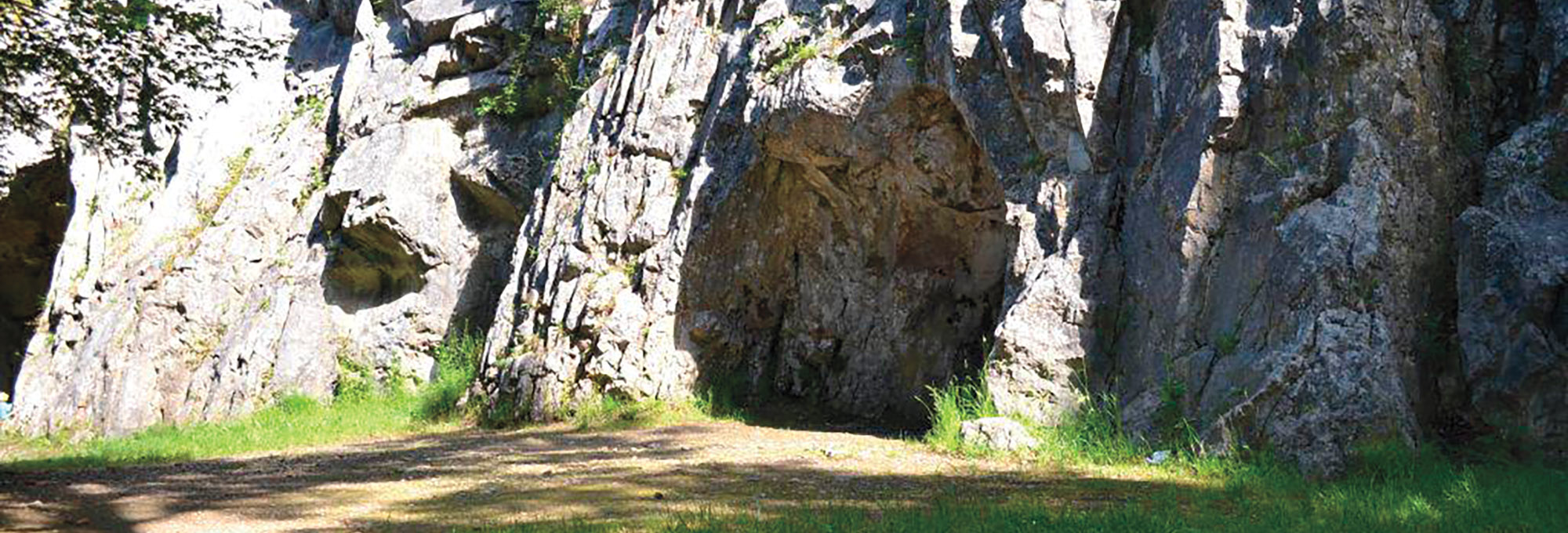
OXFORD, ENGLAND—According to a statement released by the University of Oxford, domesticated dogs were spread across Europe and Anatolia and living with hunter-gatherers by 14,000 years ago. Researchers led by Lachie Scarsbrook and Greger Larson of the University of Oxford analyzed genomes taken from dog remains recovered at Upper Paleolithic sites, including Pınarbaşı in Turkey and Gough’s Cave in England, and two Mesolithic sites in Serbia. These dog genomes were then compared with the genomes of more than 1,000 ancient and modern dogs and wolves from around the world. “Not only has this discovery pushed back the earliest direct evidence of dogs by 5,000 years, it also showed us that dogs and wolves were clearly separate, both biologically and in how humans interacted with them, at least 16,000 years ago,” Scarsbrook said. Dogs were likely domesticated more than 10,000 years before any other plants or animals, he explained. The study also determined that these early dogs were closely related to each other, which suggests that domesticated dogs spread rapidly across Europe, Larson added. Additionally, Paleolithic dogs were found to have been more closely related to European and Middle Eastern breeds such as boxers and salukis, rather than Arctic breeds. Read the original scholarly article about this research in Nature. To read about dogs kept by Indigenous people of the Pacific Northwest, go to "Ancient DNA Revolution: Wild and Woolly Ancestors."
Dog Domestication in Europe Dated to More Than 14,000 Years Ago
News March 27, 2026

Recommended Articles
Digs & Discoveries July/August 2013
Seeds of Europe's Family Tree

Digs & Discoveries May/June 2025
Lay of the Land


Artifacts September/October 2024
Paleolithic Eyed Needles

More to Discover
Features March/April 2026
Model Homes
A look inside miniature worlds created for the living, the dead, and the divine


-
Features March/April 2026
Pompeii's House of Dionysian Delights
Vivid frescoes in an opulent dining room celebrate the wild rites of the wine god
 Courtesy Archaeological Park of Pompeii
 -
Features March/April 2026
Return to Serpent Mountain
Discovering the true origins of an enigmatic mile-long pattern in Peru’s coastal desert
 Courtesy J.L. Bongers
 -
Features March/April 2026
Himalayan High Art
In a remote region of India, archaeologists trace 4,000 years of history through a vast collection of petroglyphs
 Matt Stirn
 -
Features March/April 2026
What Happened in Goyet Cave?
New analysis of Neanderthal remains reveals surprisingly grim secrets
 IRSNB/RBINSL