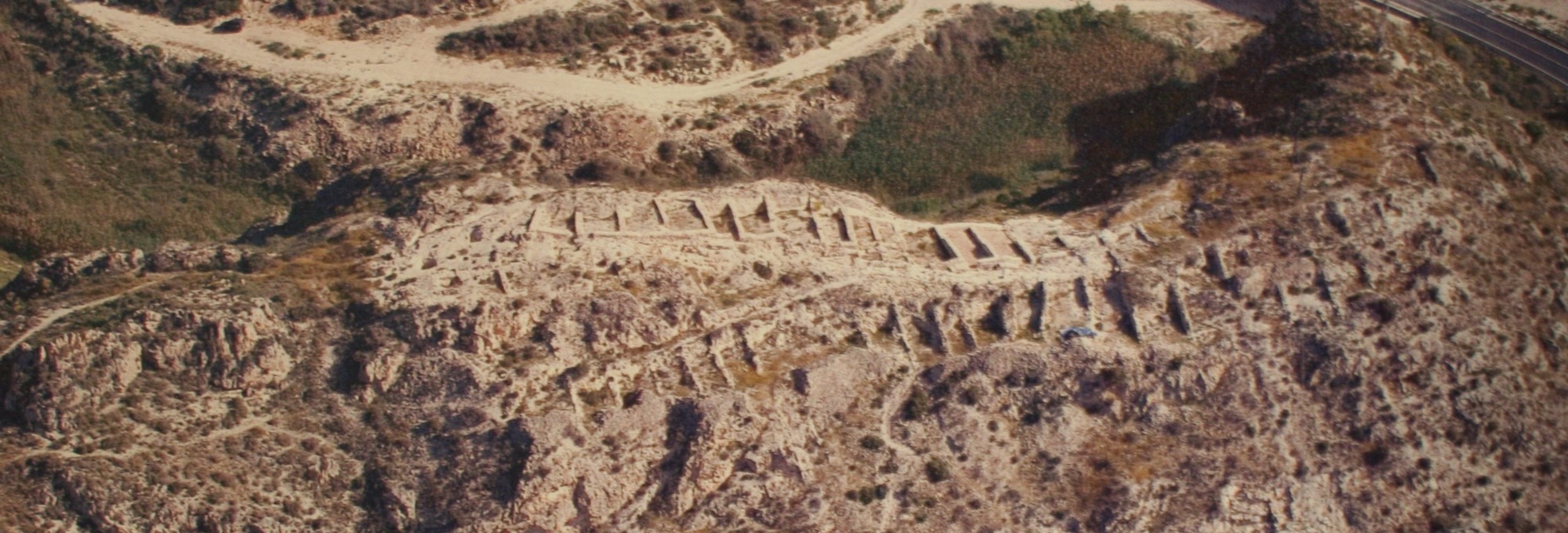
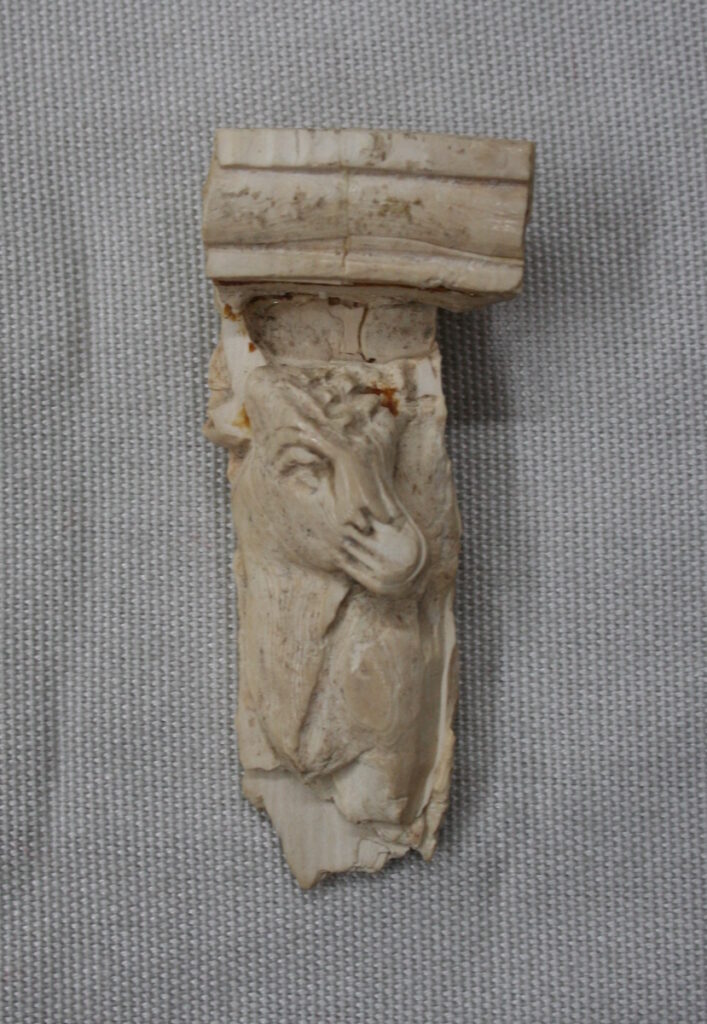
ALICANTE, SPAIN—According to the Greek Reporter, a fortified monastic settlement dated to the sixth century a.d. has been found in southeastern Spain at the site of El Monastil by a team of researchers led by Antonio M. Poveda Navarro of the Urbs Regia Foundation. The site, known as Elo or Elum in Latin, was situated on the Via Augusta, the main Roman road in the area, and was occupied by soldiers and clergy from the Eastern Roman, or Byzantine, Empire. Two iron plates from a flexible suit of armor have been uncovered at the fort, along with seven bronze weights used for tax collection. Fragments of an altar made of white Parian marble from Greece were found scattered in several of the rooms. The church building covered more than 900 square feet and featured a horseshoe-shaped apse, a baptismal pool, and painted plaster walls. Poveda Navarro said that excavation of the church uncovered an ivory cylindrical container called a pyx that is decorated with a scene depicting Hercules capturing the Ceryneian Hind. Clergy would have held consecrated wafers inside. Hercules imagery was employed to connect Greek and Christian symbolism under the emperor Justinian, Poveda Navarro explained. An iron knife for cutting hosts; a pewter spoon; a bronze key ring for the church’s tabernacle; a ceramic seal bearing the abbreviation for Beata Virgo Maria, or Blessed Virgin Mary; and a large ceramic dish incised with six crosses were also found. A Visigothic bishop took over the fortress around A.D. 600, but after about 30 years, the bishop’s seat was closed and the site was used as a monastery until Arab settlers converted it into an Islamic religious site. To read about a city in Spain that rose in the wake of Rome's final collapse, go to "The Visigoths' Imperial Ambitions."