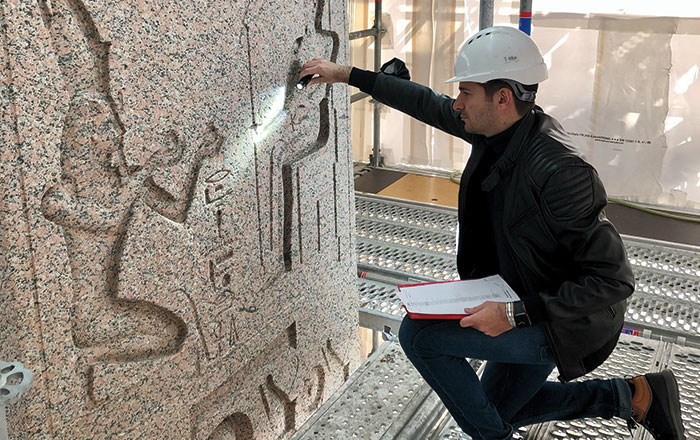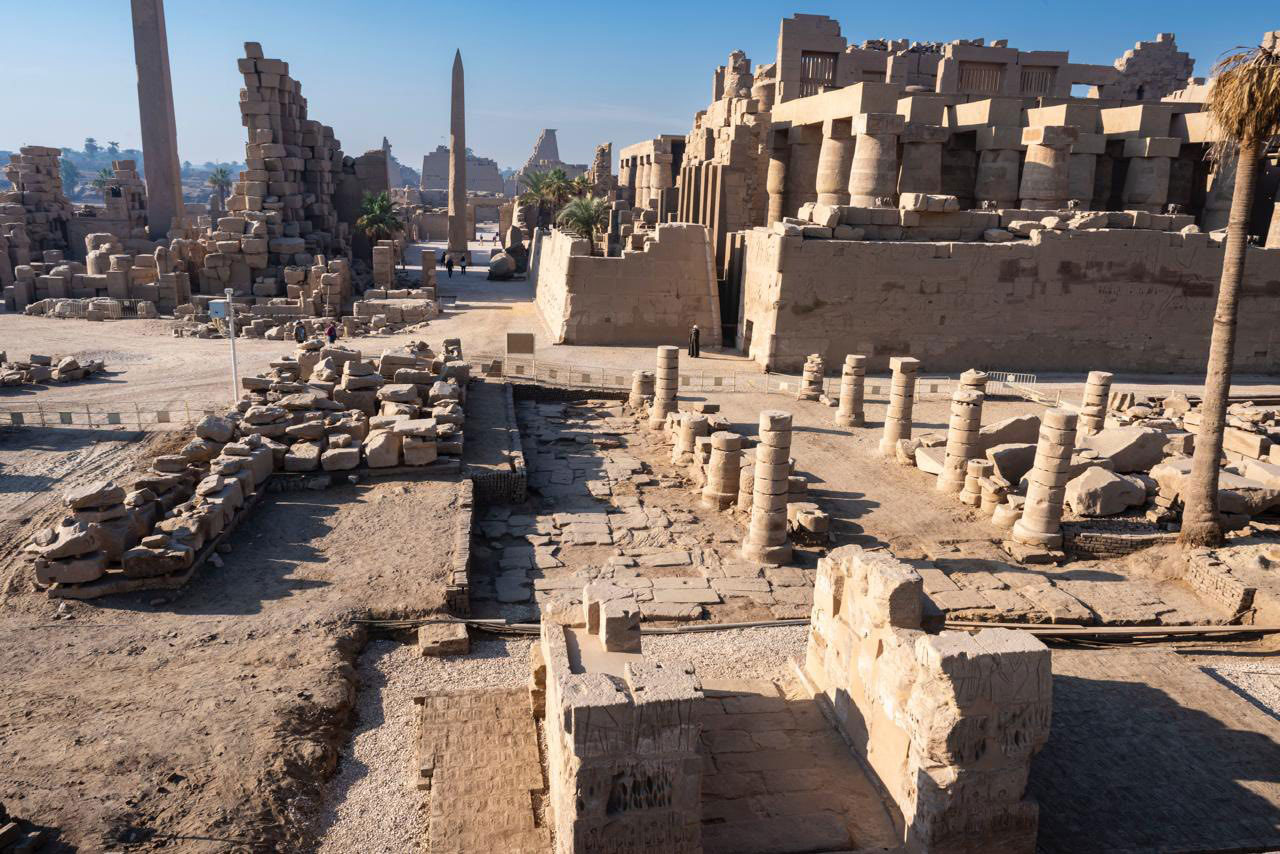
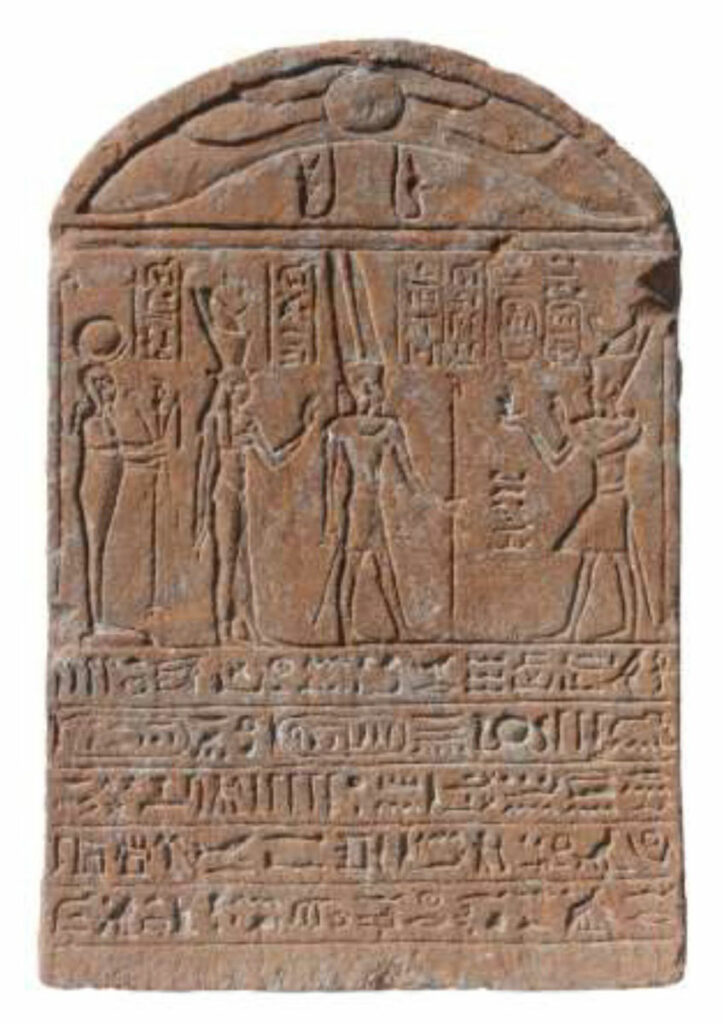
LUXOR, EGYPT—Restoration work on a gate to the north of the Karnak temple complex has uncovered a 2,000-year-old stele depicting the Roman emperor Tiberius, according to a Live Science report. The emperor, who ruled from A.D. 14 to 37, is shown with the Egyptian deities Amun, Mut, and Khonsu as a representation of his power and legitimacy. Egyptologist Abdelghaffar Wagdy of Luxor’s Department of Antiquities and the Egyptian-French Archaeological Center explained that as ruler of the Roman province of Egypt, Tiberius was responsible for maintaining what the Egyptians called maat, or divine order. “To fulfill this role, the ruler needed to be shown performing traditional rituals in a form that the gods would recognize—namely, as pharaoh,” Wagdy said. “The monument expresses what a king should be in Egyptian terms, rather than documenting his personal achievements,” he added. The text of the stele also describes the renovation of a wall at the Temple of Amun-Ra. “It is highly likely that the stela originally functioned as a fixed architectural marker, embedded in the outer face of the enclosure wall, commemorating the restoration of that very section of the gateway,” Wagdy concluded. For more on excavations at Karnak, go to "Egypt's Temple of Creation."