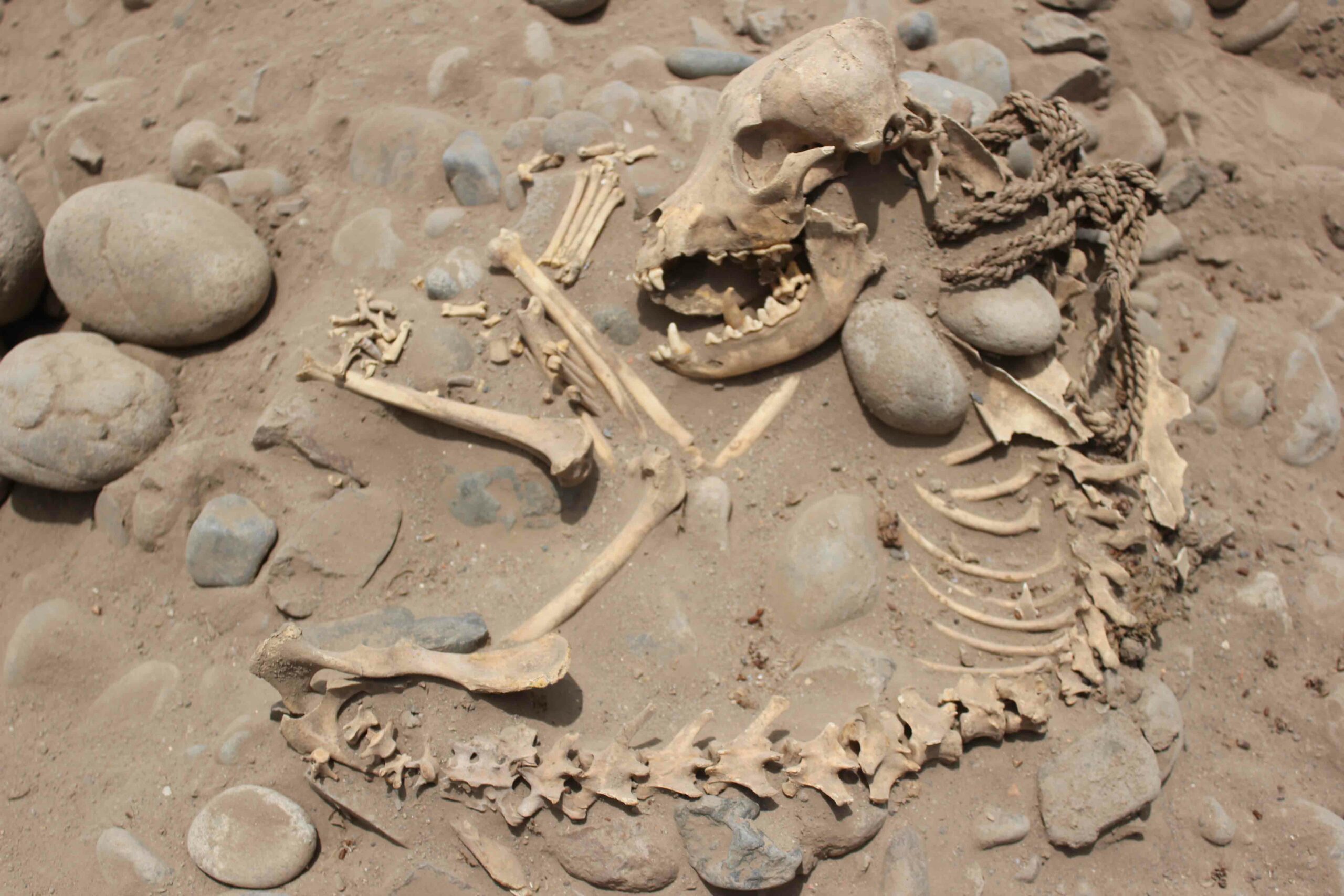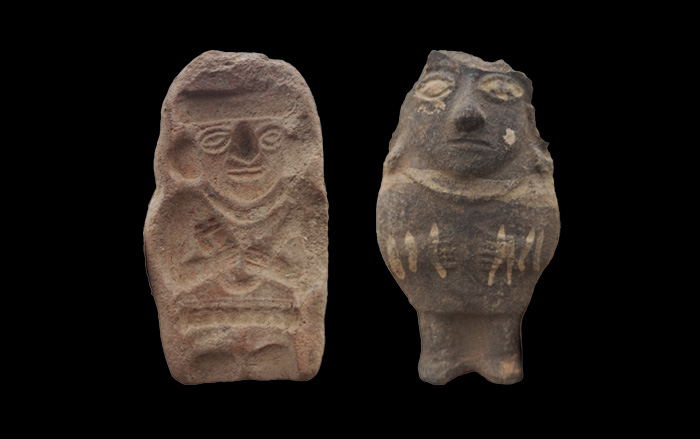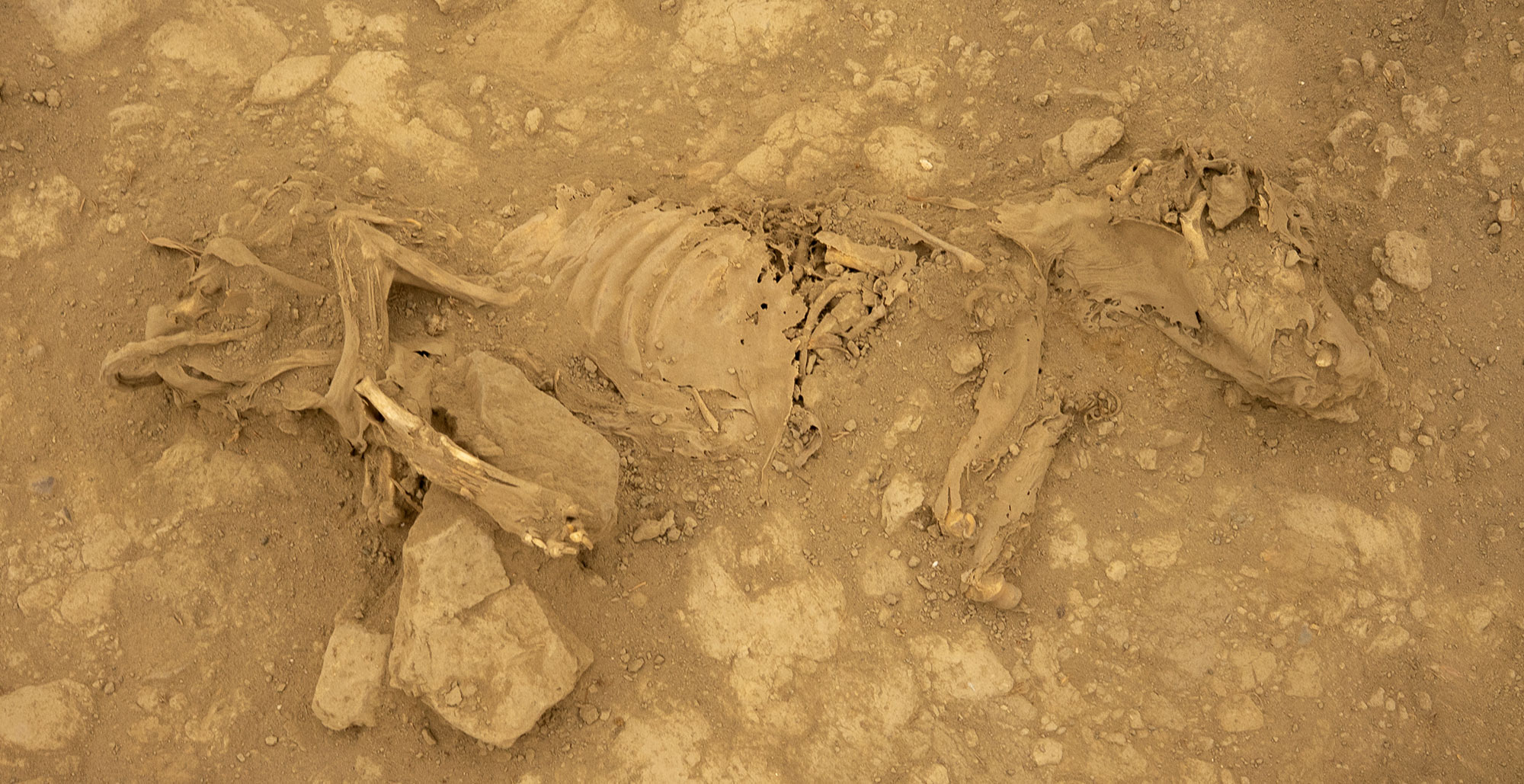
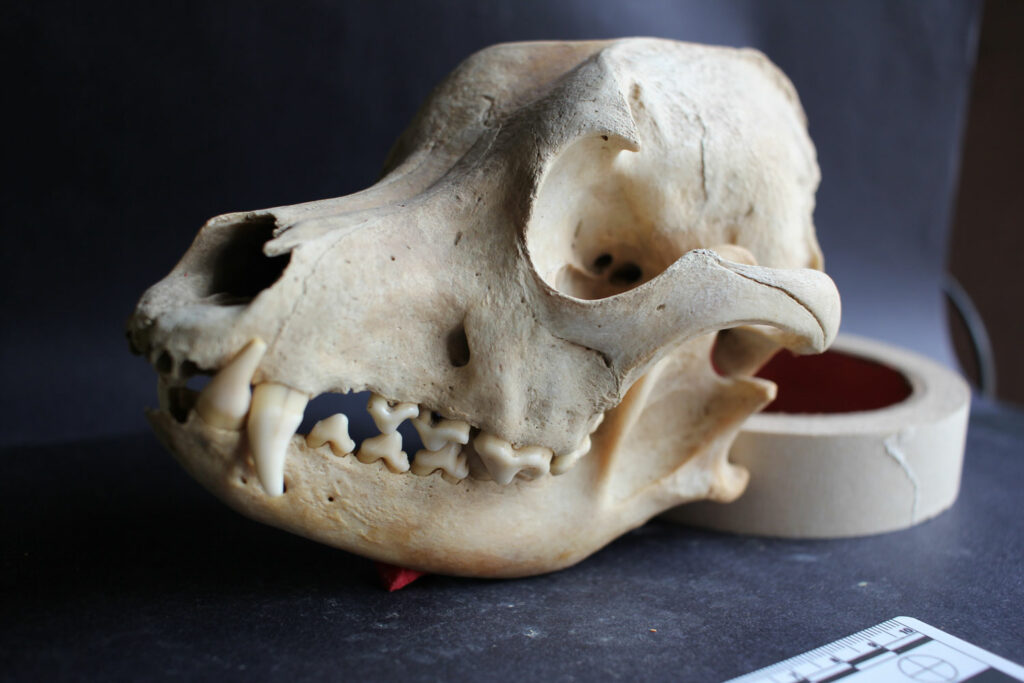
HANOVER, NEW HAMPSHIRE—According to a Phys.org report, Weronika Tomczyk of Dartmouth College and her colleagues examined more than 300 dog bones recovered from the site of El Castillo de Huarmey in northern Peru, where a royal tomb of the Wari Empire was uncovered. “Only some remains were found in undisturbed contexts, while most came from the fill disturbed by the looters’ activity in the 1980s,” Tomczyk said. She and her colleagues focused their study on mandibles or tibias in an effort to avoid sampling the same dog more than once, resulting in a group of at least 20 individuals of various ages, from puppy to senior dogs. Most of the bones, which range in size, showed minimal butchery marks. Some of the dog bones had been found near human remains. This suggests that the canines may have been buried with people, including a teenage boy and an artisan who had also been interred with tools and other grave goods. Three of the dogs in the study have been identified as Peruvian Hairless Dogs based upon missing premolars and molars, a congenital problem linked to the gene responsible for hairlessness in dogs. Chemical analysis of the bones suggests that these dogs ate a diet similar to that of Wari children. Tomczyk and her colleagues note that this is the first physical evidence of hairless dogs to be identified at a Wari site, although they were depicted in Wari art. Read the original scholarly article about this research in the Journal of Anthropological Archaeology. For more on excavations at Huarmey, go to "Tomb of the Craftworkers," one of ARCHAEOLOGY's Top 10 Discoveries of 2022.