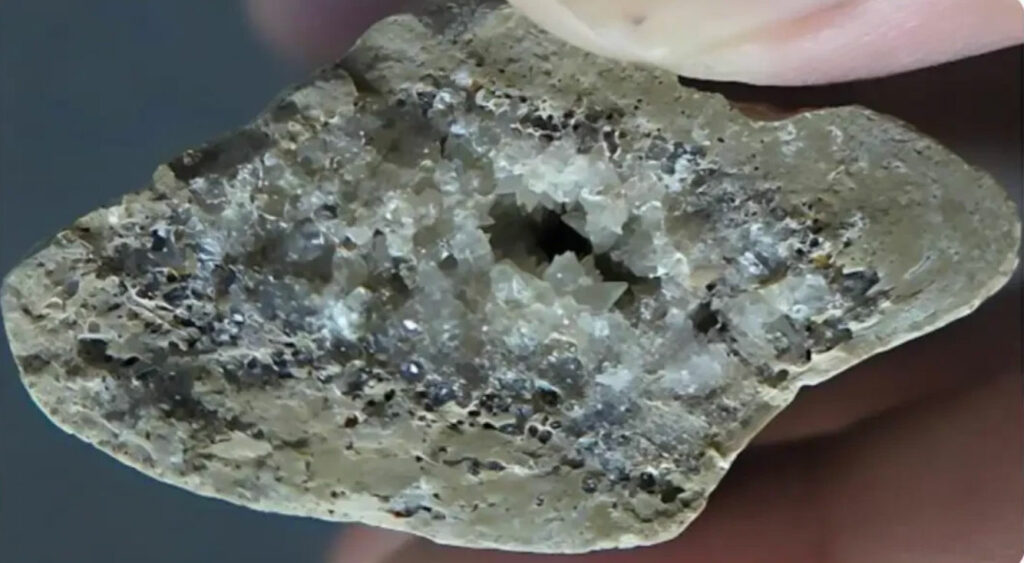
CHICAGO, ILLINOIS—Stone tools uncovered at the Lingjing archaeological site in central China have been dated to 146,000 years ago, or about 20,000 years earlier than previously thought, according to a statement released by the Field Museum. “People often imagine creativity as something that flourishes in good times,” said Yuchao Zhao of the Field Museum. “Finding out that these stone tools were made during a harsh Ice Age tells a different story. Hard times can force us to adapt,” he said. The new dates were obtained by measuring the ratio of uranium and thorium in calcite crystals in animal bones found alongside the stone tools. Because the small amount of uranium in a calcite crystal slowly transforms into thorium, the ratio of the two elements in the crystal acts as a natural clock and reveals its age. The tools were made by Homo juluensis, an extinct human relative thought to have made limited technological advances. But analysis of disk-shaped stone cores at the site shows that the manufacturing process was highly organized. “This was not casual flake production, but a technology that required planning, precision, and a deep understanding of stone properties and fracture mechanics,” Zhao said. “Altogether, this research reveals a much richer story of innovation, intelligence, and human evolution in East Asia,” he concluded. To read about a bird sculpture found at Lingjing, go to "Oldest Chinese Artwork," one of ARCHAEOLOGY's Top 10 Discoveries of 2020.