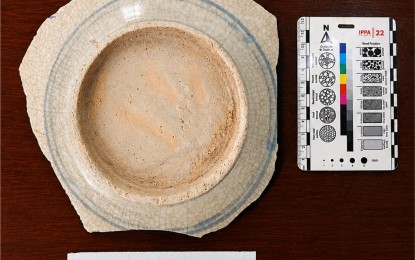
TACLOBAN CITY, PHILIPPINES—The Philippine News Agency reports that a fragment of Chinese ceramic dated to the late sixteenth or early seventeenth century was discovered in the Philippines, on the northern end of the island of Samar, during a construction project. “The ceramic piece may have reached Northern Samar through maritime trade routes that connected coastal communities to Chinese merchants and regional trading centers from the sixteenth to nineteenth centuries,” commented Jay Keenson Acebuche, a provincial planning and development officer. “Historical accounts suggest that traders frequently visited the coastal settlements of Laoang and Palapag, bringing goods, such as porcelain and ceramics, as part of early commercial exchanges,” he explained. The local town of Mapanas is now also thought to have been part of a regional and international trade network during the pre-colonial and early colonial periods, Acebuche concluded. To read in-depth about archaeological discoveries in the region, go to "Letter From the Philippines: One Grain at a Time."