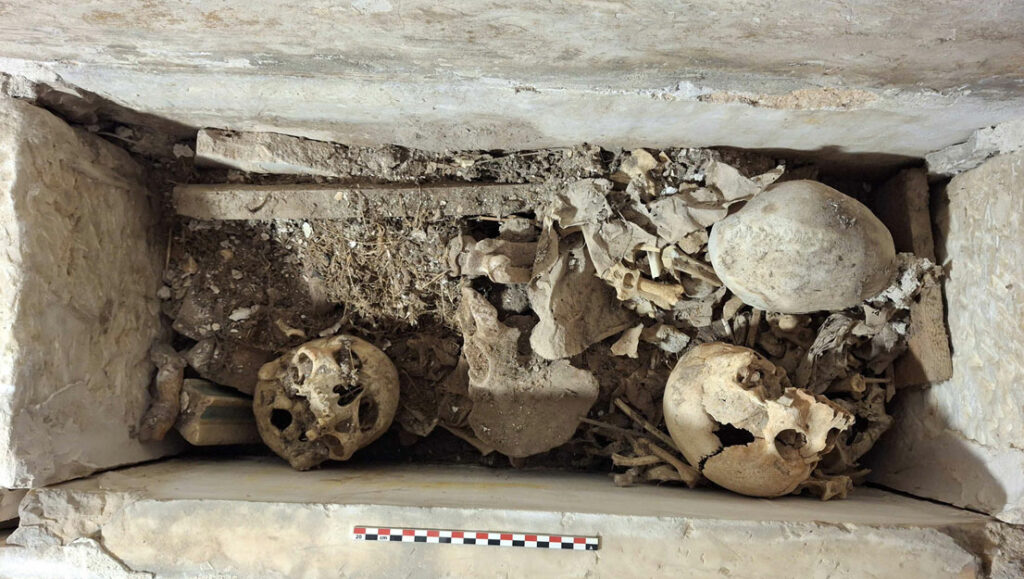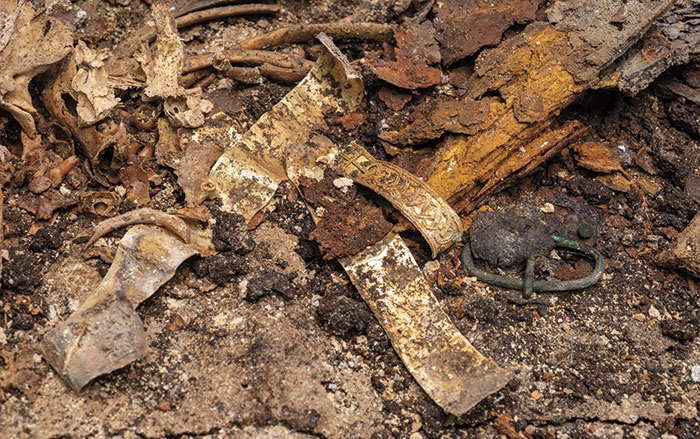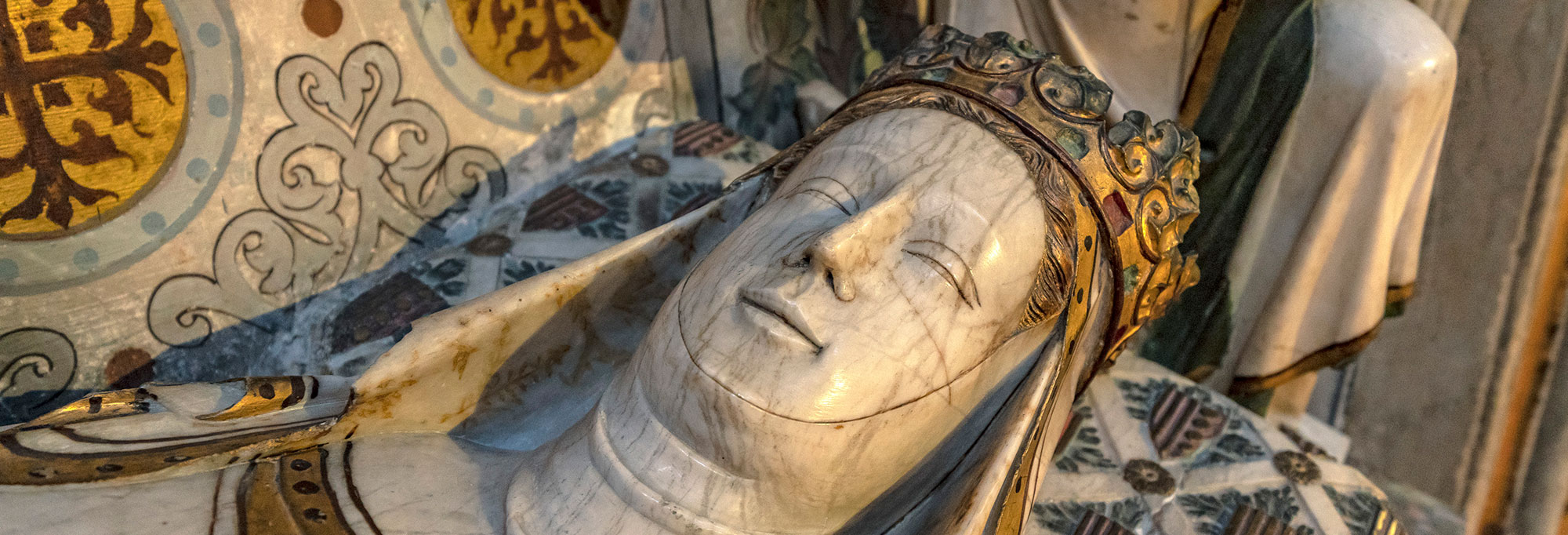
BARCELONA, SPAIN—Live Science reports that scientists from the Institute of Culture of Barcelona have examined 25 skeletons discovered in eight graves at Barcelona’s Royal Monastery of Santa Maria Pedralbes, which was founded in the fourteenth century by Queen Elisenda of Montcada. She moved into a small palace next to the monastery after the death of her husband, James II. When Elisenda died in 1364, her remains were dressed in a monastic habit and placed in a narrow wooden coffin with a gold-embroidered silk textile and aromatic herbs. Analysis of the bones suggests she was about 70 years old at the time of death. The study also investigated the tombs said to have belonged to the monastery’s first two abbesses. The remains of a woman thought to represent Sobirana Olzet, the first abbess, indicate that she had suffered a knife wound to her face shortly before death. In the tomb of Francesca Saportella, the second abbess and the queen’s niece, the researchers recovered the remains of nine people that had been interred at different times, including four male skulls with stab wounds, and the mummified torso of a pregnant woman. In a third tomb, thought to belong to a knight, the bones of two women and three children were found. One of the women still had a long ponytail attached to her skull. The team members are now sequencing DNA samples taken from the remains in an effort to identify relationships among the dead and possible pathogens. To read about a woman of importance in Bronze Age Iberia, go to "Crowning Glory."