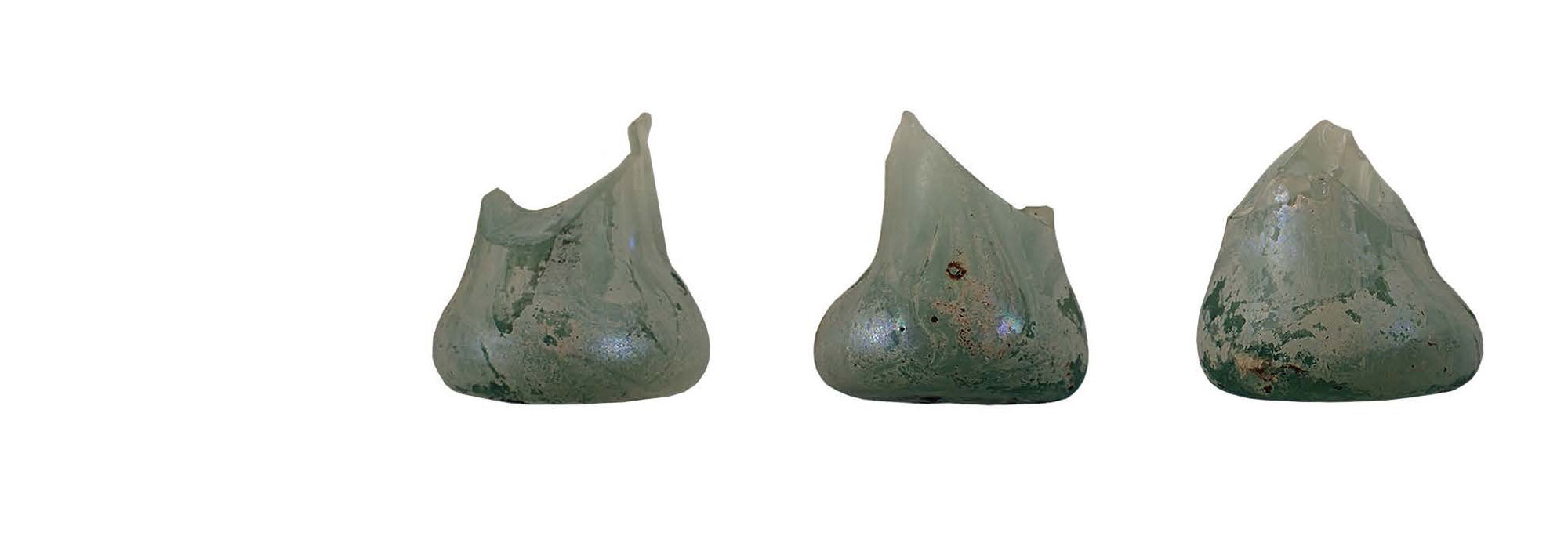
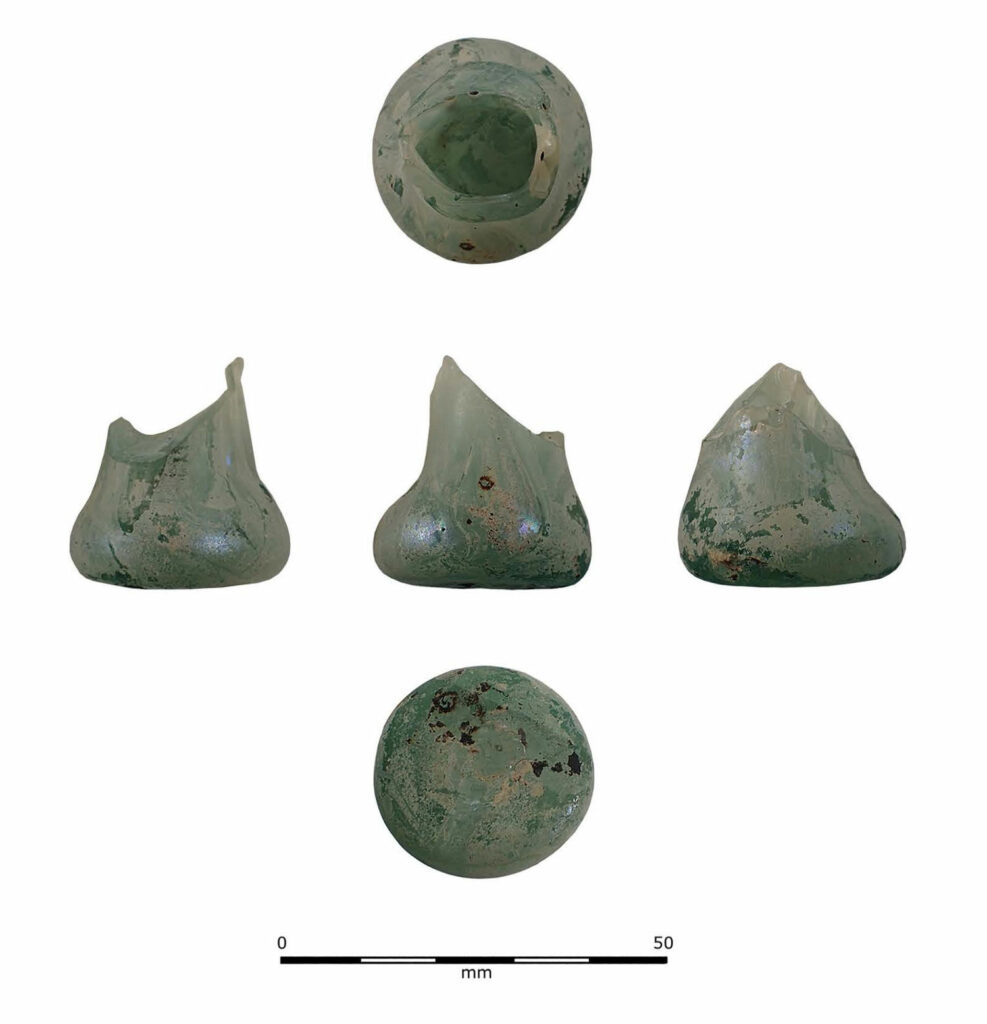
YORK, ENGLAND—Phys.org reports that a blue-green iridescent glass flask unearthed in York more than 40 years ago has been identified as an Egyptian kohl vessel by Hillary Cool of Barbican Research Associates. The small flask, found in what had been a Roman garbage dump, has been dated to the second century A.D. “In the late second century, the area across the river from the legionary fortress was starting to develop as a serious civilian center,” Cool said. “It seems likely this was a place where the rubbish from the legion was being dumped,” she added. She noted that the vessel’s walls are thicker than those of most Roman bottles. The shape of the interior of most Roman bottles mirrored the shape of the outside of the bottle, and bottles were made this way in Egypt as well. In the first and second centuries A.D., however, Egyptians also made bottles with a cylindrical internal hollow, like that in the unusual bottle from York. These bottles were useful for extracting kohl with an applicator stick. “This was not something that was traded widely beyond Egypt and Sudan—if it was, we would get the containers much more frequently,” Cool said. She thinks the iridescent bottle may have been brought to York by a soldier who was Egyptian, or who had spent time in Egypt and had adopted the practice of wearing kohl eyeliner. To read more about Roman cosmetics containers, go to "Beauty Endures."