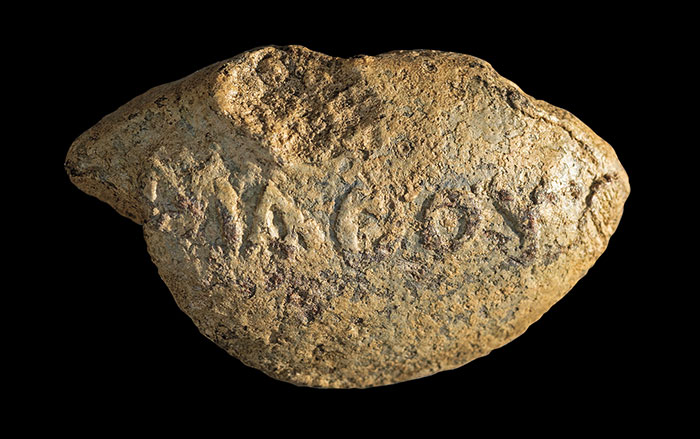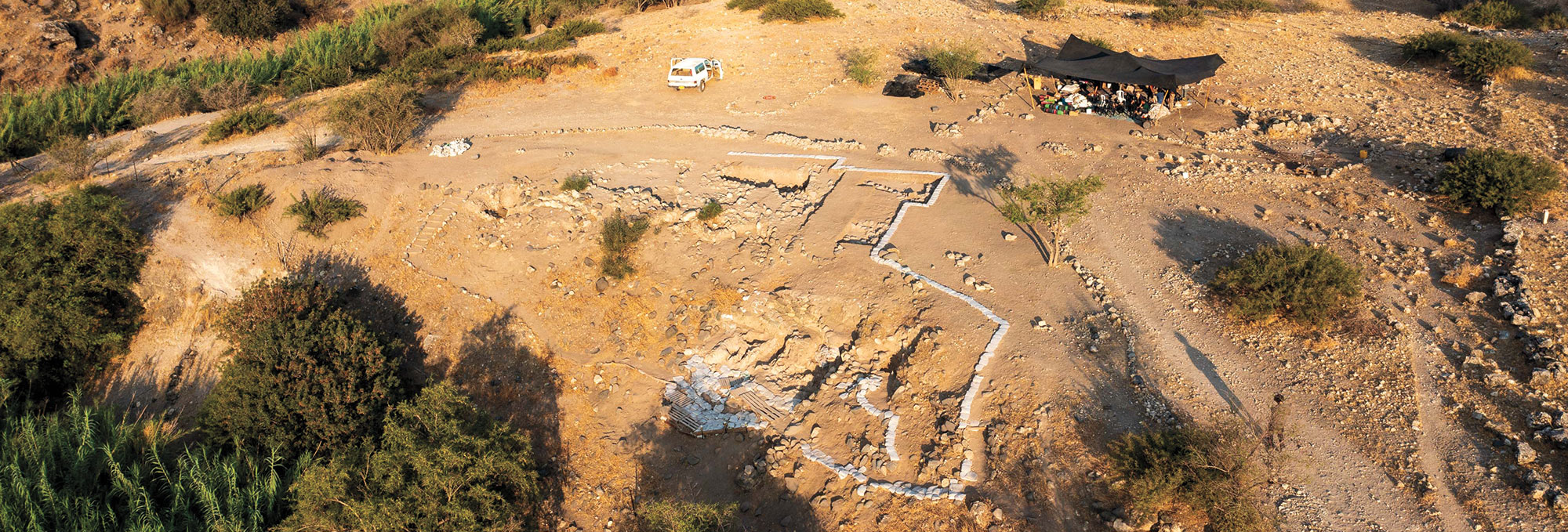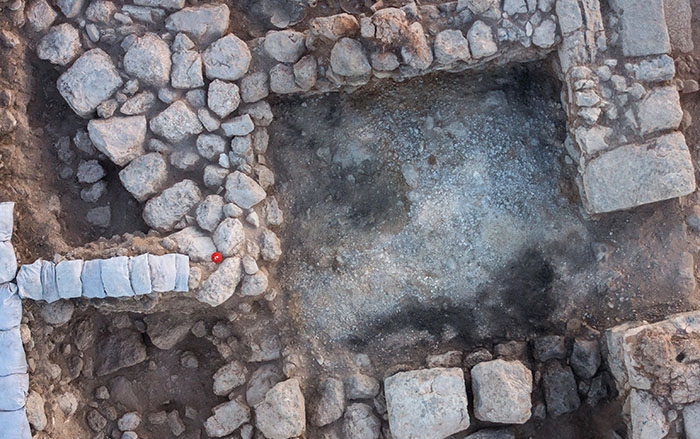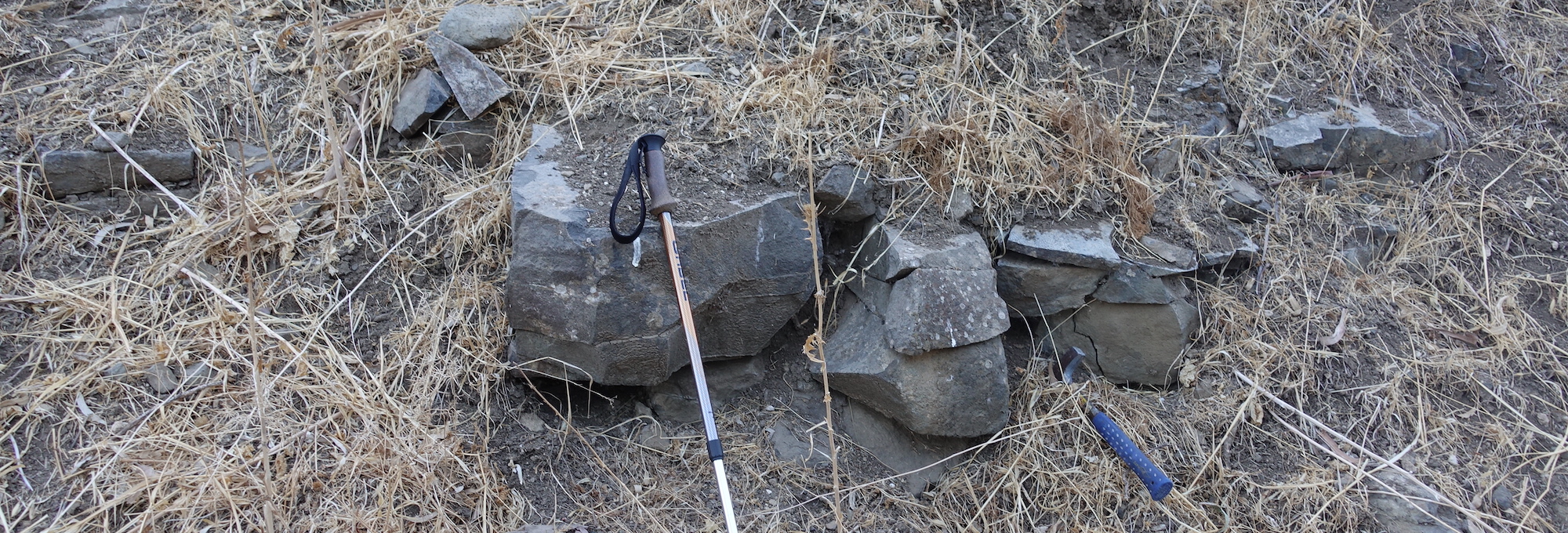
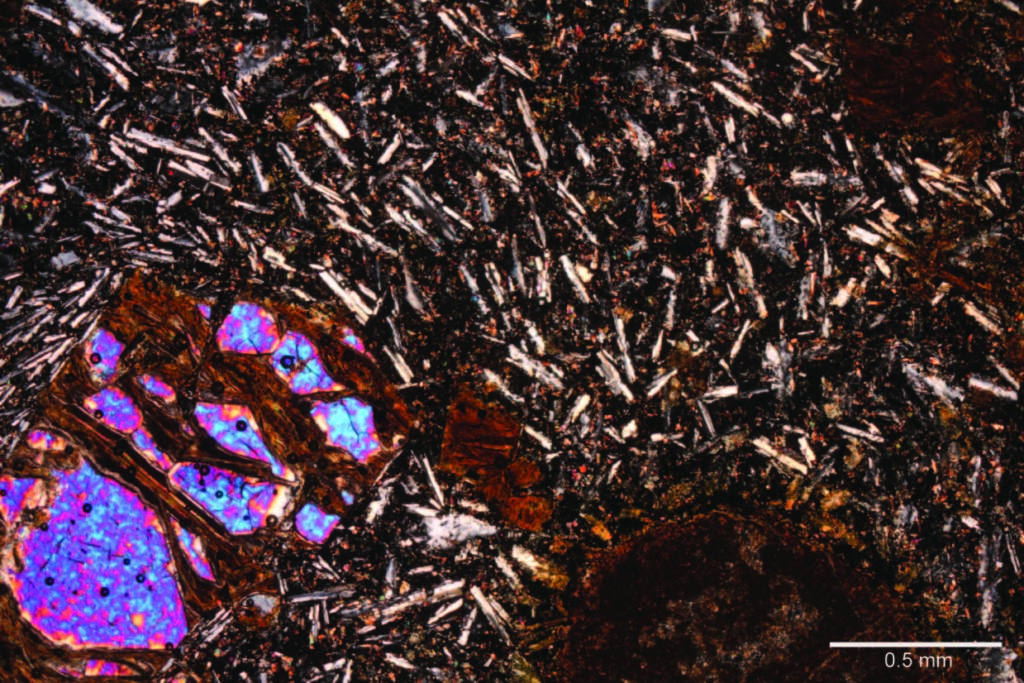
JERUSALEM, ISRAEL—According to a statement released by the Hebrew University of Jerusalem, analysis of 780,000-year-old basalt artifacts unearthed at the site of Gesher Benot Ya’aqov in northern Israel shows that hominins selected specific basalt sources when crafting particular tools. Tzahi Golan and Yoav Ben Dor of the Geological Survey of Israel and Naama Goren-Inbar of the Hebrew University of Jerusalem analyzed the basalt artifacts, which were recovered from different archaeological layers at the site. They compared the objects' chemical makeup with sources of basalt located near Gesher Benot Ya’aqov, and layers of basalt observed in a borehole drilled at the site. These layers of basalt revealed in the borehole would have been available to the toolmakers of the Middle Pleistocene, but they have since been hidden by subsidence, erosion, and sediment accumulation. The researchers determined that many of the basalt artifacts, including giant cores, were made with basalt found close to Gesher Benot Ya’aqov. Some cleavers were made with basalt whose source was not identified among the samples. Hominins may have therefore selected a source of basalt based upon what was needed for the production of a particular tool. Goren-Inbar and her colleagues also noted that these selection strategies appeared over multiple archaeological layers at the site, indicating that knowledge of local resources within the changing landscape had been passed down over the generations for tens of thousands of years. Read the original scholarly article about this research in Scientific Reports. To read about the distances hunter-gatherers in southern Africa traveled to procure particular types of stone to make their tools some 40,000 years ago, go to "Source Material."