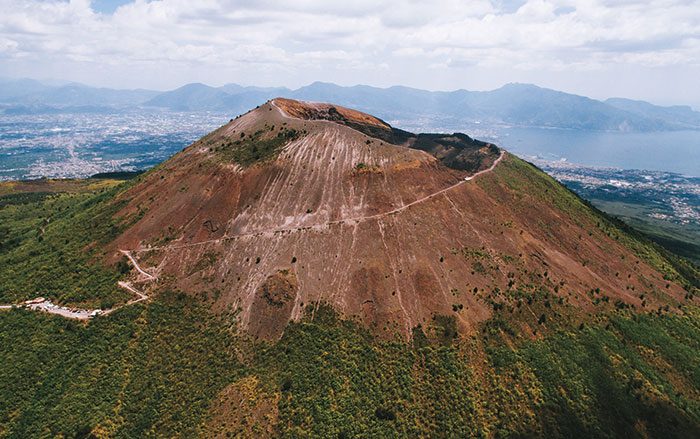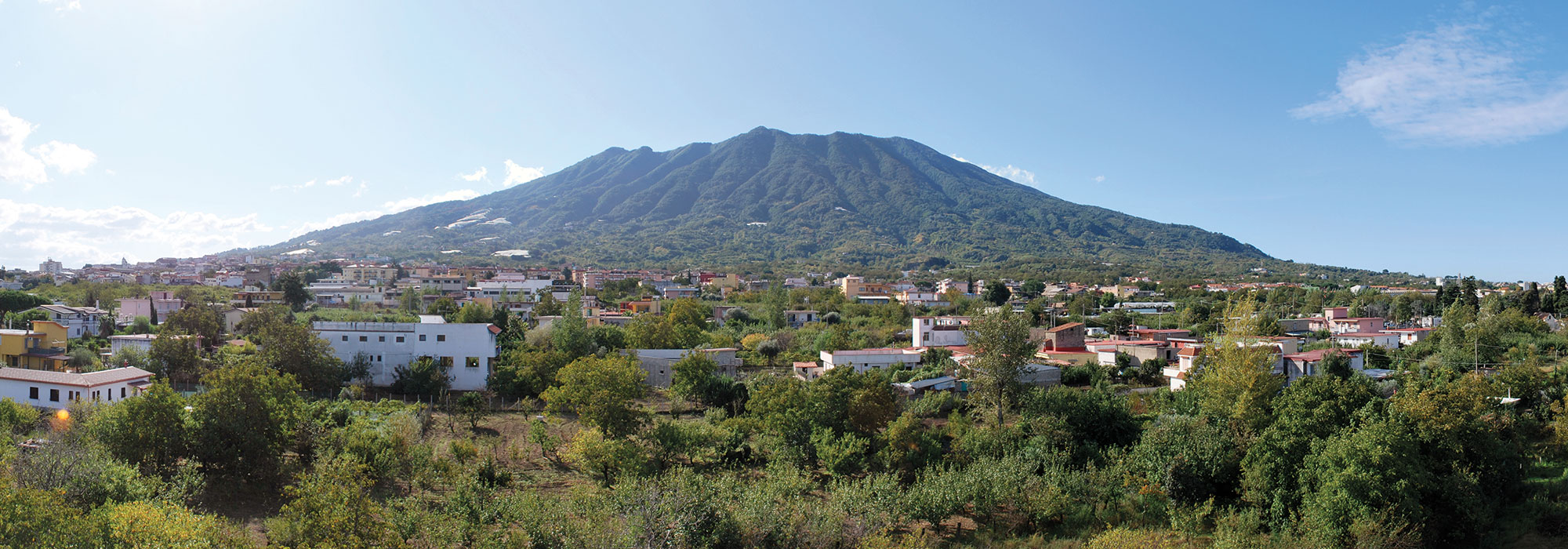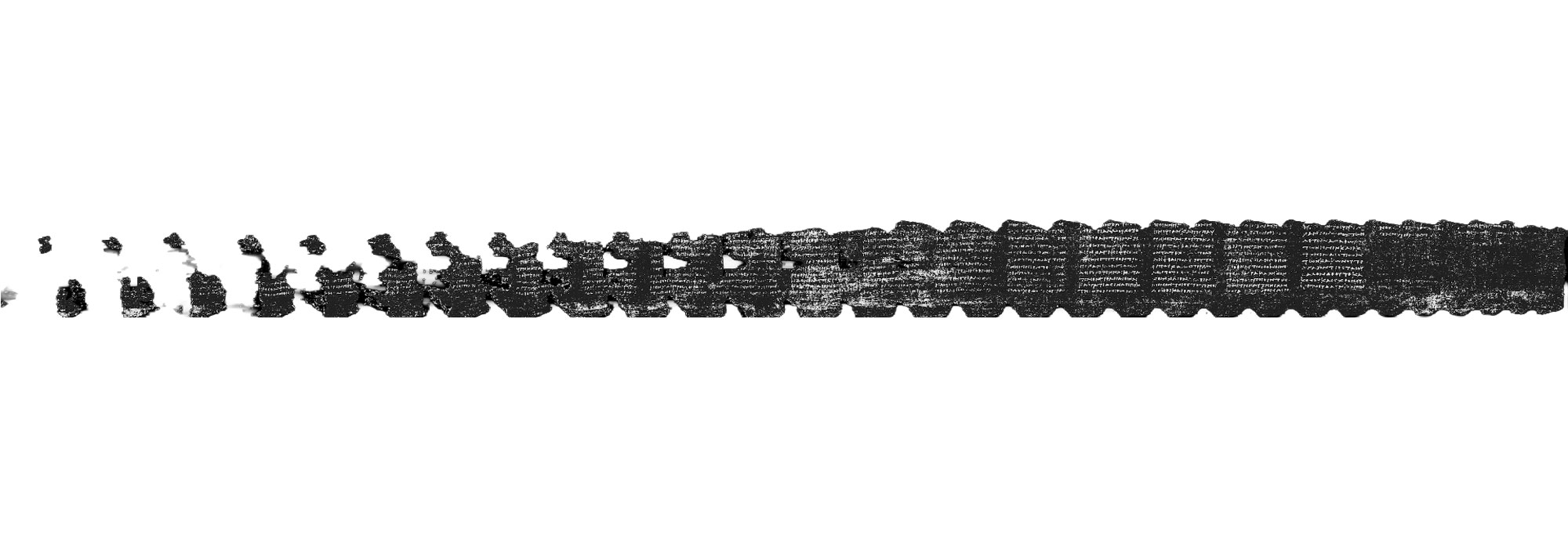
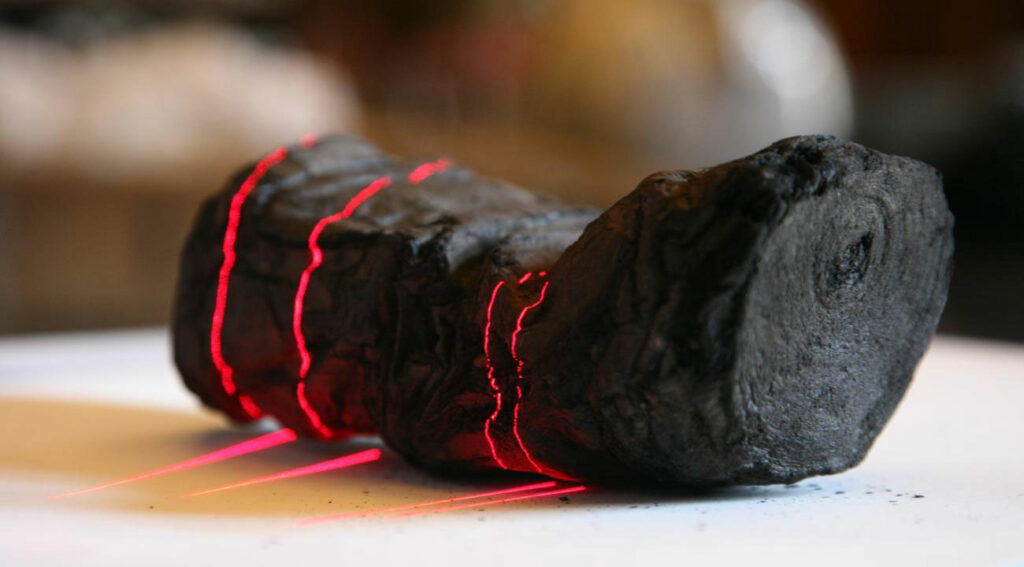
NAPLES, ITALY—Scientists have fully “unwrapped” an entire carbonized papyrus scroll preserved by the eruption of Mount Vesuvius in A.D. 79, CNN reports. Known as PHerc. 1667, the scroll is one of a library of texts found in the eighteenth century at a villa in the ancient city of Herculaneum. Information from PHerc. 1667 was gathered with a CT scan and then the papyrus was virtually unrolled. Advanced artificial intelligence, trained to identify ink on the papyrus, then detected 20 columns of text on the nearly five-foot-long scroll. “Today—after years of interdisciplinary work combining advanced imaging, artificial intelligence, academic research, and an innovation contest—we are finally able to read them,” said Brent Seales of the University of Kentucky. Seales is a member of the team that in 2023 began The Vesuvius Challenge, a contest encouraging researchers to work on virtually unwrapping carbonized scrolls. Frederica Nicolardi of the University of Naples Federico II said that PHerc. 1667 had been damaged by previous attempts to unfurl it, and finally deemed unreadable in the 1980s. Now, she explained, analysis of the scroll’s handwriting and references suggests that it dates to the second or late third century B.C. The text, by an unknown author, is a discussion of ethics, arts, and human behavior, perhaps reflecting Stoic thought. “This is no longer just about imaging or machine learning,” Seales said. “Now we need experts who can read, edit, and understand what they are saying,” he concluded. To read more about the library of papyri unearthed in the ancient city, go to "The Charred Scrolls of Herculaneum."