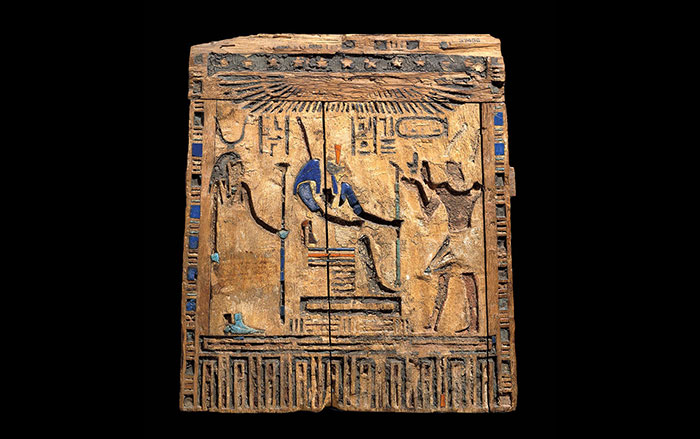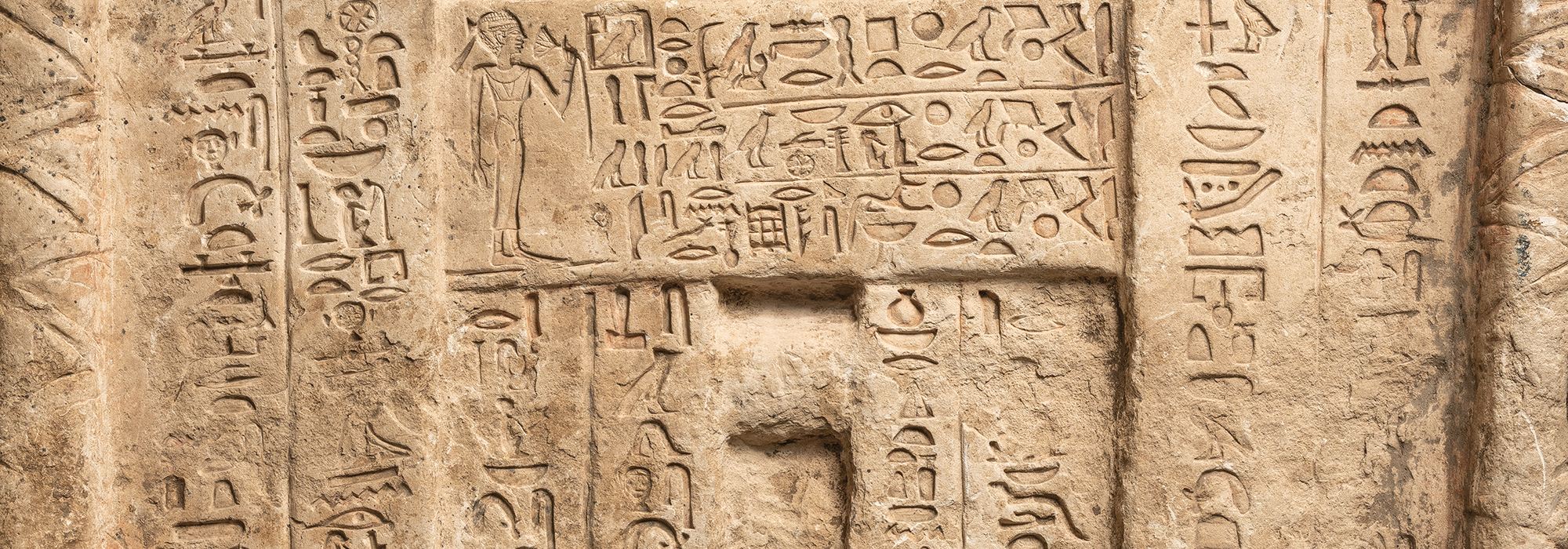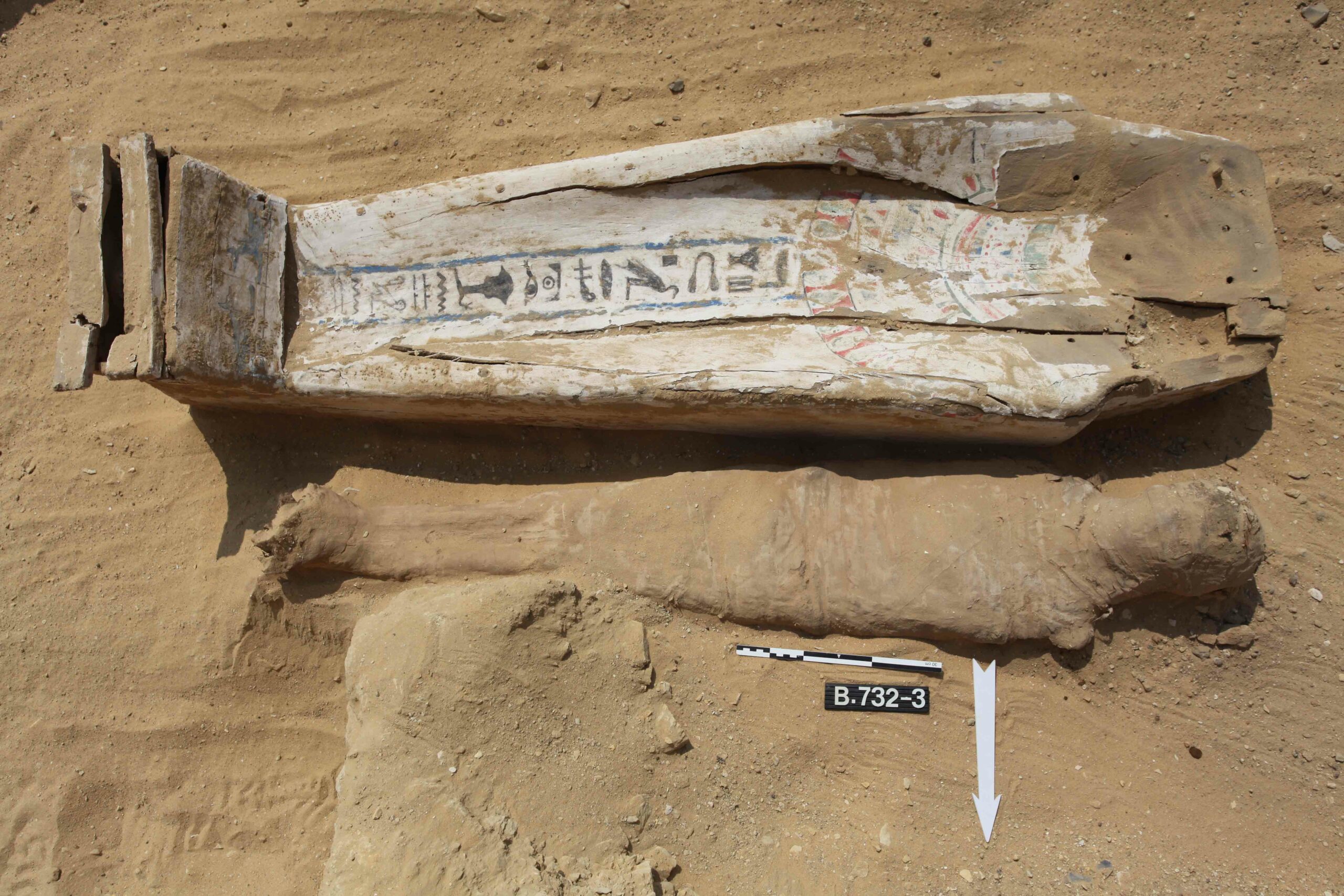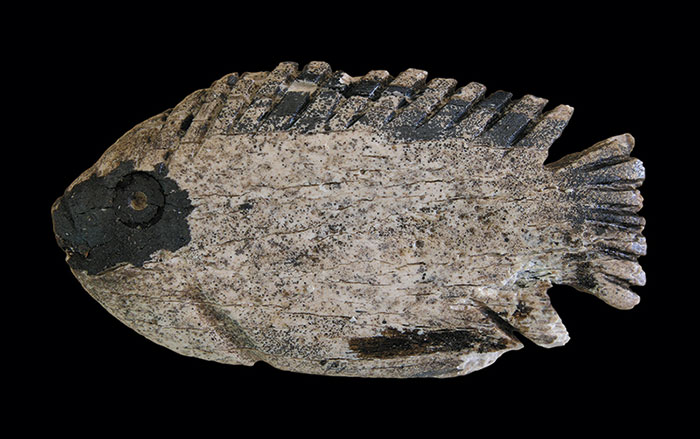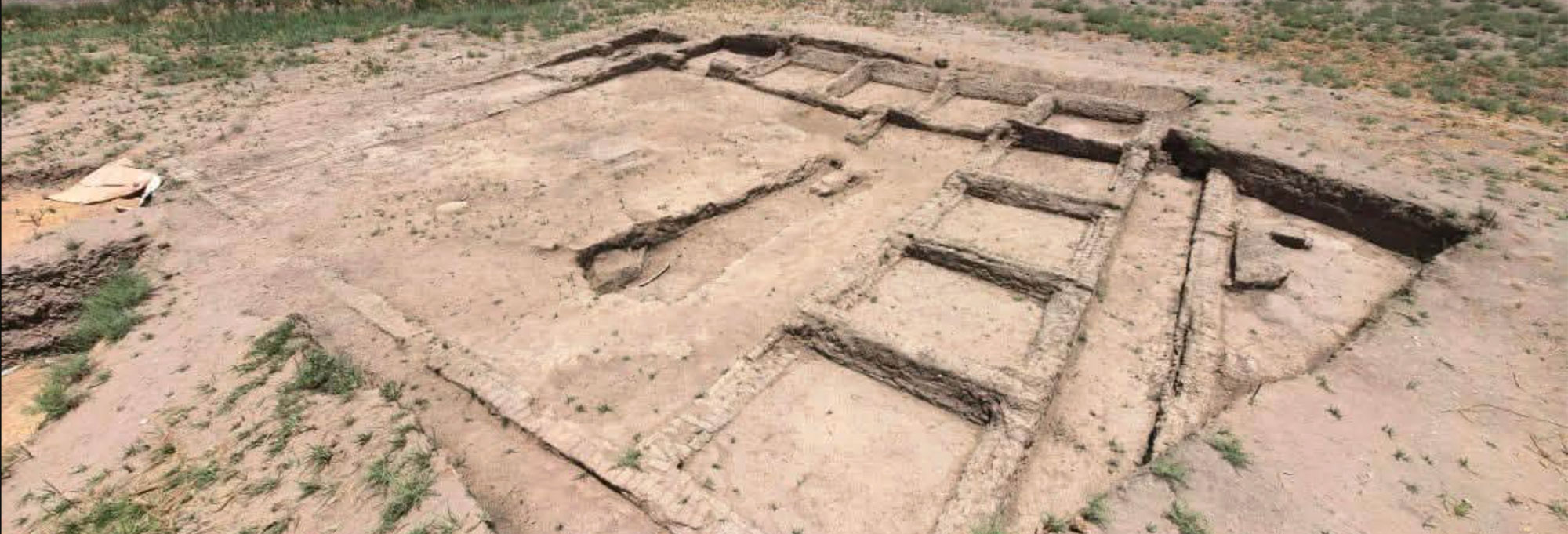
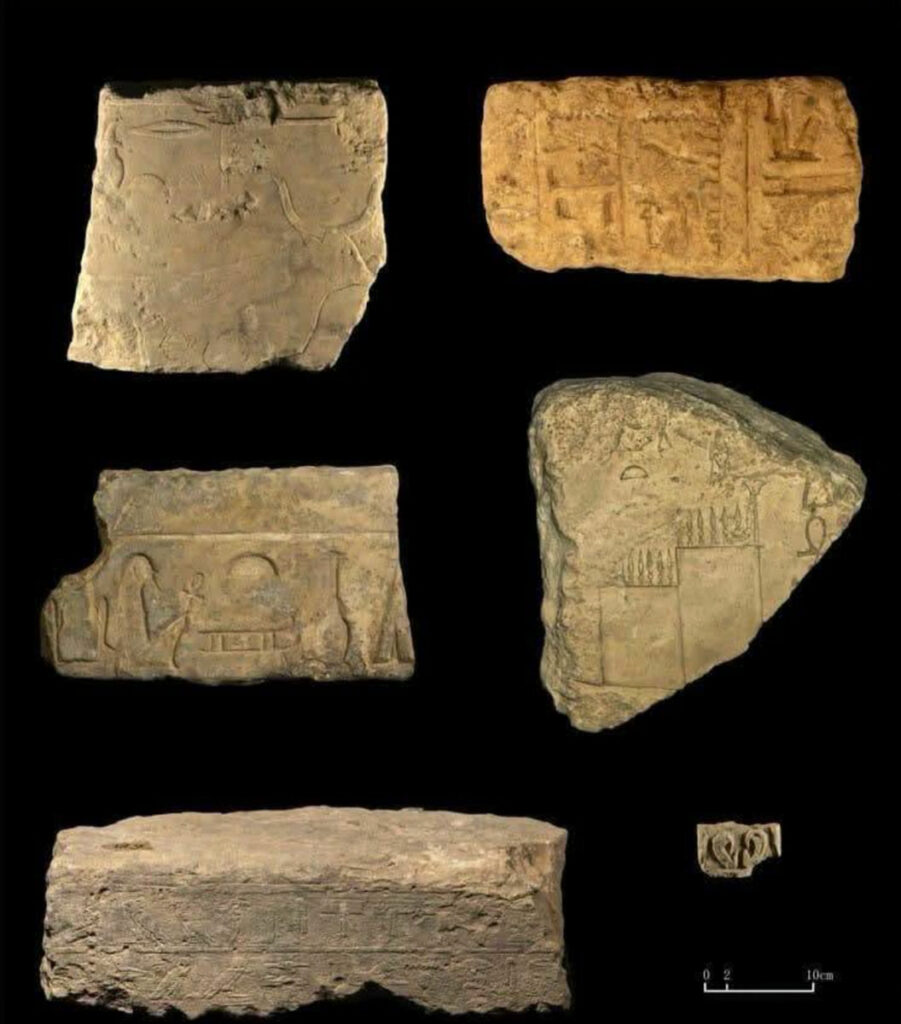
MIT RAHINA, EGYPT—According to a report in La Brújula Verde, a team of researchers from Egypt’s Supreme Council of Antiquities and the Shanghai Museum have uncovered domestic structures and workshops near the Temple of Sekhmet in Memphis, an ancient capital city in Lower Egypt. The buildings were made of adobe, reused stone blocks, and sculptural fragments thought to have come from the Temple of Ptah, which had once been the main sanctuary in the city. A possible winepress, consisting of a limestone basin with a slope leading to a central opening and a lower basin, was also uncovered near the Temple of Sekhmet. Ceramic fragments, faience amulets, and votive plaques suggest that devotions may have continued at the site into the Greco-Roman period, after the city’s temples had fallen out of use and the area had become a residential neighborhood. To read about a false door thought to have come from Memphis, go to "Magical Mystery Door."