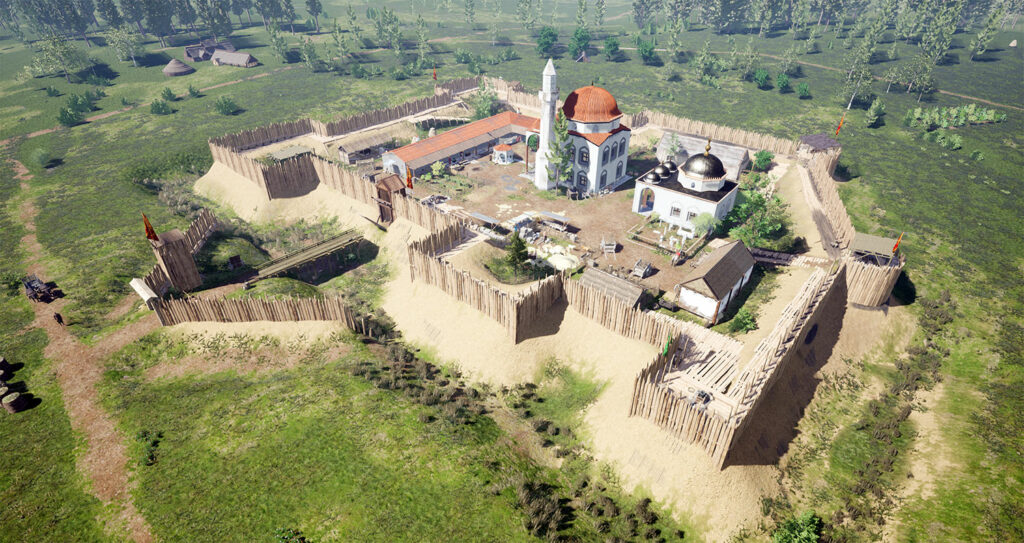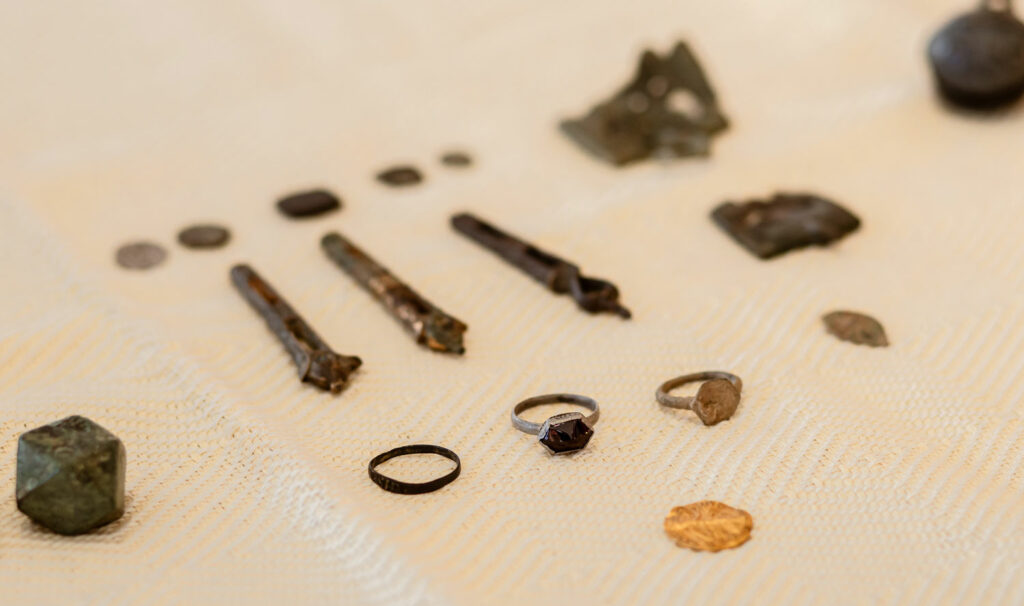
SZIGETVAR, HUNGARY—The Anadolu Agency reports that excavations in southern Hungary at Szigetvar Castle have determined that Turbek, a settlement that developed around the tomb of the Ottoman sultan Suleiman the Magnificent, was larger and more affluent than previously thought. Suleiman died the day before his siege of the castle ended in 1566. His son, Selim II, built a tomb at the site, and it eventually became a place of pilgrimage. Researchers led by Norbert Pap of the University of Pecs found the foundations of a square building that they identified as the sultan’s tomb in 2015. They also uncovered a complex including a mosque, a dervish lodge, a guesthouse, and a guard barracks, all surrounded by a wooden palisade. Now, they have determined that the civilian settlement that grew around the tomb complex covered nearly 200 acres. Ceramics, coins, jewelry, and pieces of Ottoman metalwork were found on the surface, while geophysical surveys detected traces of buildings, some made of brick and topped with roof tiles. The archaeologists also found a well, grain storage pits, terracotta heating systems, footed bowls, porcelain cups, painted glass vessels, a gold coin, a silver coin, tableware, rings, buckles, and ornaments for horse harnesses. Turbek was eventually destroyed when Ottoman rule ended in the region. To read more about the discovery of Turbek's ruins, go to "Letter from Hungary: The Search for the Sultan's Tomb."