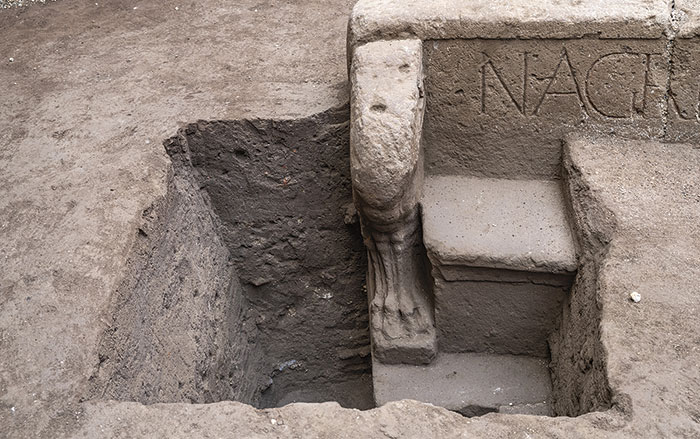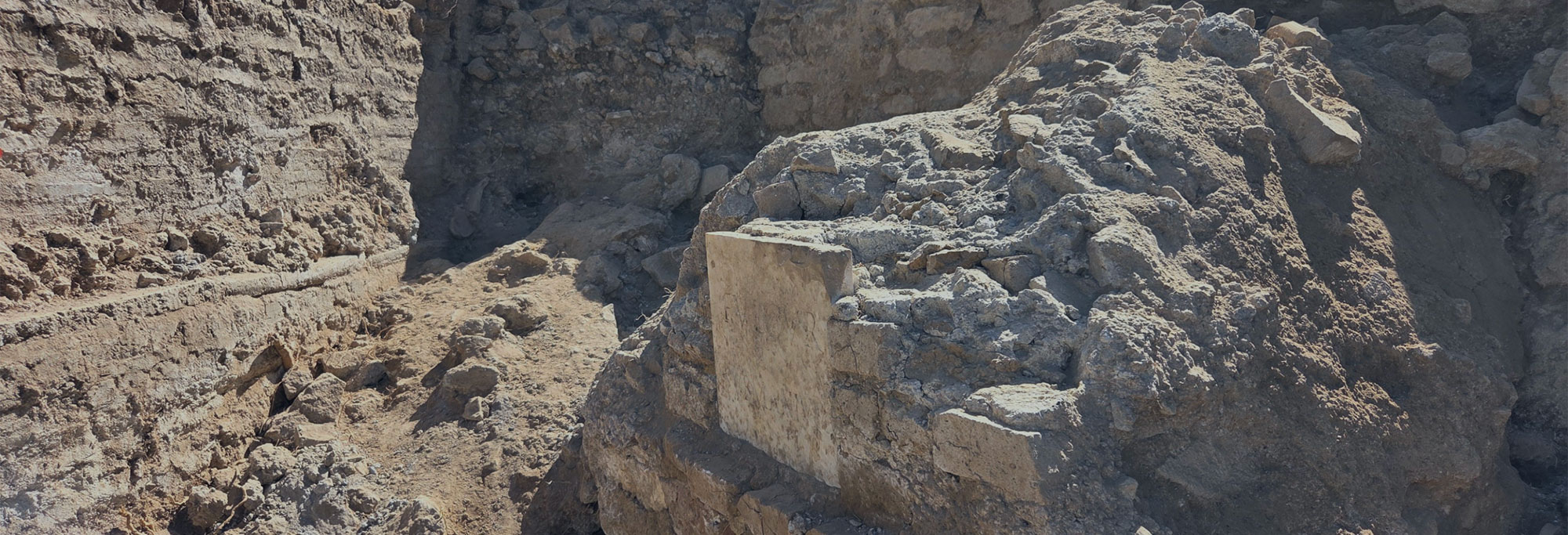
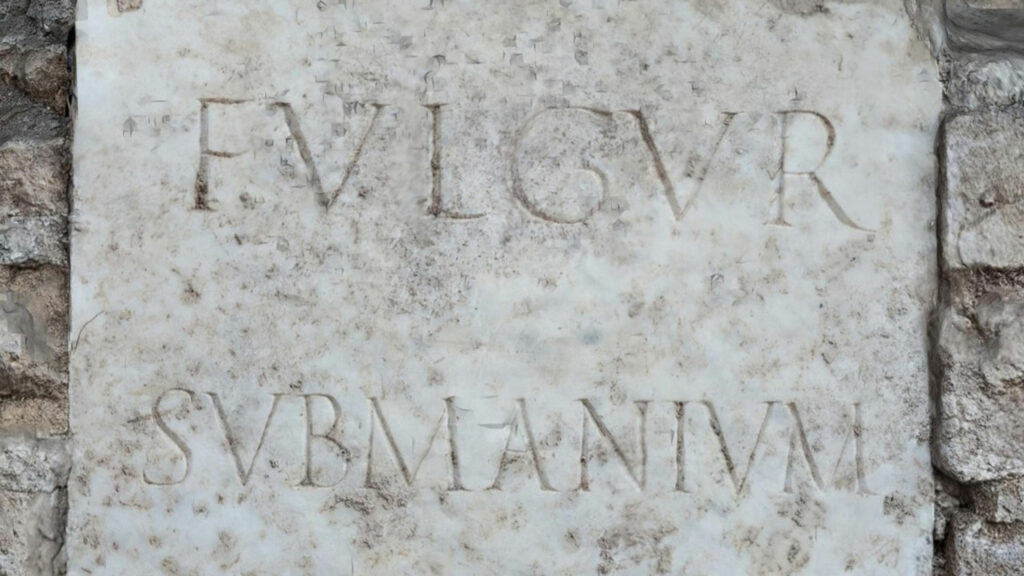
TIVOLI, ITALY—A marble slab uncovered near the amphitheater at Hadrian’s Villa bears the inscription “FVLGVR SVBMANIVM,” regarding Summano, the Roman god of night lightning, according to a report in The Independent. The slab is thought to be linked to the practice of burying objects that had been struck by lightning, and therefore considered by the Romans to have been consecrated by the gods. “The discovery opens up new perspectives on the history of this sector of Villa Adriana and on the role of the fulgur conditum ritual in the reorganization of spaces,” said Fabio Giorgio Cavallero of the University of Umbria. Places struck by lightning were marked in order to recognize them as religious spaces, where the divine had entered human space, he explained. “Finding the material sign of the sanctification of a place struck by lightning allows us to touch the meticulous ritual procedures of time,” commented Alberto Samonà of Italy’s Ministry of Culture. To read about another instance of this kind of ritual at a sanctuary in Tuscany, go to "Sacred Spring," one of ARCHAEOLOGY's Top 10 Discoveries of 2023.