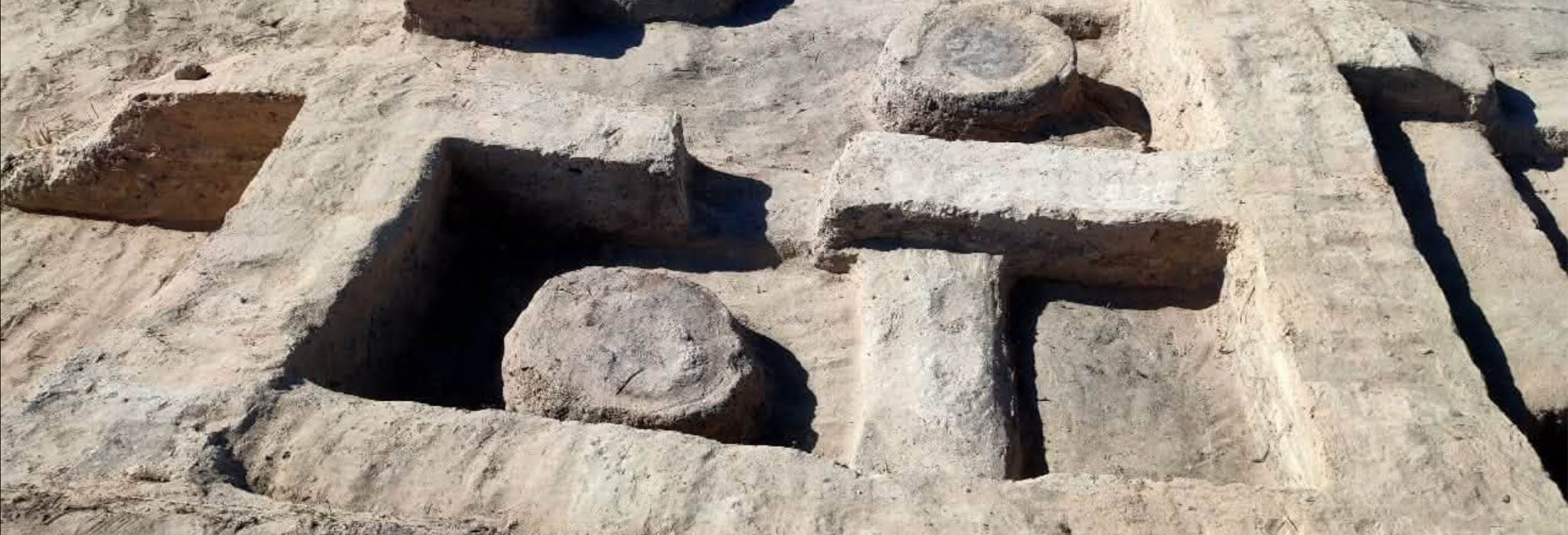
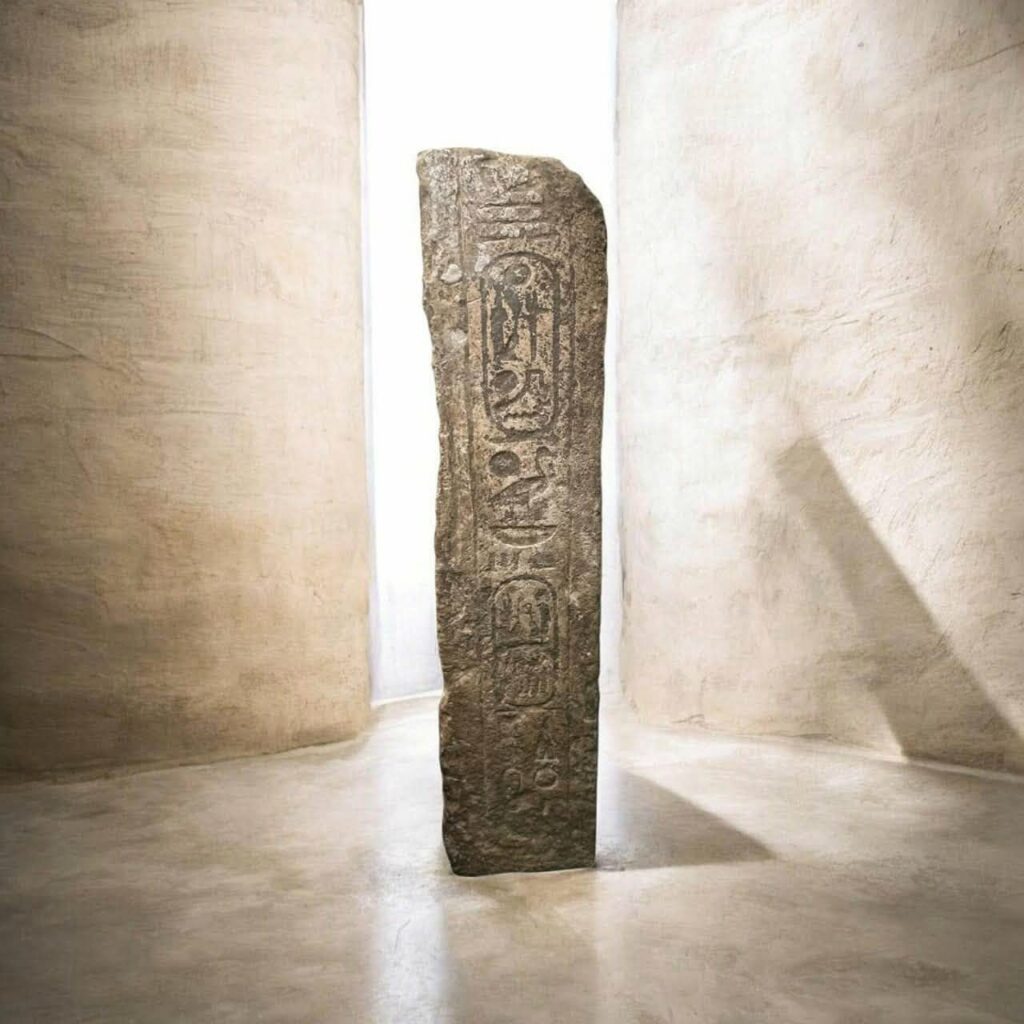
BEHEIRA GOVERNORATE, EGYPT—CBS News reports that excavations at Tell Al-Abqain, the site of a New Kingdom (ca. 1550–1070 B.C.) fortress in the Nile Delta, have uncovered mudbrick residential structures, planned streets, grain storage silos, pottery ovens, and the remains of a horse thought to have been given a deliberate burial. Mohamed Abdel-Badie of the Supreme Council of Activities said that examination of the intact horse remains revealed that it was a male of a medium-sized breed characterized by speed and agility. Cylindrical pieces of alabaster and limestone found near the horse’s grave are thought to have been part of a chariot harness. Researchers also recovered part of a limestone stela carved with an image of a prisoner with bound hands in a submissive posture. The depiction of the prisoner’s clothing suggests that he came from nearby Libya. Other artifacts unearthed at the fortress include amulets associated with protection, fertility, renewal, and strength; pottery; tools; and jewelry. To read about a New Kingdom musical innovation, go to "The Music of Time: Accompanying the Afterlife."