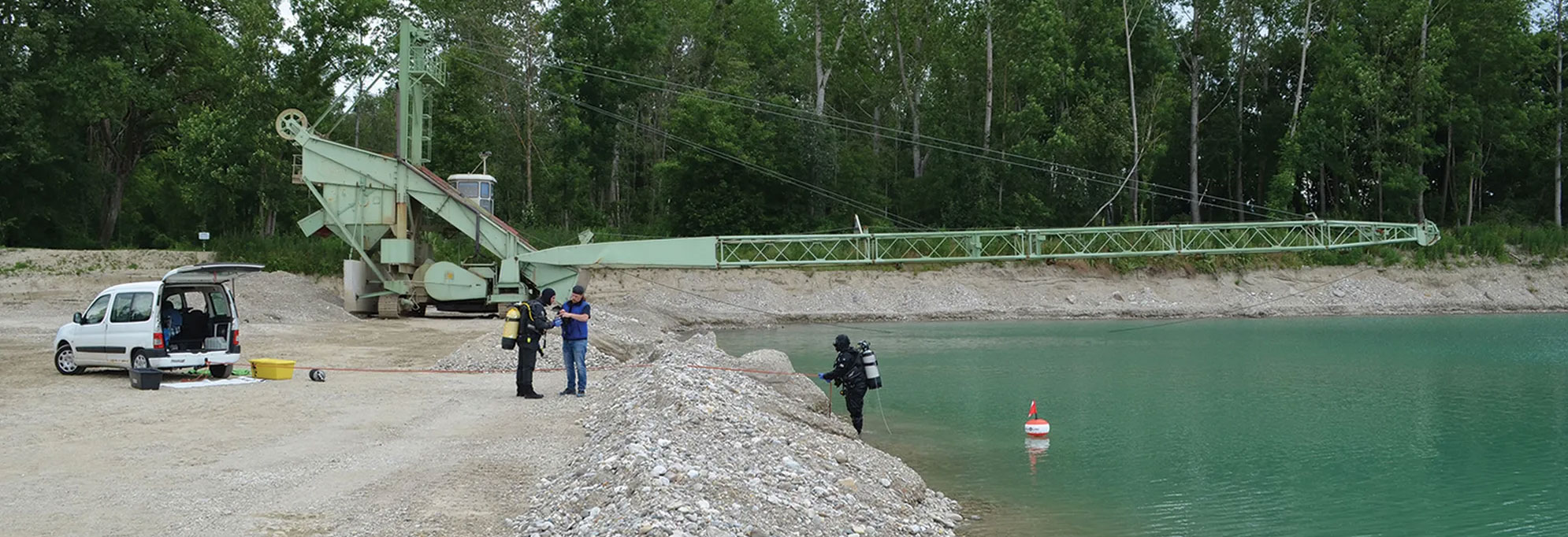
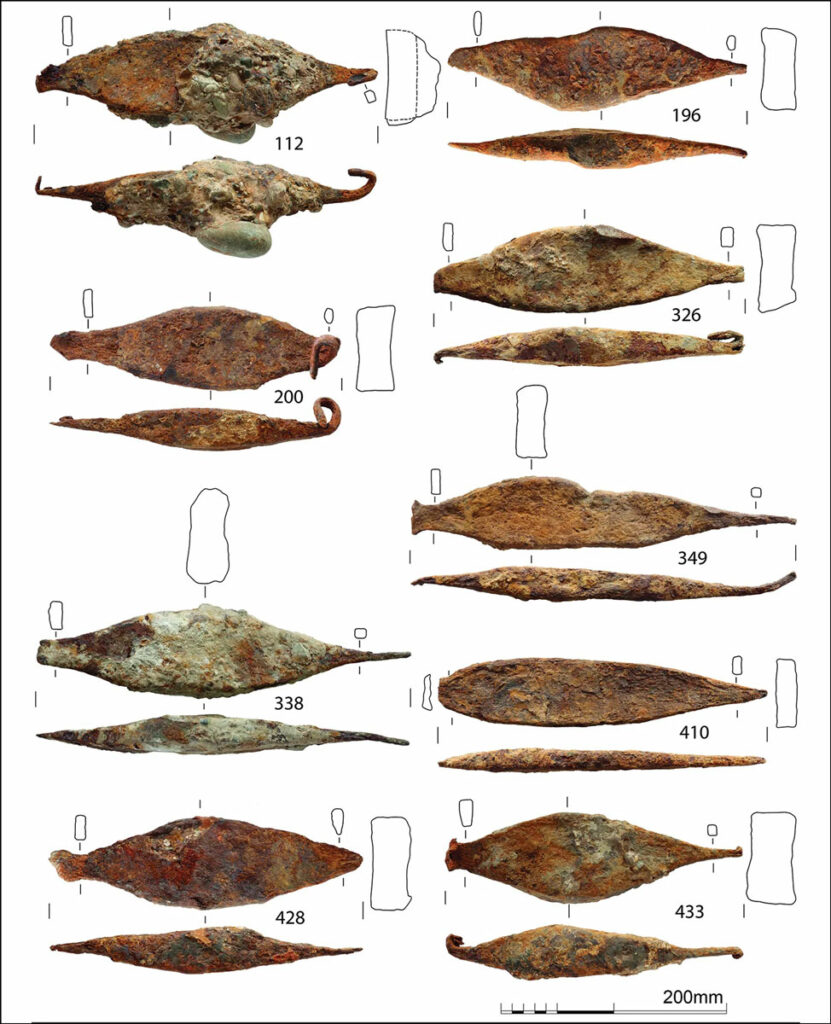
DEINHAM, AUSTRIA—According to a Live Science report, Peter Trebsche of the University of Innsbruck and Marion Berranger of the University of Technology of Belfort-Montbéliard have analyzed a collection of iron ingots discovered in gravel retrieved from the Danube River in 2019. The study suggests that the iron may have been in the cargo of a ship that sank some 2,200 years ago. The researchers identified 193 rough iron bars with pointed ends, and more than 300 partial bars, for a total of at least 500 bars in the ship’s cargo. The whole bars measure about 11 inches long, and weigh about 4.5 pounds each, for a total estimated cargo weight of 2,200 pounds. This much iron could have been used to produce some 500 swords, Trebsche said, or about 8,000 nails. The iron ingots are thought to have been produced somewhere upriver from where they were found, perhaps in southern Germany, where similar iron bars have been uncovered. “It is incredible that such a large quantity of iron was transported at once and was available in a single exchange transaction in the Late Iron Age,” he explained. Read the original scholarly article about this research in Antiquity. To read about Alpine villages close to the Danube that ancient farmers built on stilts, go to "Pioneers of Lakefront Living."