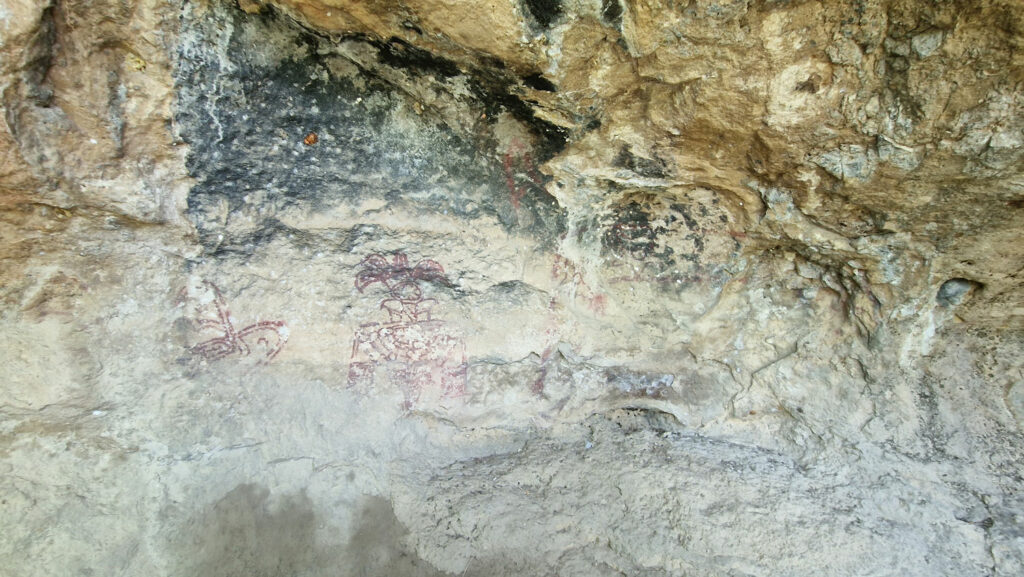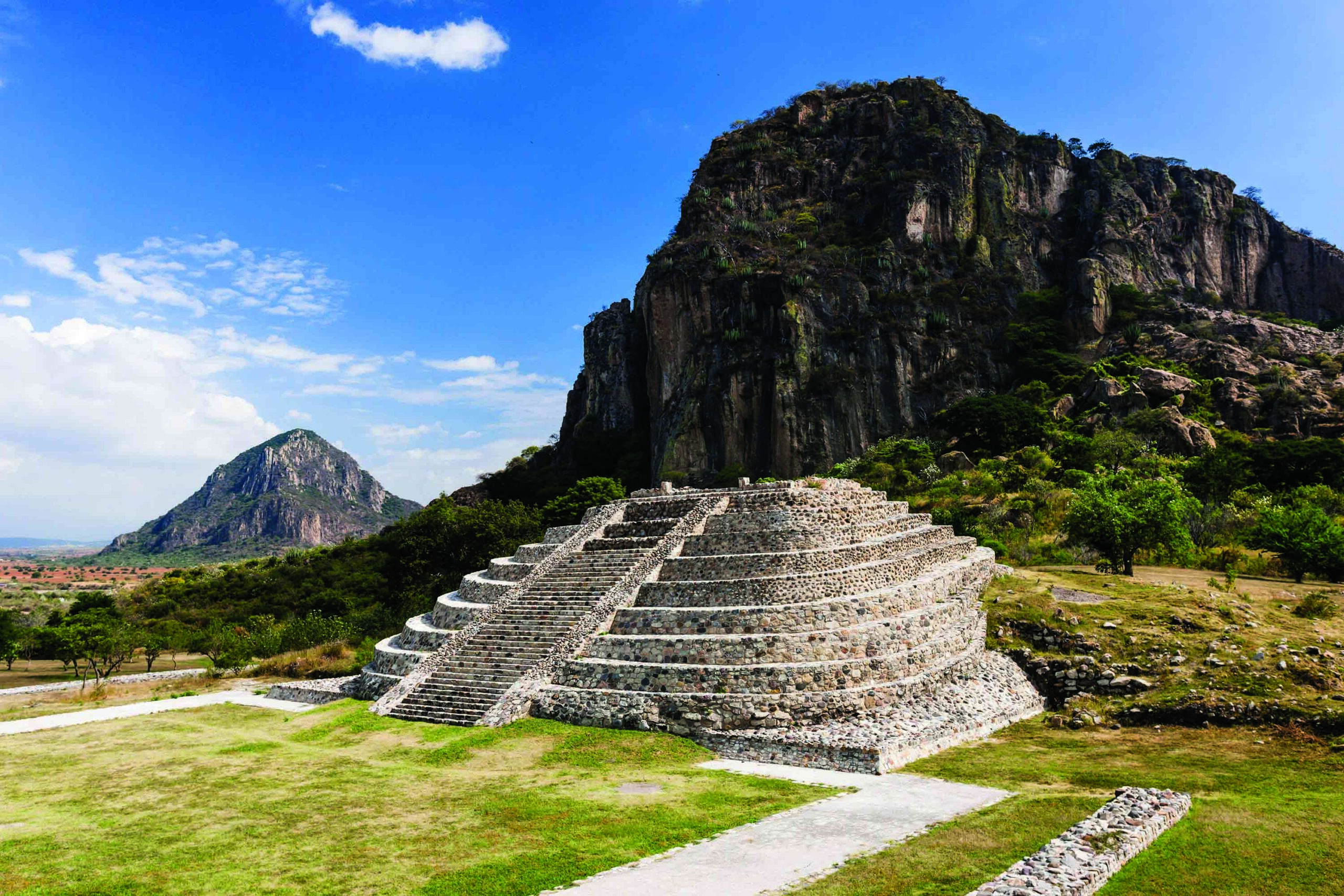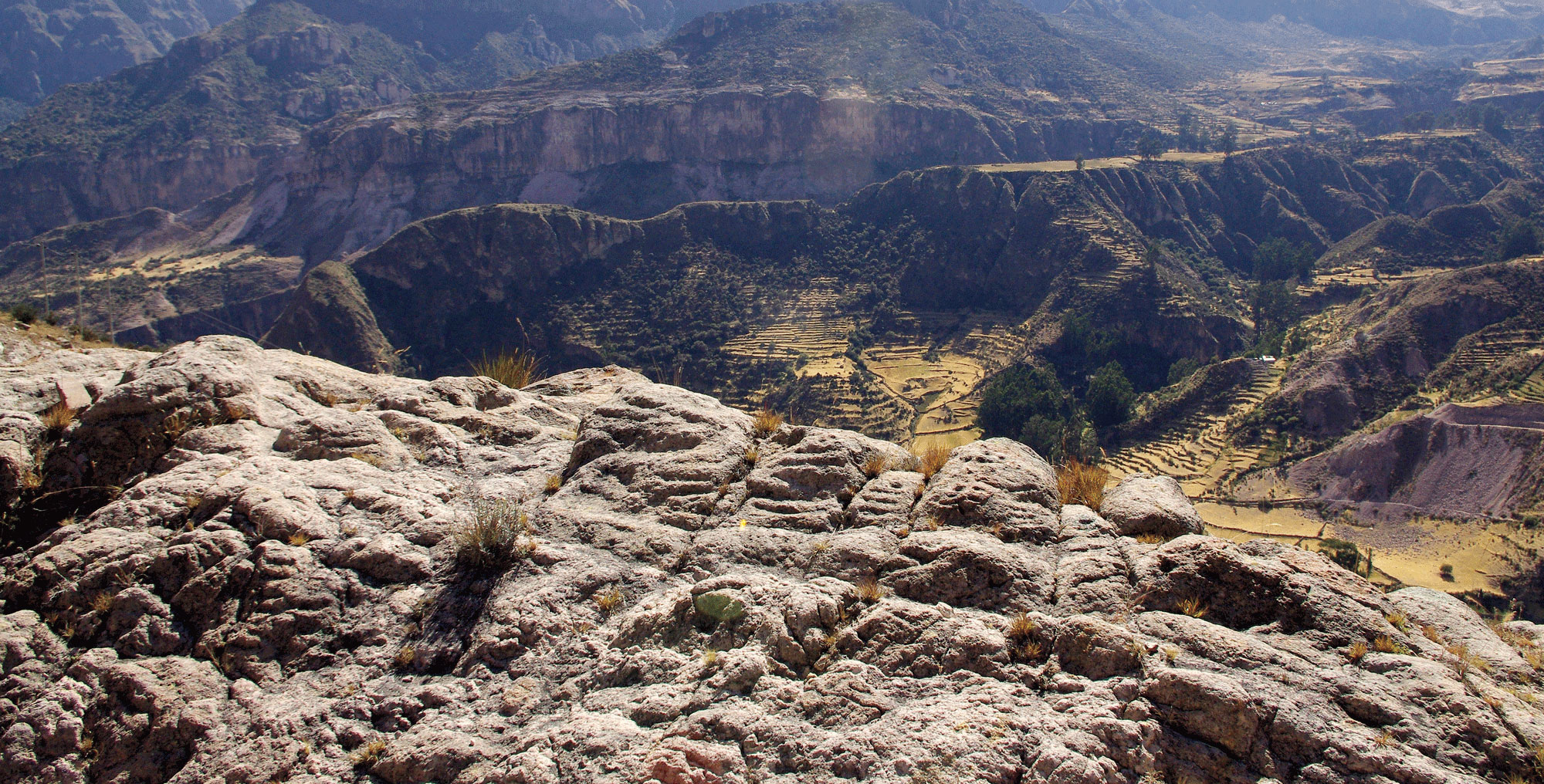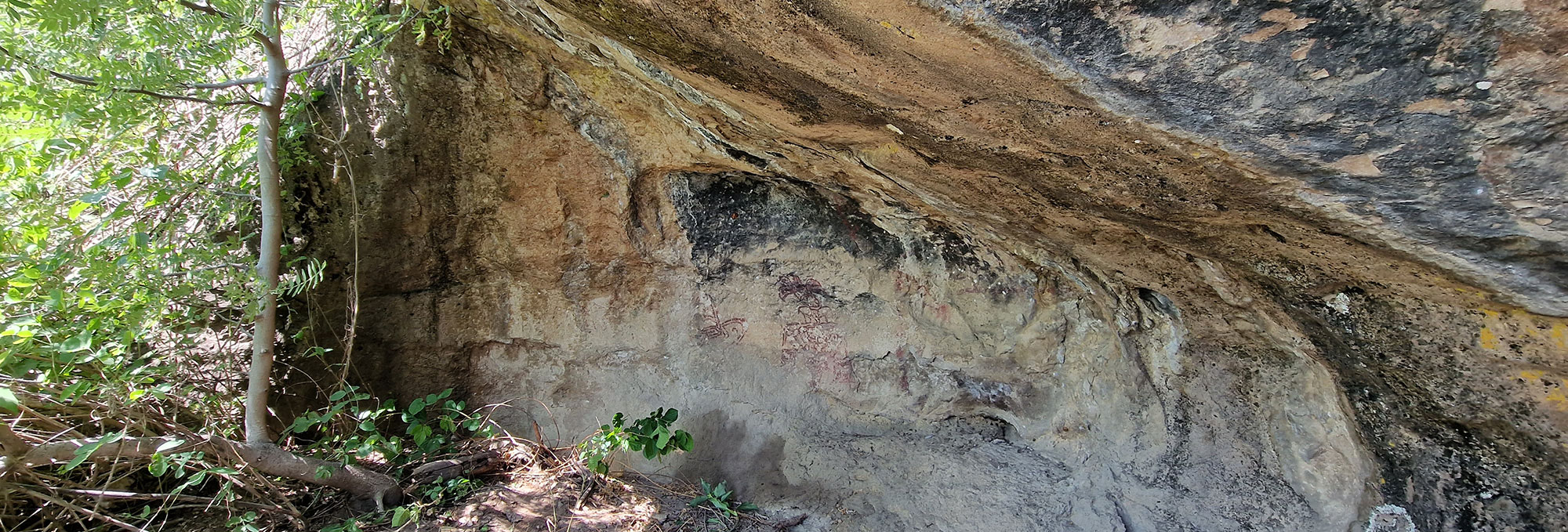
CHALCATZINGO, MEXICO—Phys.org reports that Christophe Helmke of the University of Copenhagen and his colleagues mapped a shallow cave on a cliff at the site of Chalcatzingo in south-central Mexico, where three glyphs were found in the 1980s. The red painted glyphs are thought to have been left by people from Teotihuacan who established settlements and carried out rituals in the region. The researchers also took detailed photographs of the glyphs and used digital photo enhancement software to get a better look at the paintings. Helmke said that one image features a stylized mountain flanked by speech scrolls, and may refer to a place name that means Singing Mountain. The same glyph appears in Teotihuacan, he added. The second glyph features items worn by Teotihuacan warriors, including a beaded necklace, a cloak, and a pointed dart. This glyph is therefore thought to refer to a warrior title. The third glyph, placed over a low bedrock shelf, consists of a rectangular frame with five-pointed stars. The cave walls and ceiling surrounding the shelf are blacked from fire, suggesting that incense or funerary bundles may have been burnt there. “We therefore hypothesize that this frame and the modified bedrock shelf served as the background and elevated base for a Teotihuacan pyrolytic ritual,” Helmke explained. The study of these three glyphs supports the idea that images found on buildings and pottery at Teotihuacan were part of a writing system, he concluded. “Teotihuacan writing can therefore no longer be dismissed or considered as a set of isolated or emblematic symbols,” he said. Read the original scholarly article about this research in Antiquity. To read more about the site, go to "Off the Grid: Chalcatzingo, Mexico."