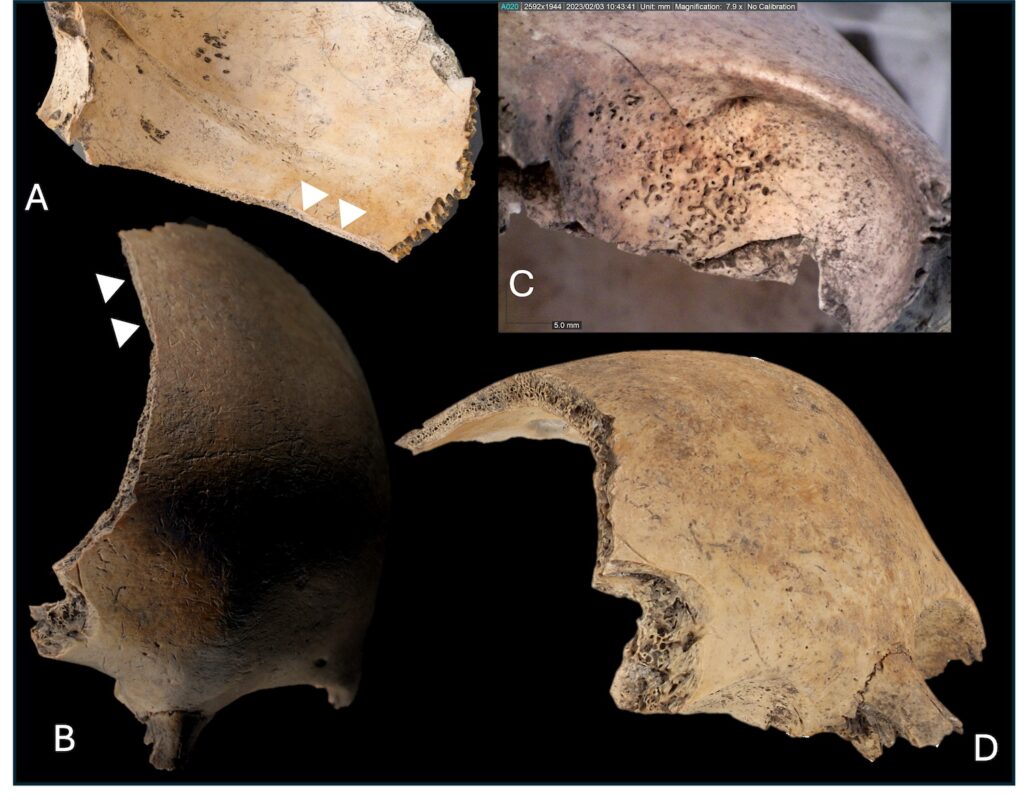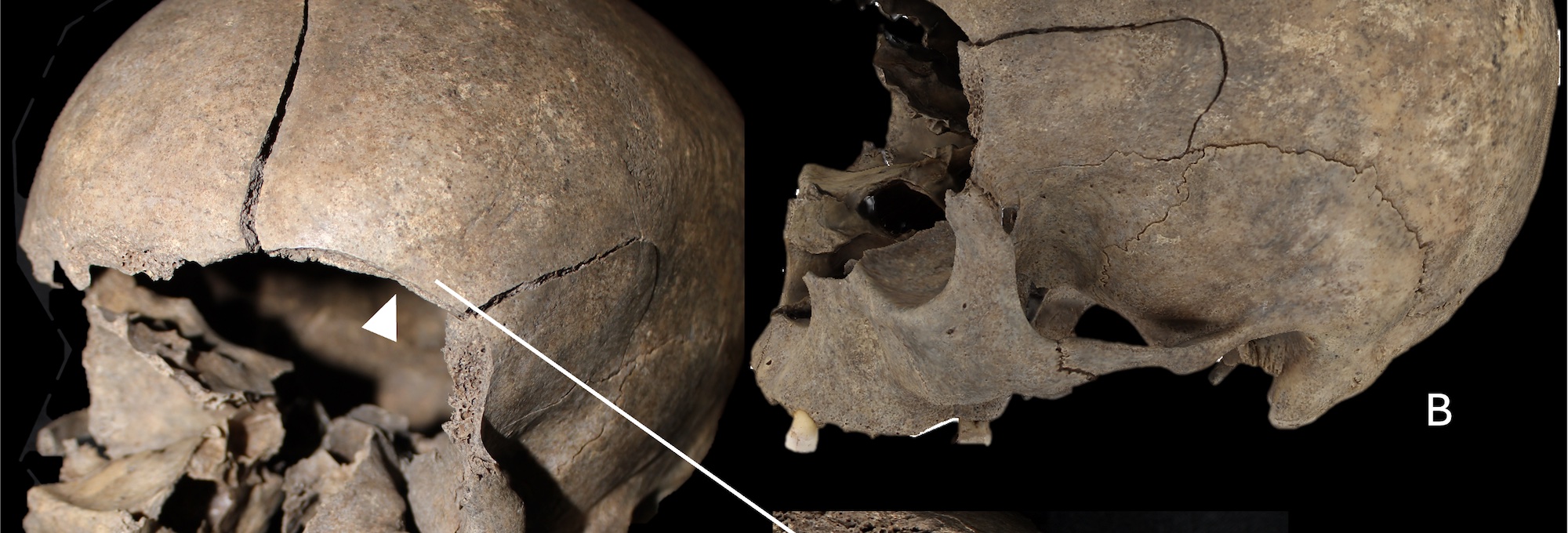
COPENHAGEN, DENMARK—Analysis of more than 190 bones from people who were buried in Scandinavia between about 500 B.C. and A.D. 1050 suggests that violent encounters increased over time, Live Science reports. The remains were interred in domestic areas, but it is not known if the violence occurred during domestic disputes, or as a result of warfare or some form of punishment. “The fact is that not all bodies ended up in monumental burial mounds in the Iron and Viking Ages, or even in more modest urnfields and cemeteries,” said Marianne Hem Eriksen of the National Museum of Denmark. Eriksen and her colleagues determined that at least 12 of the individuals in the study, including two women and a child, had been violently injured around the time of death. Six of them had suffered head trauma, while four had multiple injuries. For example, part of the skull of a child between the ages of two and four at the time of death was found in an Iron Age house in Denmark. Dating of the skull and the dwelling revealed that the child lived some 200 years before the house was built. The child’s skull was placed in the floor of a house where people continued to live, Eriksen explained. “The results show a much greater complexity in the everyday life and world of imagination of the time than we often attribute to Iron Age people,” she concluded. Read the original scholarly article about this research in the Journal of Archaeological Method and Theory. To read about ship burials of the Viking elite that have been uncovered throughout Scandinavia, go to "Setting Sail for Valhalla."