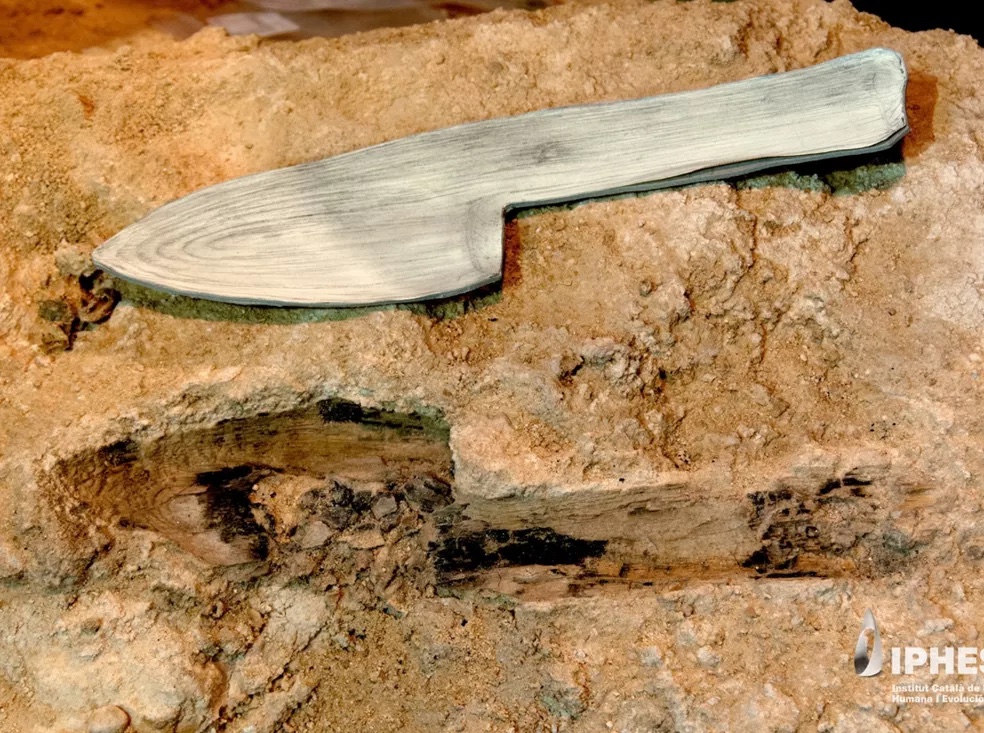

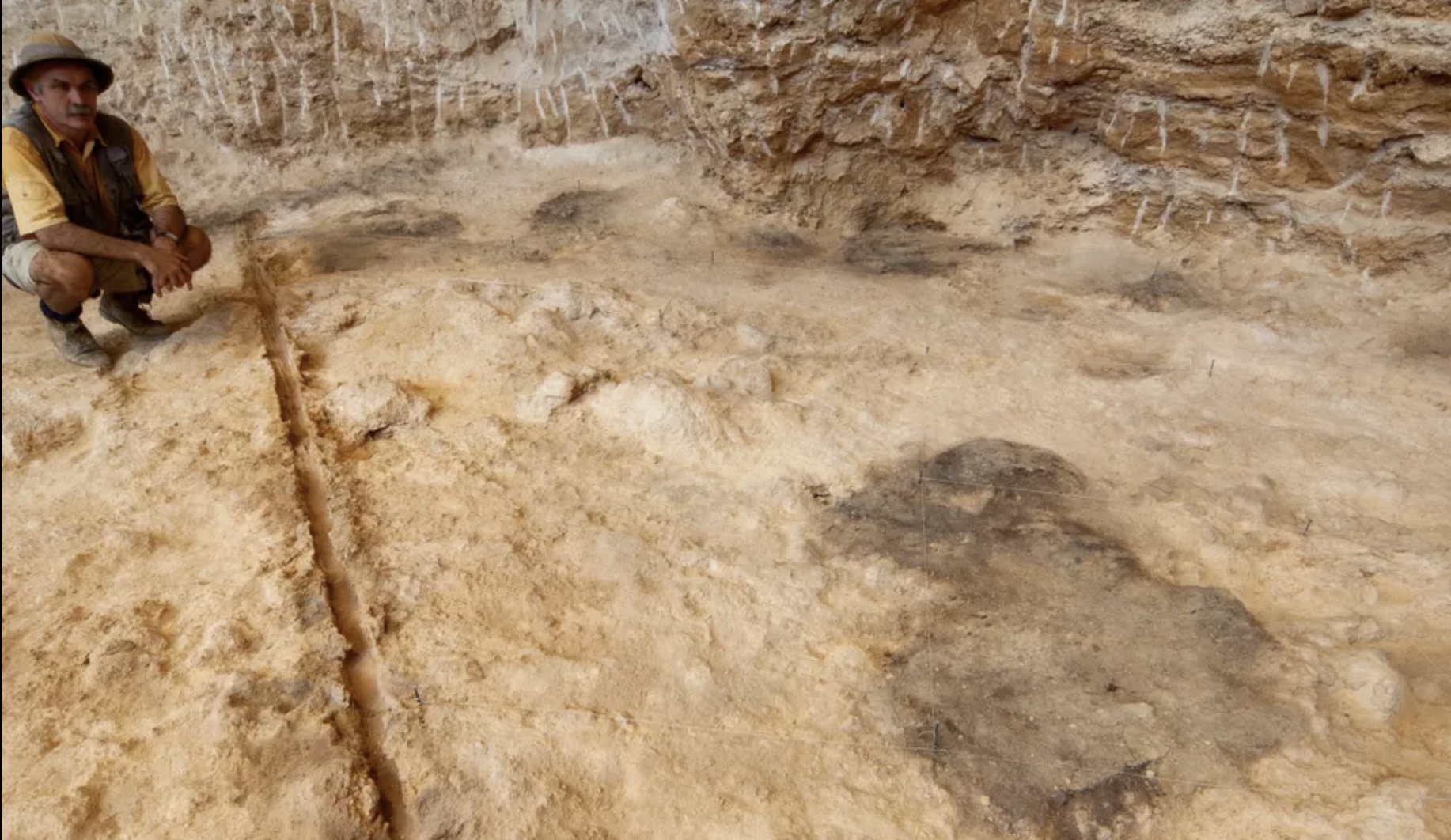
BARCELONA, SPAIN—La Brújula Verde reports that 13 impressions left in travertine in northeastern Spain's Abric Romaní rock shelter have been identified as wooden tools made by Neanderthals who lived in the region between 40,000 and 62,000 years ago. According to Palmira Saladié, Gema Chacón, and Josep Vallverdú of the Catalan Institute of Human Paleoecology and Social Evolution, the impressions were made when the wooden objects were coated with water rich in calcium carbonate. The wood eventually decayed but left a hollow in the sediments. In all, the rock shelter contains about 66 feet of sediments laid down over thousands of years. The objects were found in different layers of these sediments. Two spears were discovered in level R, the oldest of the layers excavated so far. One spear measured more than eight feet long, and was likely used for stabbing at close range. The other spear had broken into three pieces and may have been discarded. In level P, the researchers found an impression with a triangular head and a handle measuring about six inches long. Grooves on the surface of this possible club show that it had been shaped by scraping. Stone blades were also found in this level. In levels H and O, the researchers found four flat pieces of charred bark measuring between 12 and 22 inches long. The flexible juniper bark is thought to have been used as plates or shallow bowls, or scoops for picking up ashes. Straight sticks found on top of a hearth in level I are thought to have been part of a raised support that may have been used to cook food. A smooth pole in level N was surrounded by five hearths. This area may have been used as sleeping area, with the pole supporting a windbreak or small hut. Finally, thick sticks found in levels J and O may have been used to dig up roots and tubers, or to dig pits for hearths or waste disposal, the researchers explained. Read the original scholarly article about this research in Science Advances. To read about stone tools that the hominins made, go to "Neanderthal Tool Time."