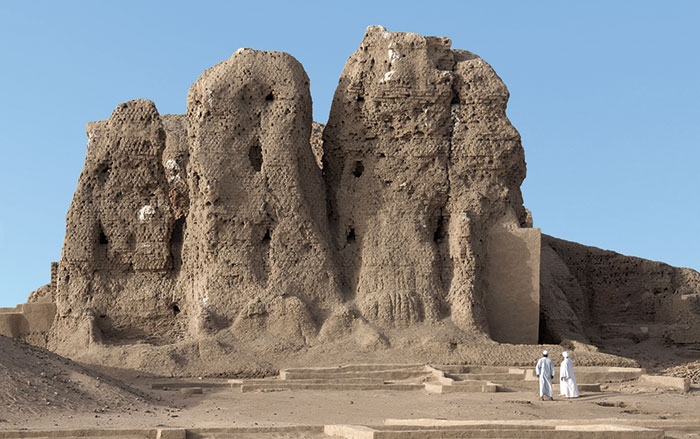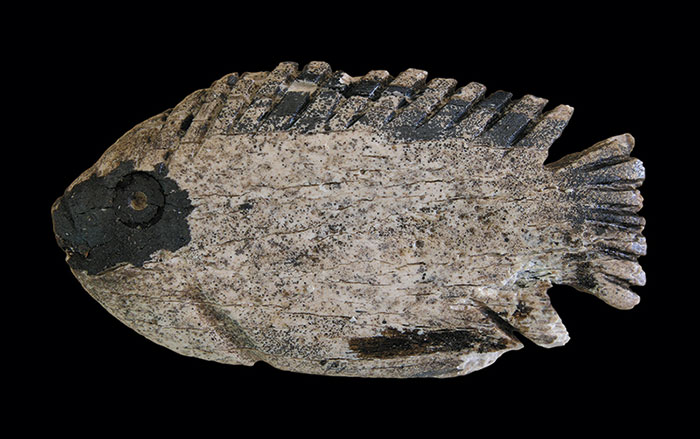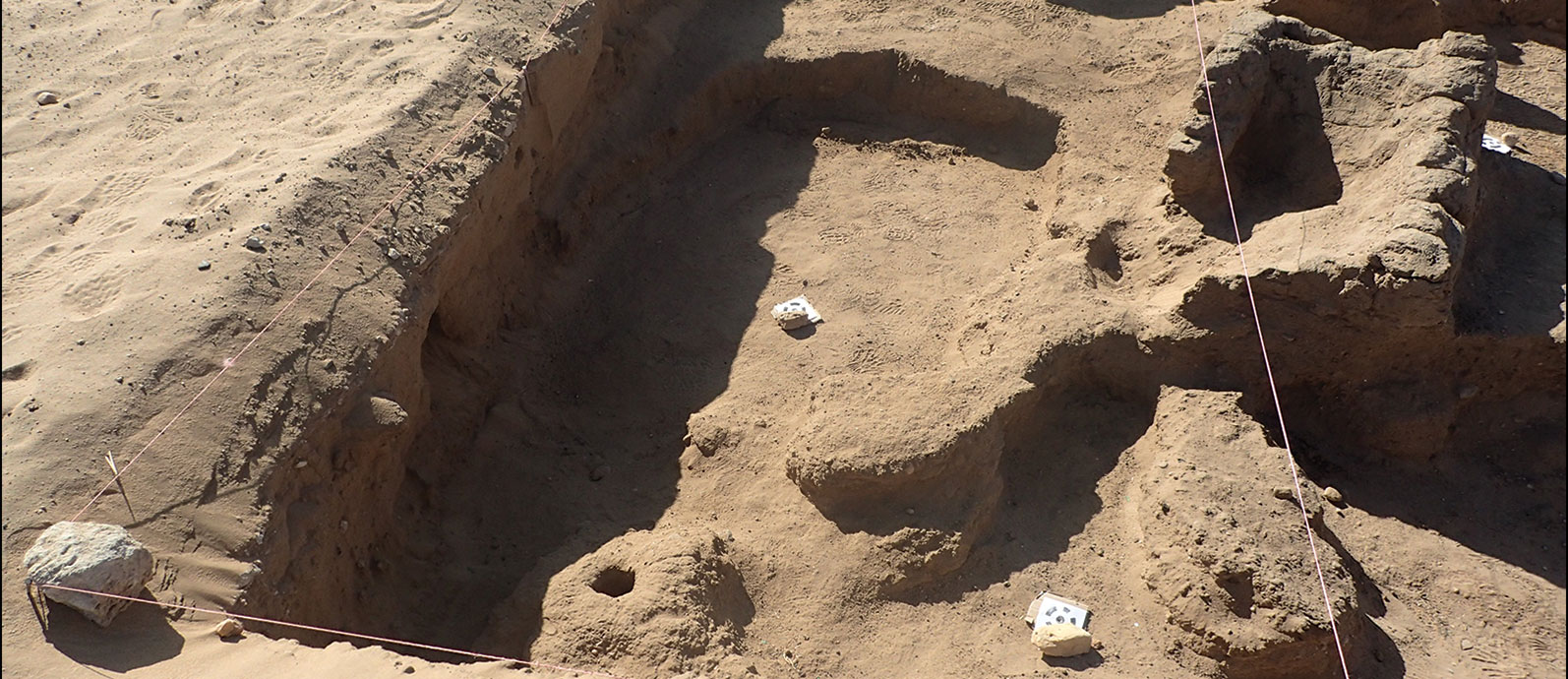
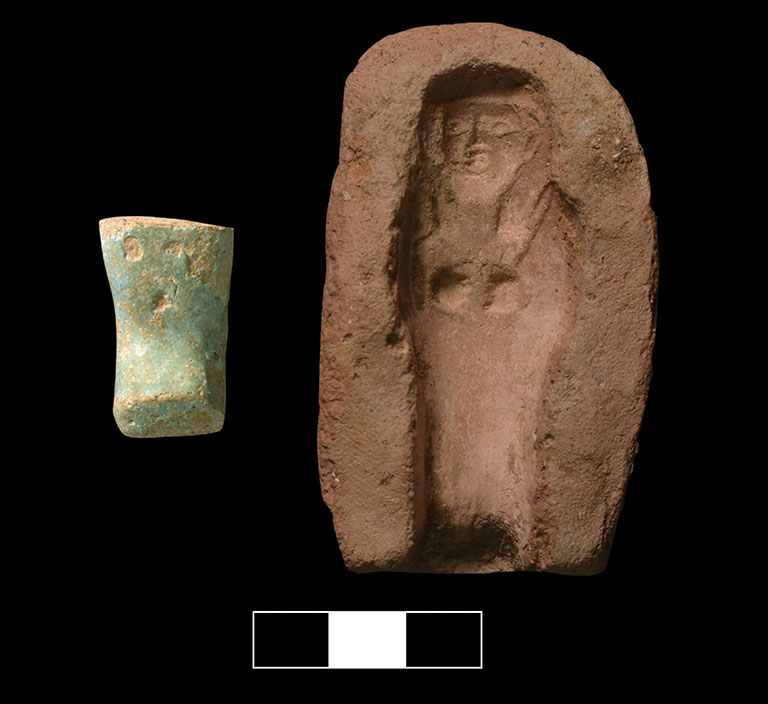
DURHAM, ENGLAND—According to a statement released by Antiquity, a faience workshop has been discovered at Sanam, a temple complex at the site of Napata, an ancient capital of the Kushite Empire in Nubia. The complex was built by Taharqo, the Kushite king who ruled from 690 to 664 B.C. Rennan Lemos of Durham University, Kathryn Howley of New York University, and their colleagues explained that faience workshops in Egypt were usually located on the edges of settlements because they produced noxious fumes and smoke. But in Nubia, temples were central to the state economy and royal authority. “This evidence demonstrates that Sanam Temple was not simply a religious monument but also a center of state-controlled production,” Lemos said. “The workshop produced faience objects associated with royal power, including shabtis destined for the royal cemetery at Nuri,” he explained. The study also determined that Kushite craftspeople used local materials to produce faience. The researchers suggest that although the Kushites may have adopted some Egyptian cultural practices, they developed their own technologies and social and political strategies to adapt them to use in Nubia. Read the original scholarly article about this research in Antiquity. To read about Nubia’s island of temples, go to “When Isis Was Queen.”