
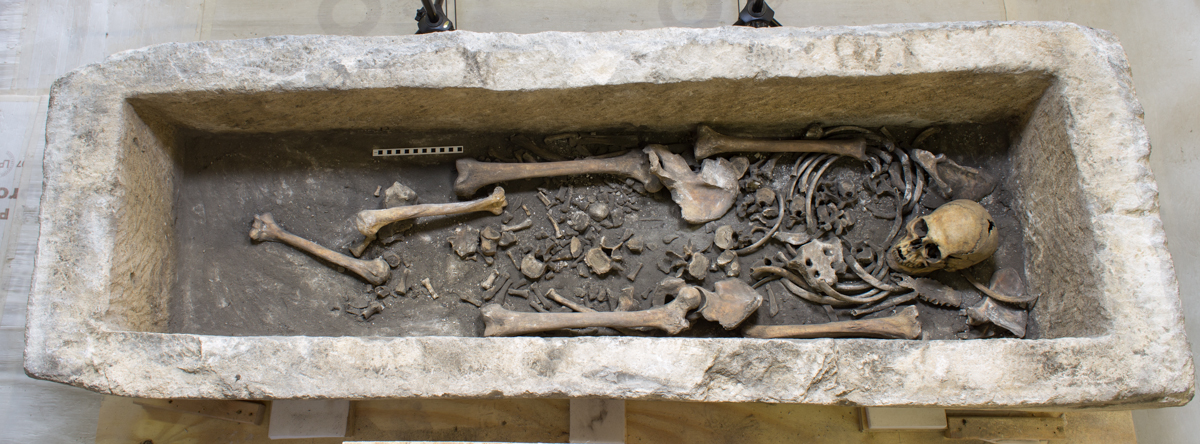
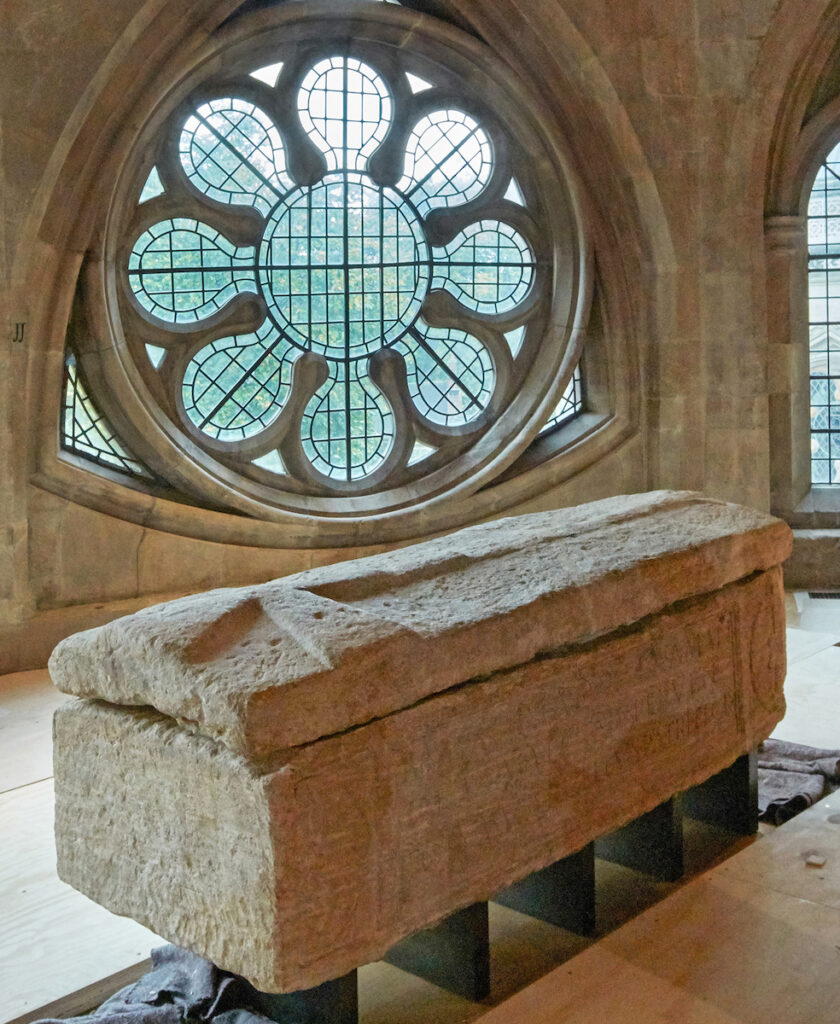
LONDON, ENGLAND—According to a statement released by Taylor & Francis, human remains found in a Roman sarcophagus at Westminster Abbey in 1820 may have been identified by Warwick Rodwell, consultant archaeologist at Westminster Abbey. The sarcophagus is inscribed with the name of Valerius Amandinus, a wealthy Briton who lived between about A.D. 300 and 400. A Latin cross dated to the tenth or eleventh century is also inscribed on the lid of the sarcophagus, however, suggesting that it may have been reused during the medieval period. In fact, radiocarbon dating of the bones has revealed that the person died during the late Saxon period, between A.D. 987 and 1052. Rodwell suggests that the remains could belong to Aelfwig, who died around A.D. 1020 after serving as abbot of the Benedictine monastery at Westminster Abbey, or Wulnoth, who succeeded Aelfwig as abbot and died in 1049. “We have two viable contenders for the occupant of the sarcophagus,” Rodwell said. Analysis of the bones, conducted by James Young Langthorne of Pre-Construct Archaeology, indicates that the man stood about five feet, nine inches tall, and was between 35 and 49 at the time of death. Recent study of the burial also examined a white residue marking out a rectangular structure within the sarcophagus. “Although no physical traces of that feature remained, it can only have been a timber coffin, which has completely decayed over the course of the seven centuries that the sarcophagus was buried in the sacristy courtyard,” Rodwell said. The white substance has been identified as lime sprinkled over the remains at the time of burial. Read the original scholarly article about this research in the Journal of the British Archaeological Association. To read about 700 years of English history at the site, go to “Westminster Abbey’s Hidden History.”