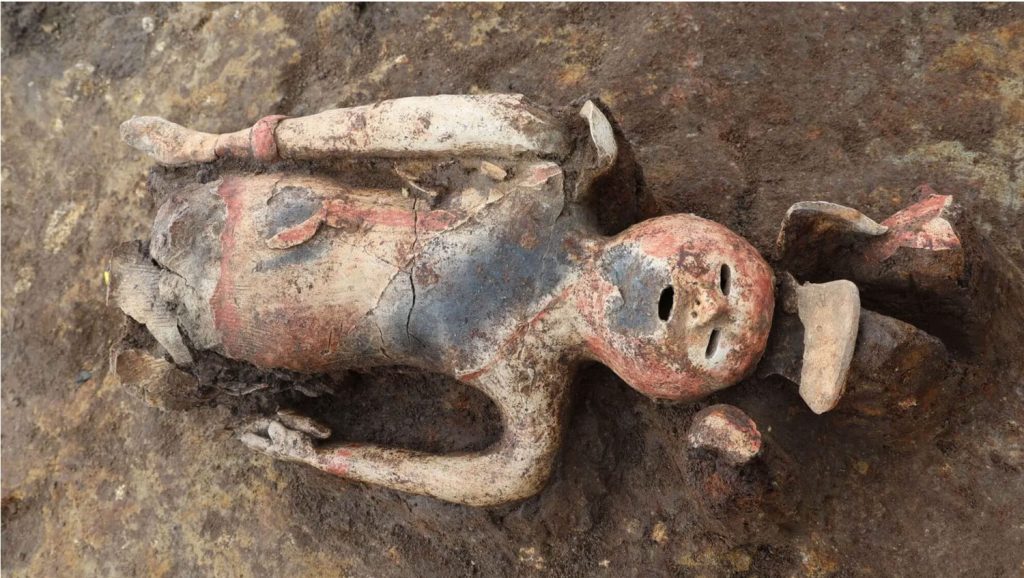

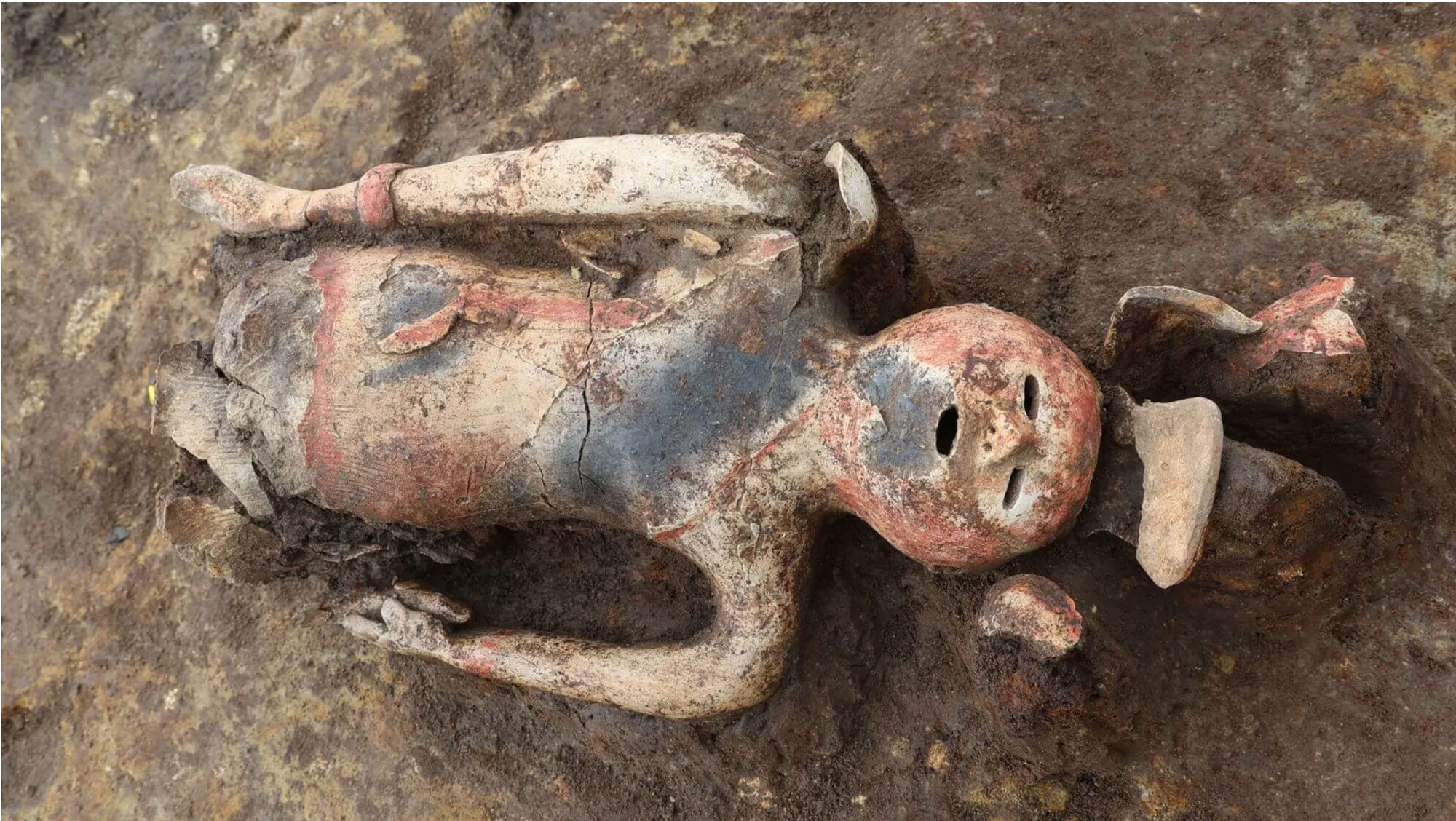
GUNMA PREFECTURE, JAPAN—According to a Live Science report, the head and torso of a clay figurine thought to represent a female shaman, or miko, has been discovered in the moat at a fifth-century burial mound at the Nishikaminomiya archaeological site on the Japanese island of Honshu. The surviving pieces of this figurine measure about 16 inches long. Styled with a prominent nose and carefully molded fingers, the figurine was identified by its traditional Japanese topknot hairstyle, bracelets made of clay and red pigment, a red sash painted on the torso, and a rod-shaped implement in one hand. Similar figurines, called haniwa, have been found in other burial mounds, or kofun, which lend their name to the imperial Kofun period (A.D. 300–700). Haniwa are thought to have been used as offerings to the dead, and were sometimes believed to contain the souls of the deceased. A miko in particular was believed to bridge the gap between the human and spiritual realms. Researchers posit that this miko was originally placed near a boat-shaped sarcophagus found in the large mound. But, over time, it slipped down the hill and landed in the moat. The haniwa is now housed at the Gunma Prefectural Archaeological Research Center Museum. To read about the largest known wooden haniwa, go to “Around the World: Japan.”