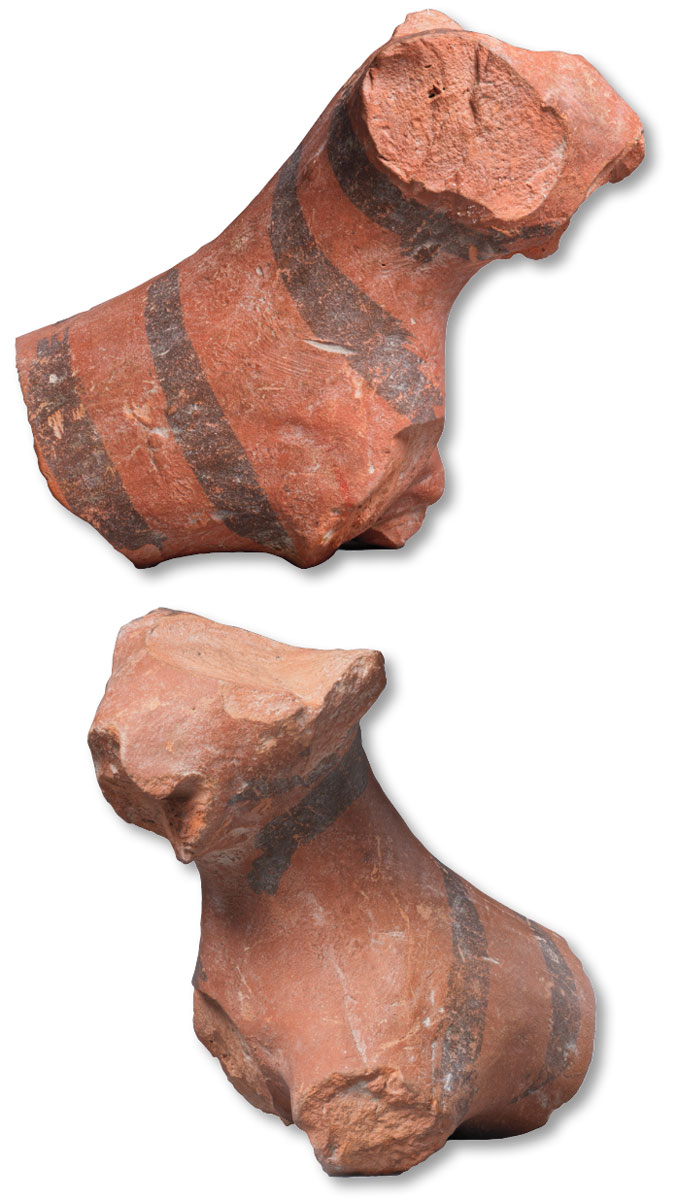
What is it?
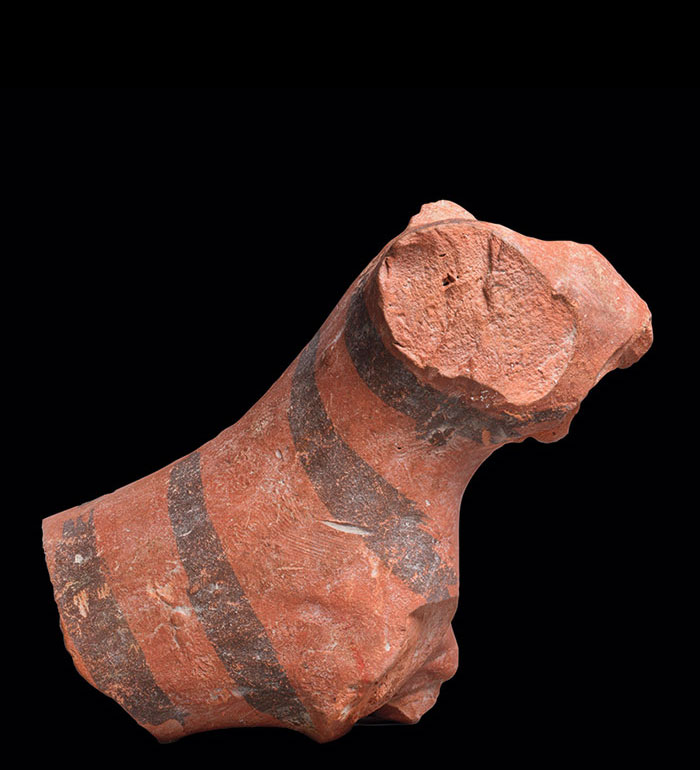
Figurine (two views)
Material
Ceramic
Culture
Copper Age Iran
Date
Ca. 3500–3100 b.c.
Dimensions
3.14 inches long and
2 inches tall
Found
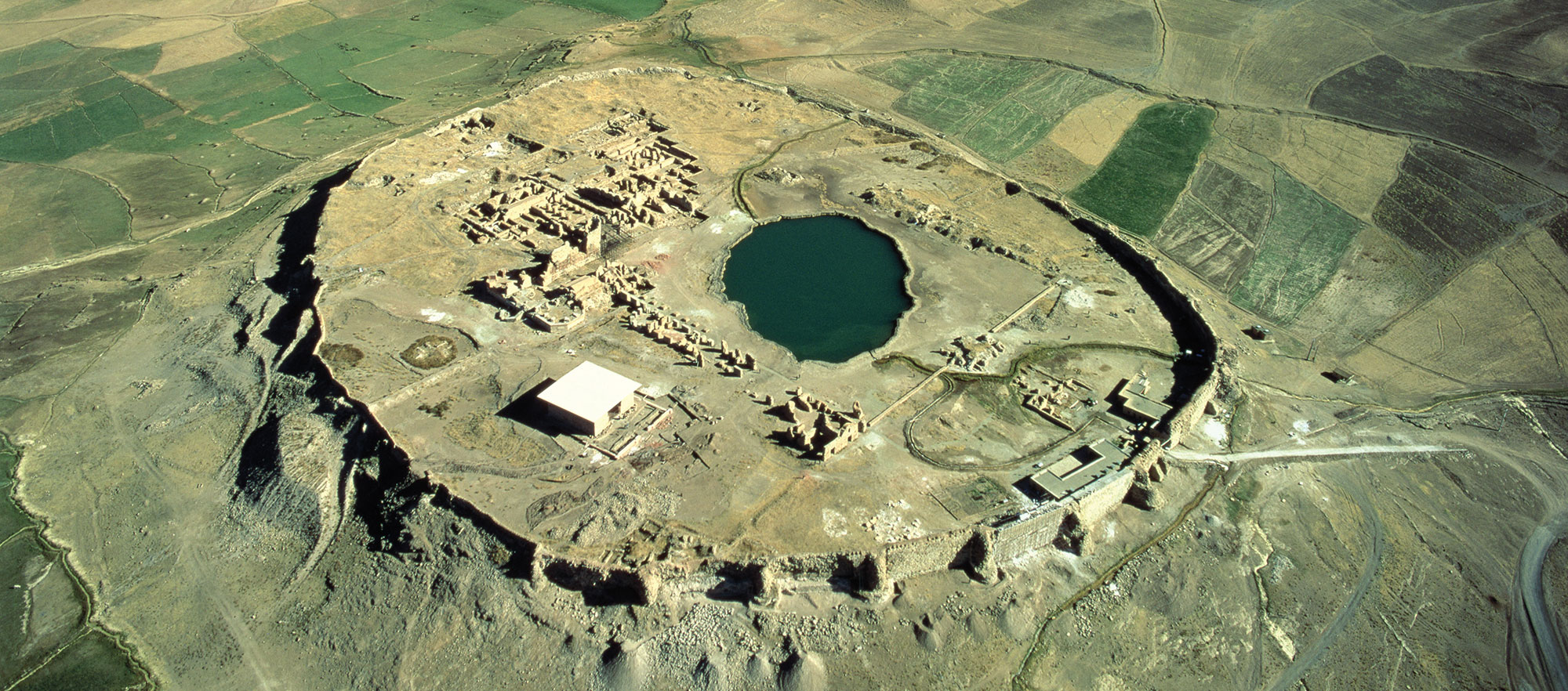
Yarim Tepe, Iran
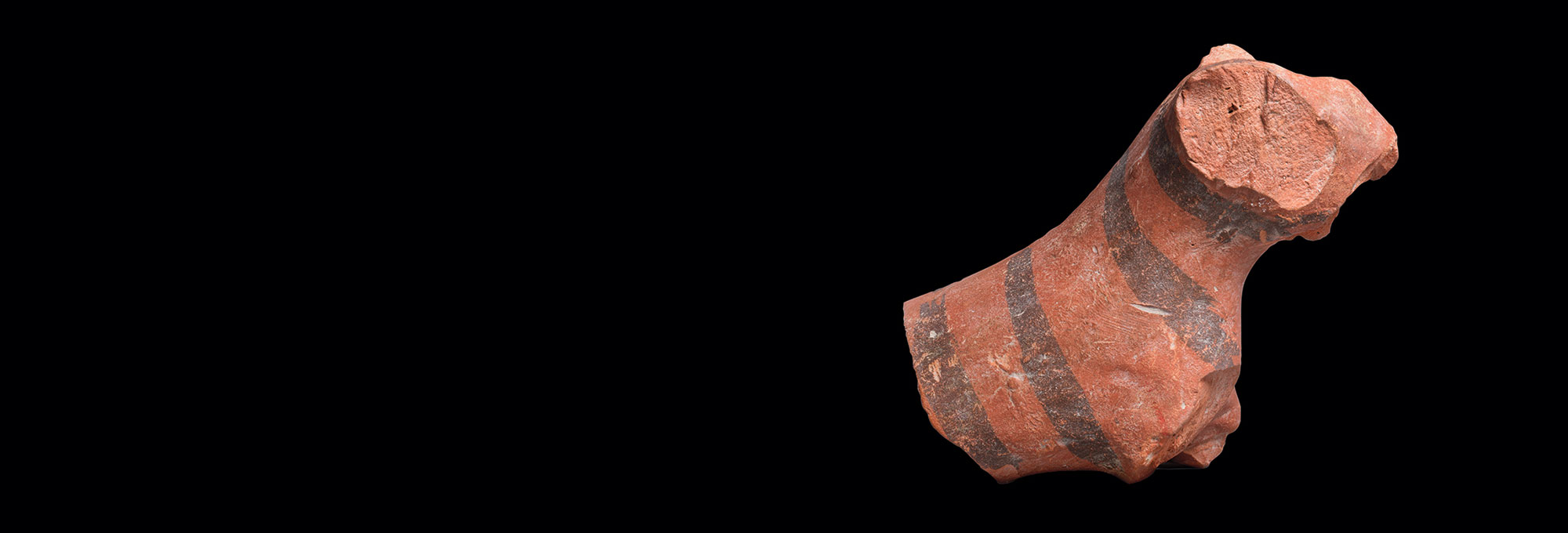
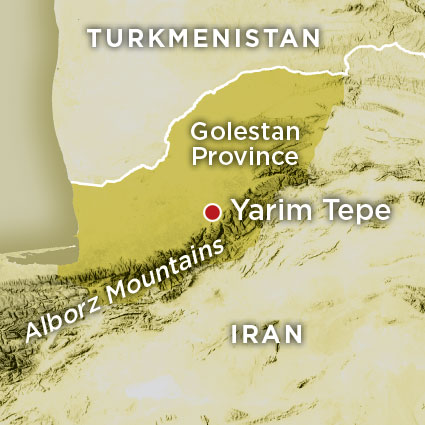
The last Caspian tiger in northeastern Iran’s Golestan Province was seen in the 1950s, and the subspecies was declared extinct in the early 2000s. These fearsome animals once freely roamed the region’s Alborz Mountains, and until recently the earliest known depictions of Caspian tigers dated to the Sasanian period (a.d. 224–651). Archaeologist Henry Colburn of Bryn Mawr College has now come across this small figurine excavated in 1960 at the Copper Age site of Yarim Tepe—which dates to more than 3,000 years earlier. “Animal figurines are common enough in this period in Iran, but they usually depict herbivores such as sheep and goats,” Colburn says. “If they’re painted, it’s with spirals or straight, even lines that look like they’re just decoration. You can see that this figurine’s stripes aren’t evenly spaced and that they align with the contours of its body, just the way a real tiger’s do.”
Surely, at least some of Yarim Tepe’s residents had seen a Caspian tiger in the wild, but what inspired them to create this unusual figurine is difficult to say. No representations of tigers have yet been found at any contemporaneous site. Several additional figurines from Yarim Tepe, however, have recently been identified as representing these formidable felines. All of the tiger figurines were made from the same type of orange clay used to create the rest of Yarim Tepe’s pottery, and the material’s hue may have inspired artists to craft something different from the usual farm animal. “They must have recognized that the clay, which was the same color as the pot on their table, was also right for a tiger—and their imagination came alive,” says Colburn. “Perhaps they wanted to make something special that showed an unusual animal that was local and meaningful to them. Maybe this was how they could encounter a tiger in a way that was controlled and safe, but also, perhaps, a little magical.”