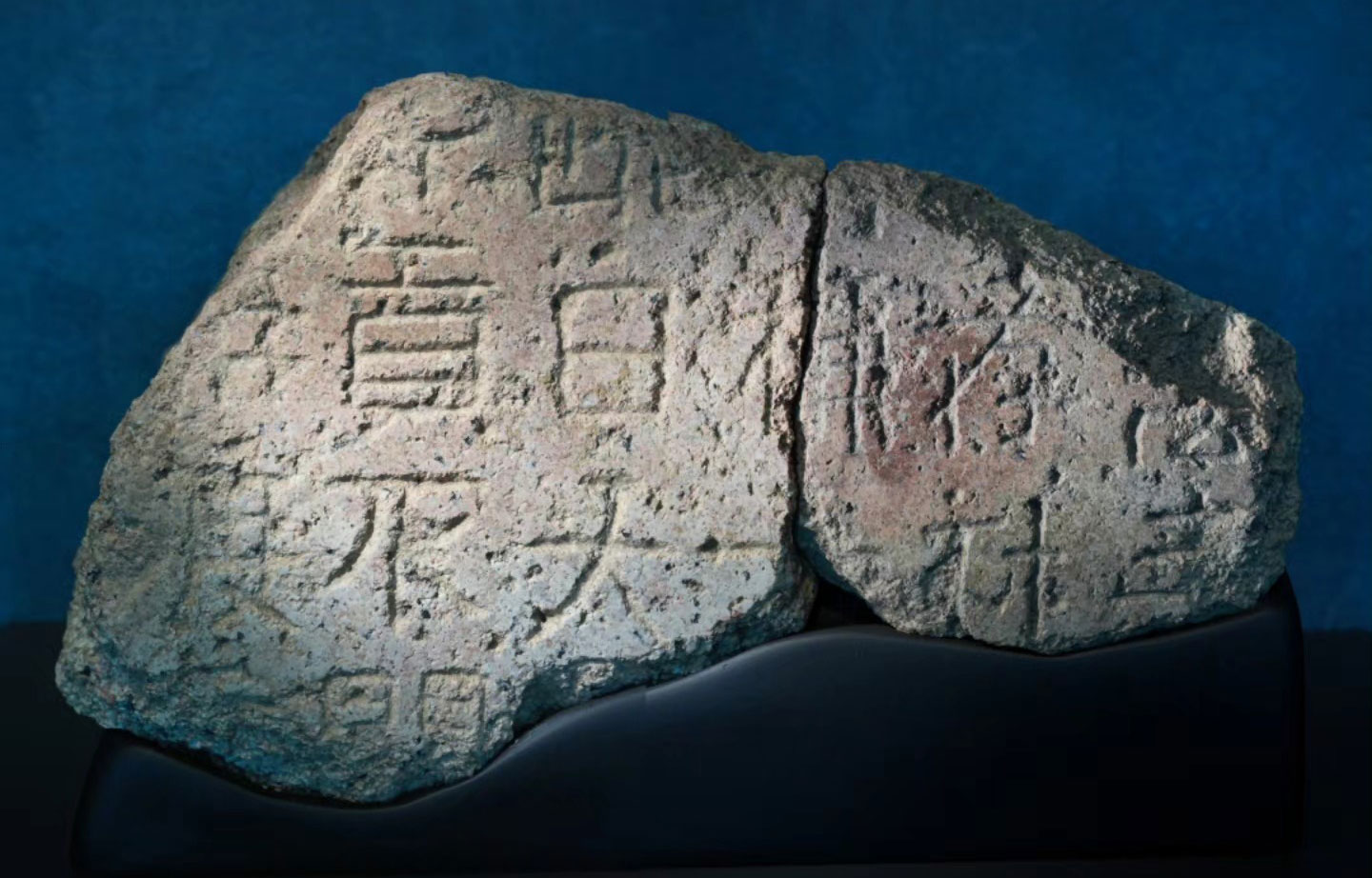
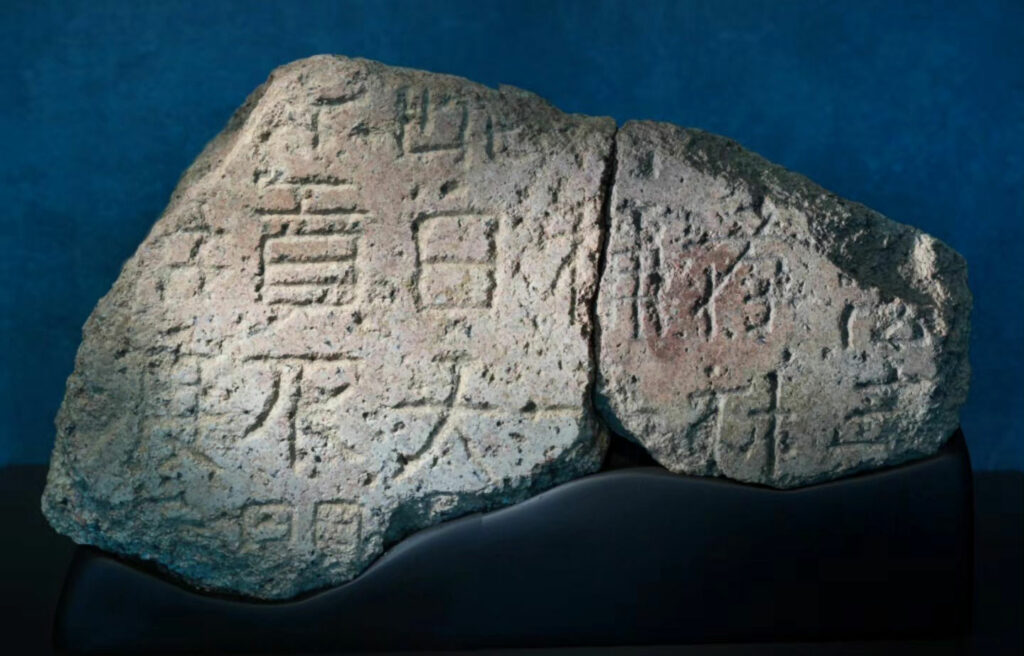
GYEONGJU, SOUTH KOREA—Korea JoongAng Daily reports that an inscribed fragment of stone discovered in 1937 at the Wolseong Palace in southeastern South Korea—and another, larger fragment discovered in 2020—belong to the same stele. The smaller fragment, found in the western section of the palace, has been housed at the Gyeongju National Museum. The second fragment was also uncovered in the western section of the palace, in a water-filled protective ditch. Analysis of the stones showed that they are both alkali granite quarried from Namsan Mountain in Gyeongju. Researchers fit the pieces together digitally using detailed 3D scans. The fragments are thought to have come from the center of a large stele. Part of the inscription, written in a clerical script of Chinese characters, can now be read as “to call” or “to name.” The stele has been dated to the Silla Dynasty (57 B.C.–A.D. 935). Some scholars suggest that the script could link the stele to a fifth-century monument from the ancient kingdom of Goguryeo. “We hope additional fragments will be discovered to help reveal more about the identity of this stele,” said Kim Hyeon-hee of the Gyeongju National Museum. To read about clay figures recovered from the palace, go to "Doll Story."