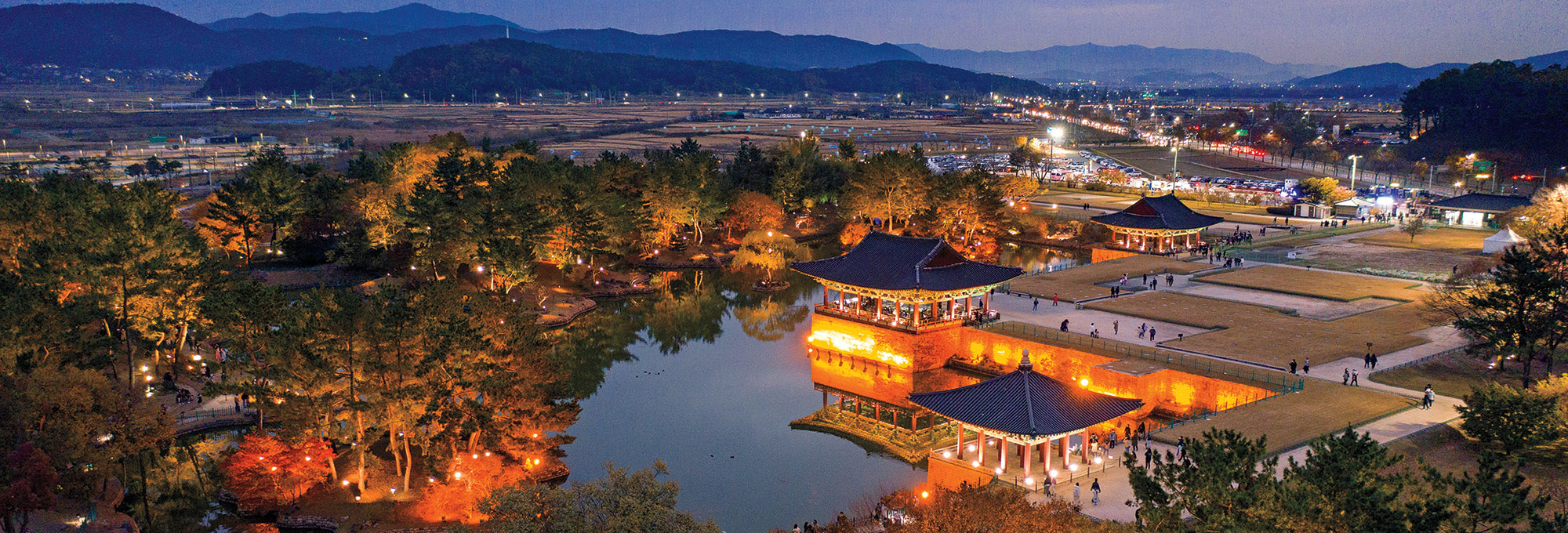
Today, Gyeongju is a small city two hours southeast of Seoul by train. For nearly a millennium, however, it was the seat of the Silla Kingdom (57 b.c.–a.d. 935) and became one of Asia’s most glorious capitals. Gyeongju still boasts Silla-era Buddhist temples, royal tombs, fortresses, covered bridges, and Asia’s oldest surviving astronomical observatory. A complex known as Donggung Palace and Wolji Pond, which was built in the time of King Munmu (reigned a.d. 661–681), has particularly excited archaeologists. “So many significant archaeological features and artifacts have been discovered,” says archaeologist Gyeong-yeol Kim of the Gyeongju National Research Institute of Cultural Heritage.
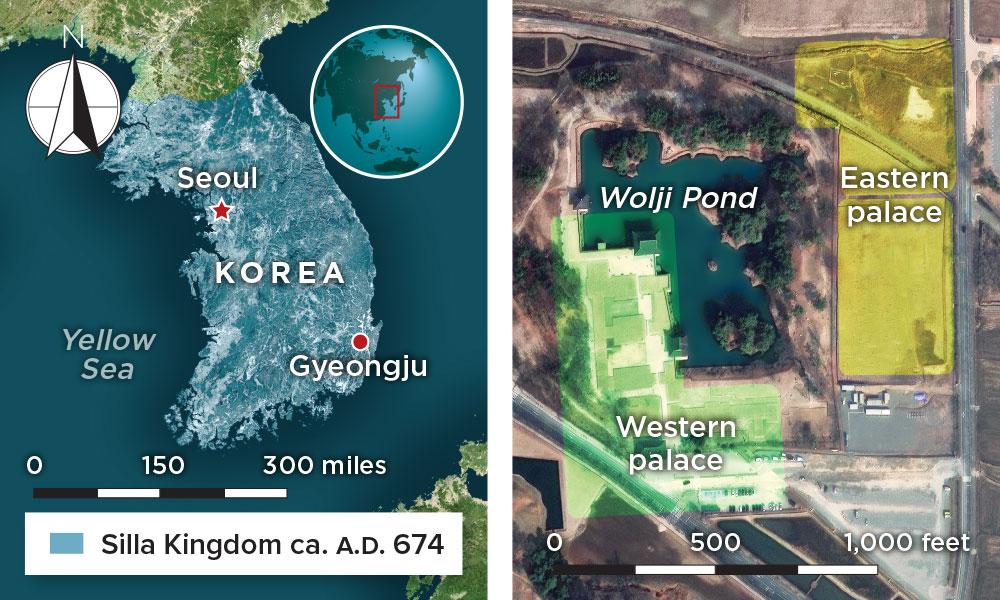
According to historical sources, Wolji Pond was created in a.d. 674, and the palace was constructed five years later, shortly after Munmu expanded Silla territory to encompass the entire Korean Peninsula. Nearly 20 years of excavation of the complex has brought a new understanding of Silla architectural techniques and engineering capabilities. The area around the site is at frequent risk of flooding. Archaeologists have determined that builders installed massive earthworks to raise and support the palace, and that numerous ponds likely helped drain the area. “It’s not easy terrain for people to develop and inhabit,” says Kim. “The most surprising thing to me was realizing the sheer scale of the architectural planning for the palace, as well as the immense amount of labor that must have been poured into it.” Kim’s recent investigations have led him to believe that the complex included not just one palace, but two. Donggung translates to both “east palace” and “crown prince,” suggesting to Kim that structures east of Wolji Pond functioned as a princely residence. A compound west of the pond, by contrast, was built on artificial ground raised five feet higher than the eastern palace, giving it a better view. In Korean architecture, the number of kans—spaces between pillars—was a measure of importance. The main building on the western side had seven kans on its long side, whereas the main building on the eastern side had only five. Kim believes that the king used the western palace to administer state affairs and that he hosted banquets and entertained foreign envoys alongside Wolji Pond.
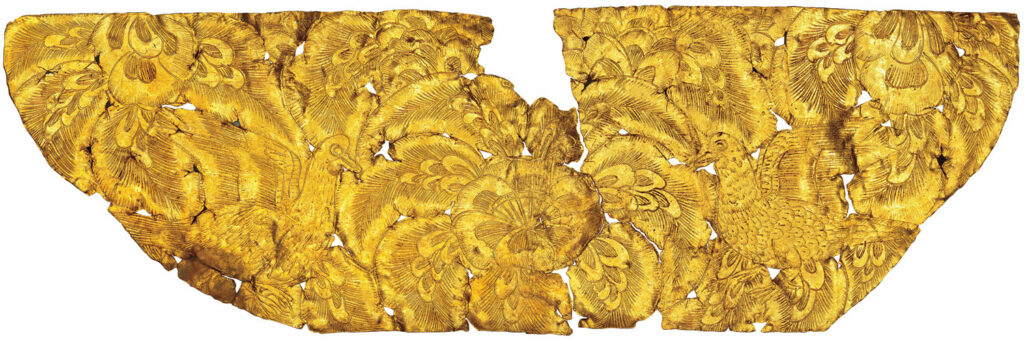
The builders of the prince’s palace did not skimp on decor, comfort, or pleasures. Archaeologists have found thousands of ornamented roof tiles, Buddha statues, bronzeware, and a 14-sided wooden die used to assign penalties in drinking games—“do a dance,” “drink three cups,” and so on. A piece of gold foil, engraved with birds and flowers, nods to Buddhist art by evoking nature and perhaps even incorporates cultural influence from faraway Persia, where similar motifs were in vogue. A semi-flush toilet—its user or an attendant poured water to banish waste down a drain—provides a glimpse of everyday life in the palace.
THE SITE
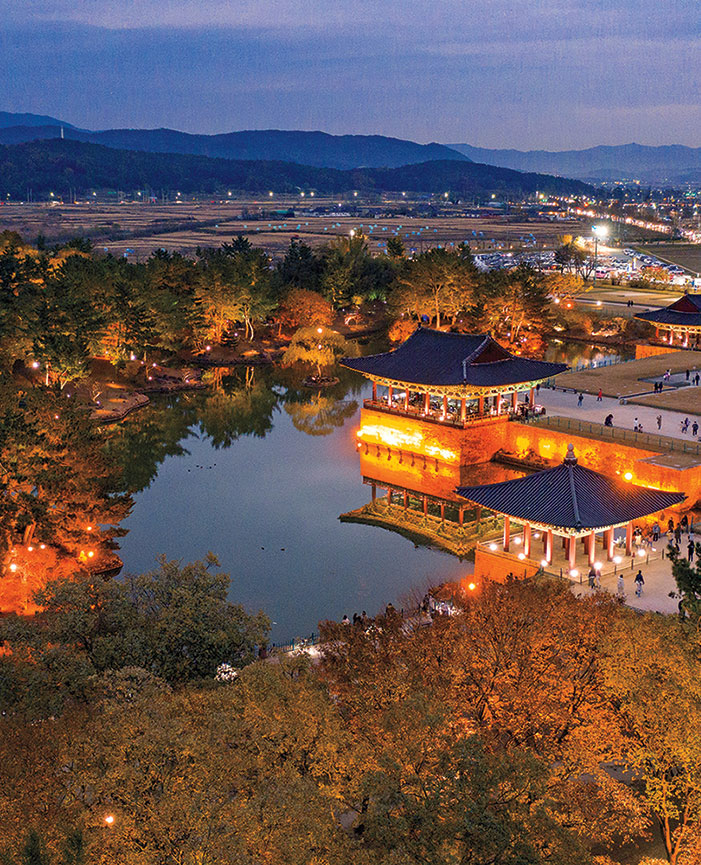
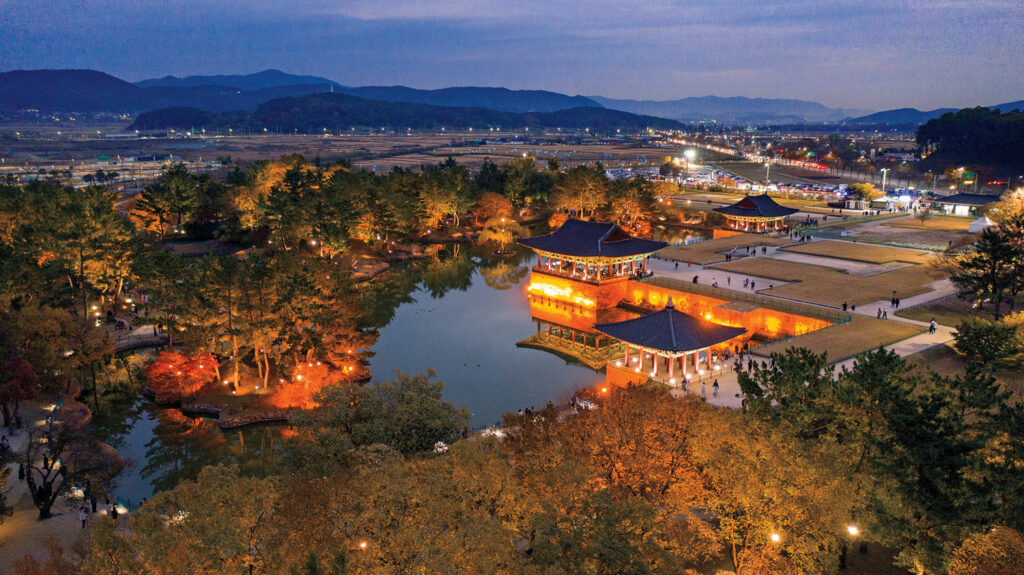
Only foundations of the Donggung palaces survived into the twentieth century, as the buildings had been constructed from wood. In 1981, pavilions, terraces, and gardens were rebuilt on the western side of Wolji Pond, allowing visitors to experience the grandeur of the Silla Kingdom’s architectural marvels. The site is especially enchanting at night, when lights around the pond create brilliant reflections in the water.
WHILE YOU’RE THERE
Across the street from the site’s parking lot is Wolseong Palace, which was built in the second century a.d., according to a medieval historian. It transports visitors back to a much earlier era of Silla rule. The Gyeongju National Museum is a short bus ride from Donggung Palace and houses many of the finest artifacts found at the site. It also displays other Silla masterpieces such as a 12-foot-tall bronze bell inscribed with Korean calligraphy and with reliefs depicting lotus flowers and nymphlike spirits.