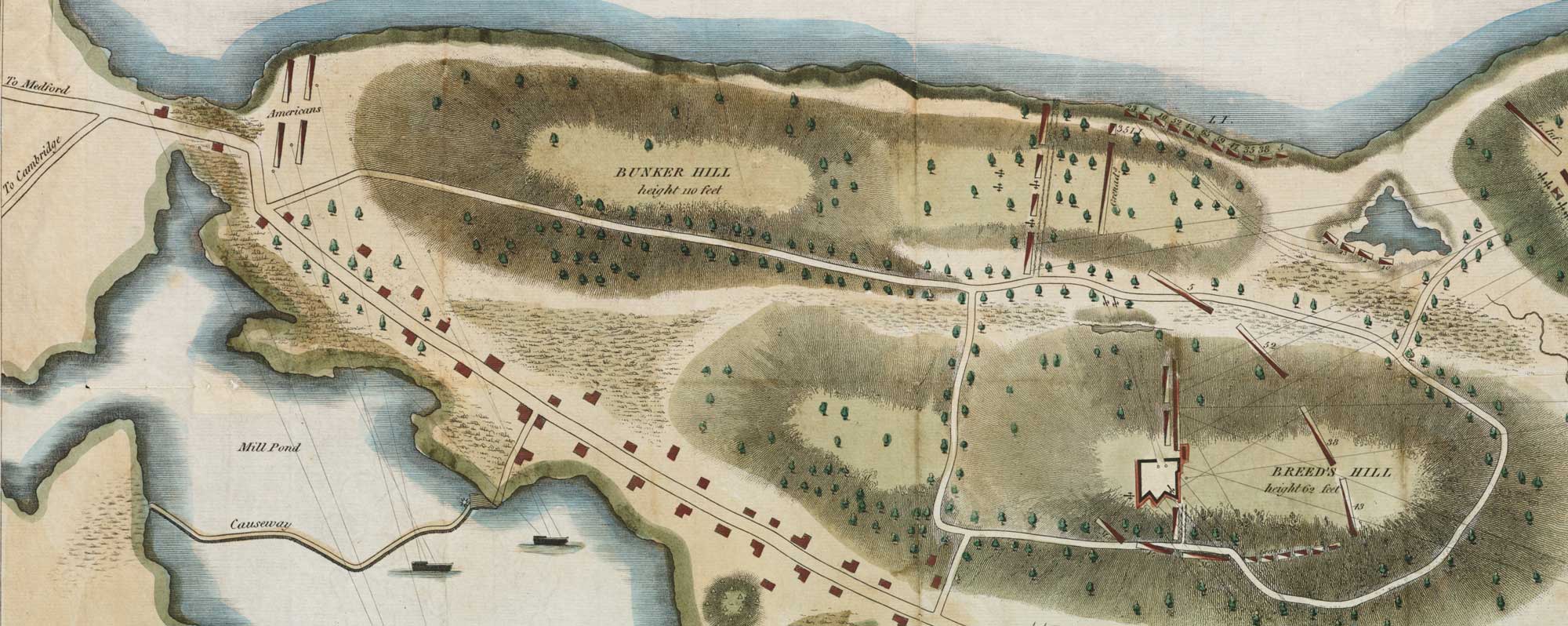

BOSTON, MASSACHUSETTS—According to an Associated Press report, an excavation conducted at Breed's Hill, the site of the Battle of Bunker Hill, has uncovered the outline of an earthworks, eight musket balls, and parts of a musket. The earthen walls were quickly built by Americans to slow advancing British forces who occupied Boston in June, 1775. Joe Bagley, city of Boston archaeologist, said that potential locations for the fort were identified with ground-penetrating radar, and the presence of a defensive ditch some three feet deep and six feet wide was confirmed through excavation. American soldiers piled soil from the ditch to form a six-foot-tall square fortification stretching about 150 feet long on each side. Although about 150 people were killed in the fighting, but no human remains have been recovered. The recovered musket balls had been fired by both armies, added battlefield archaeologist Joel Bohy. “You can see the ramrod mark from when the soldier rammed it down,” Bohy said. Tea cups, tobacco pipes, sleeve buttons, and a wig curler found in the ditch are thought to have been left behind by British troops who stayed in the area after the battle. To read in-depth about townspeople who lost everything in the conflict, go to "Letter from Boston: In the Shadow of Bunker Hill."