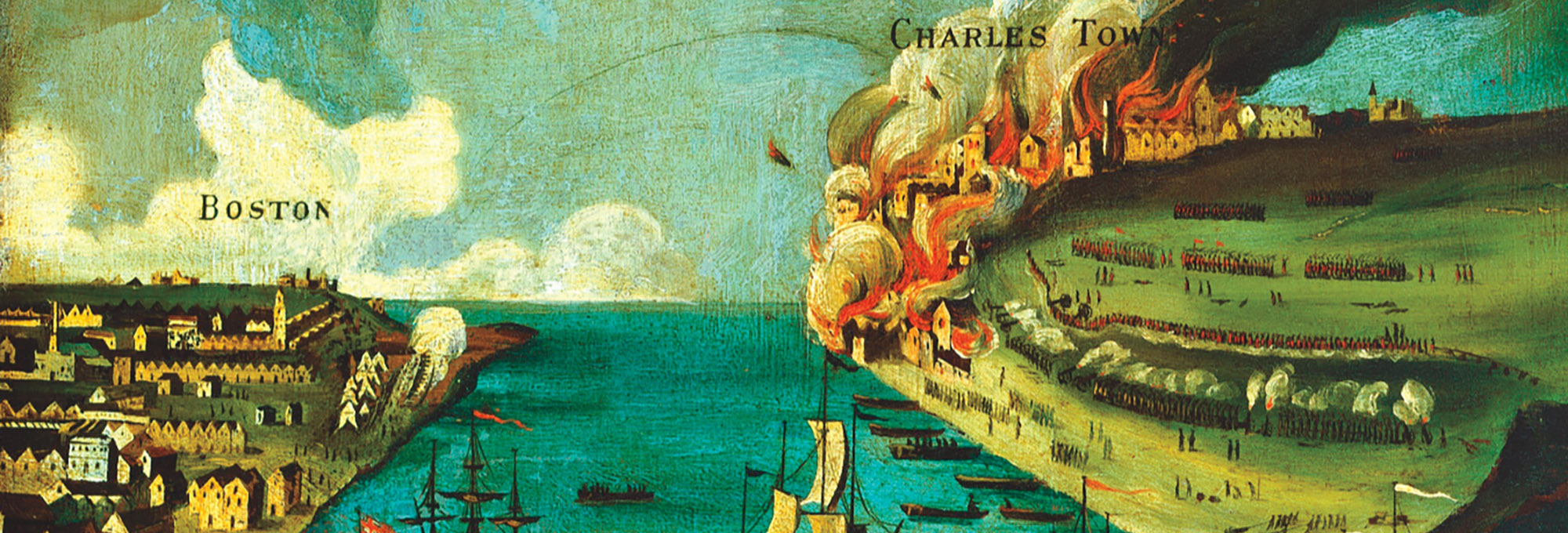
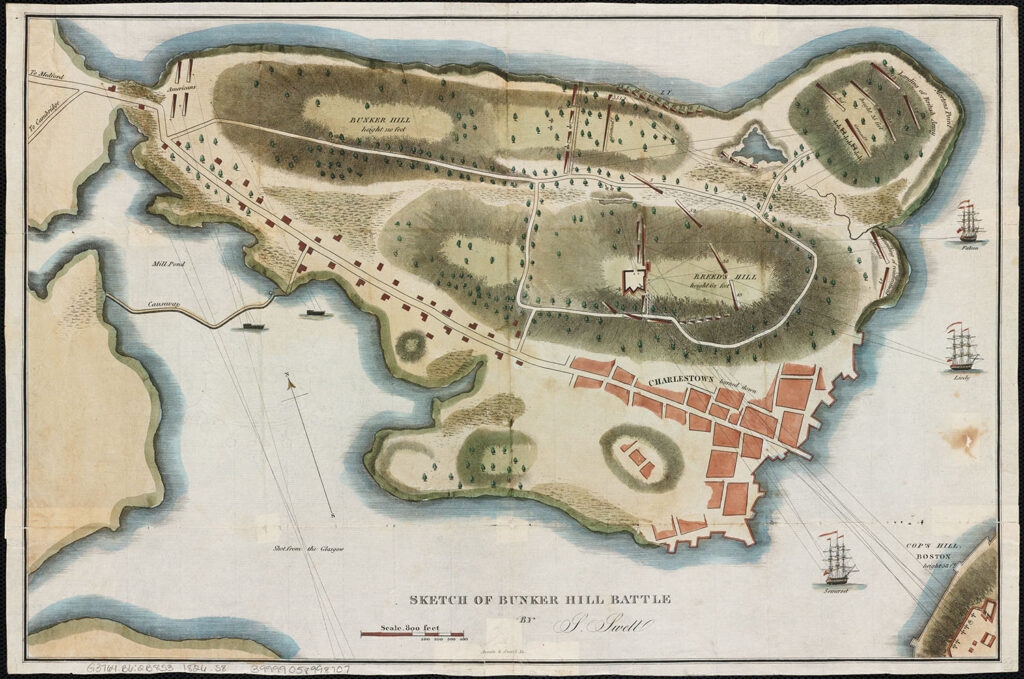
Today, Charlestown is one of many neighborhoods that make up Boston’s urban patchwork, just a quick walk from the heart of the city across a short bridge spanning the Charles River. Two and a half centuries ago, however, prior to major landfill projects, the map looked much different. At that time, Boston and Charlestown were two separate towns on two distinct peninsulas, facing each other across more than half a mile of water. For a brief period in the eighteenth century, the fate of colonial America played out along their shores.
In early 1775, Charlestown was already almost 150 years old. It was a bustling settlement of between 1,500 and 2,000 people representing all walks of life—farmers, artisans, merchants, and mariners, including both free and enslaved Black people. There were large landholders, such as 53-year-old distiller David Cheever, who owned multiple properties across the peninsula, and those who were less well-off, such as widow Elizabeth Moore, who rented a simple room in a neighborhood tavern. The town’s diverse population also included Margaret Thomas, who bought a humble home in 1773, likely making her the first free Black woman to own property in Charlestown. Among the wide array of craftspeople were goldsmith Nathaniel Austin, chaise maker James Frothingham, and Cato Hanker, a shoemaker. Hundreds of houses, workshops, and other buildings lined the town’s streets and wharves.
By dawn on June 18, 1775, nothing was left standing and everyone was gone. Less than 24 hours earlier, a brutal engagement, known as the Battle of Bunker Hill, had raged across the Charlestown Peninsula. It would go down as one of the most pivotal moments in American history, a day that catapulted the American colonies onto the uncertain and perilous path toward independence. Many people are familiar with the battle, especially the legendary instruction uttered by one desperate colonial commander not to fire “until you see the whites of their eyes.” However, one tragic outcome of the battle has largely been glossed over by history. As part of the British plan of attack, Major General William Howe ordered his troops to burn all of Charlestown, including its residential neighborhoods. When the cannonballs finally stopped raining down, one eyewitness described the aftermath as a “scene of ruin unparalleled before in America.” Townspeople were sent fleeing, and many never returned. Nearly all lost everything they owned.
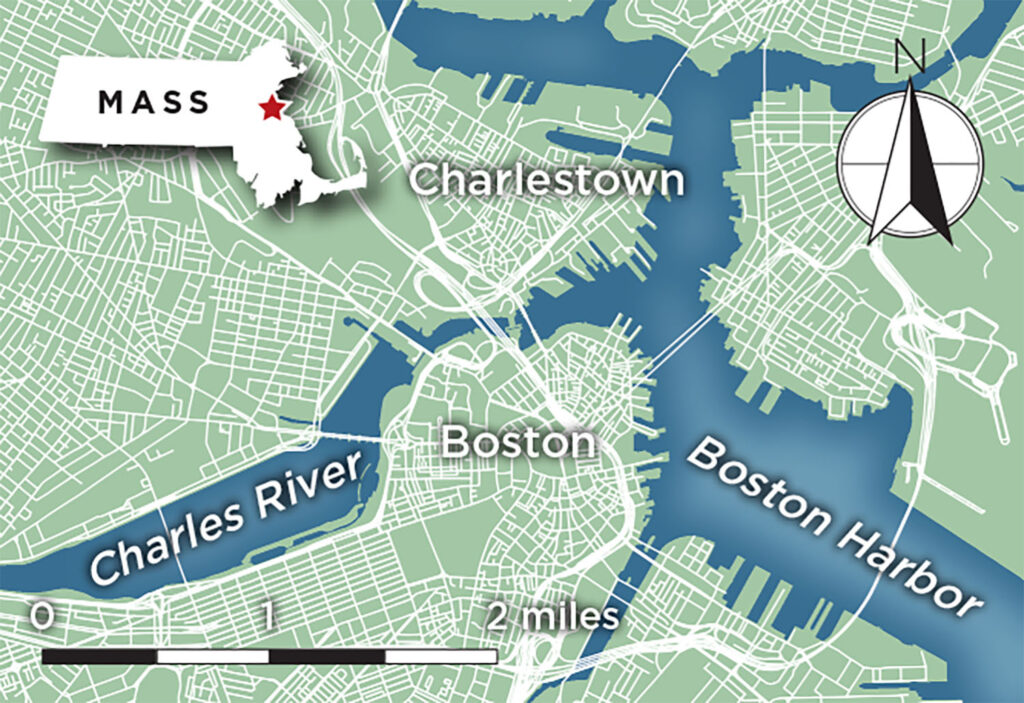
While conducting archaeological and archival research in anticipation of the 250th anniversary of American independence, some scholars realized there was much still to be learned about the lives of Charlestown’s civilians. They’ve shifted their attention away from the well-known military tactics of the Battle of Bunker Hill and the famous generals involved. Instead, a team of archaeologists is now uncovering the stories of Charlestown’s ordinary citizens. “The battle has been very widely talked about, but the fact that the entire town burned is something that few people know,” says Joe Bagley, director of archaeology for the city of Boston. “Our main goal has been to add something new to the story. We thought this would be a great chance to look at what hasn’t been thoroughly covered, so we’re really focusing on the residents.”
The researchers have conducted geophysical surveys and excavations and have pored over hundreds of historical documents, some of which have never been studied before, in order to create a new map reflecting how Charlestown would have appeared on the eve of the Battle of Bunker Hill. They have identified the names of most of Charlestown’s residents, as well as where each one lived. This has yielded a deeper understanding of the colonial landscape, of the unsung people who lived in Charlestown, and of the first town that was sacrificed in the name of American independence.
By spring 1775, Boston was a tinderbox ready to explode. Tensions between American colonists and the British had reached a breaking point and begun to erupt into violence. On April 19, the Battles of Lexington and Concord broke out. These skirmishes resulted in around 400 combined British and colonial casualties. The situation was about to get much bloodier.
After those engagements, British troops entrenched themselves in Boston while 15,000 New England militiamen encircled the city. An uneasy stalemate lasted for nearly two months as each side waited for the other to make a move. The die was cast in the very early morning hours of June 17, as 1,200 colonial troops crept stealthily onto the Charlestown Peninsula opposite Boston and, still under the cover of darkness, began to build a redoubt on a strategic hilltop within cannon-shot of British positions.
The patriots’ decision to fortify a hill on the peninsula forced commanding British officer Thomas Gage into a swift and aggressive response. The ensuing Battle of Bunker Hill consisted of two hours of the fiercest fighting either side would encounter during the entire American Revolution, as waves of redcoats attempted to ascend the steep slope and drive the Americans from the hilltop. With colonial troops low on gunpowder, the British succeeded, but at enormous cost. They suffered more than 1,000 casualties, around 40 percent of their total attack force, the highest portion during any single encounter of the war. The colonial losses numbered around 450 dead and wounded. The battle had profound consequences for the colonists. The ruthlessness of the British attack and the display of American bravery caused many who were still uncommitted to the idea of American independence to take up the patriot cause. The intensity and bloodiness of the fighting also marked Bunker Hill as a point of no return. There could no longer be reconciliation—war was the only way forward.
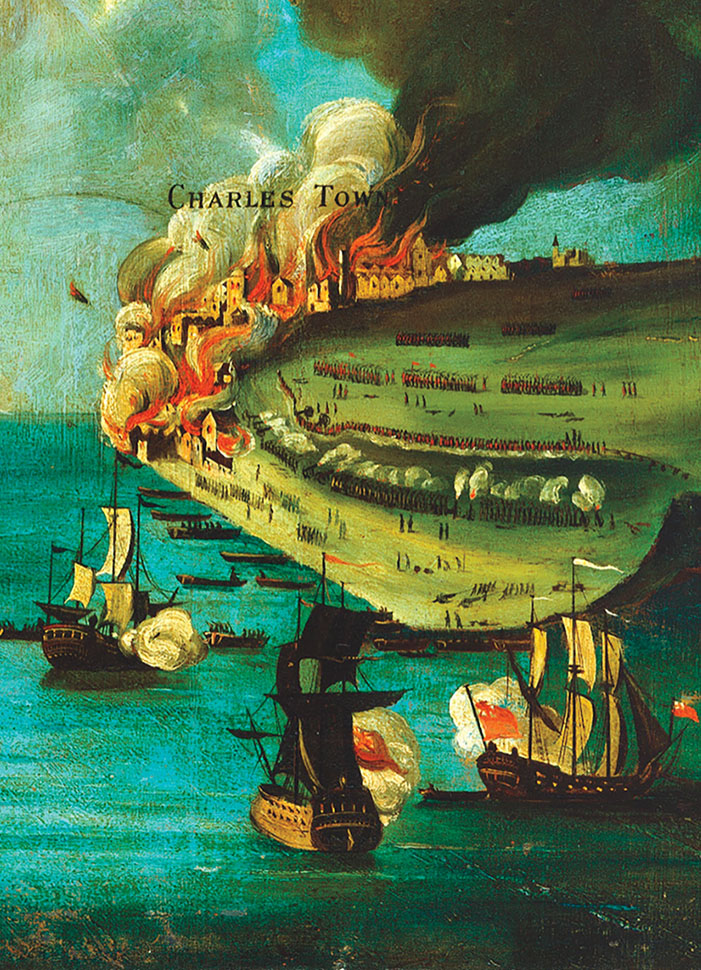
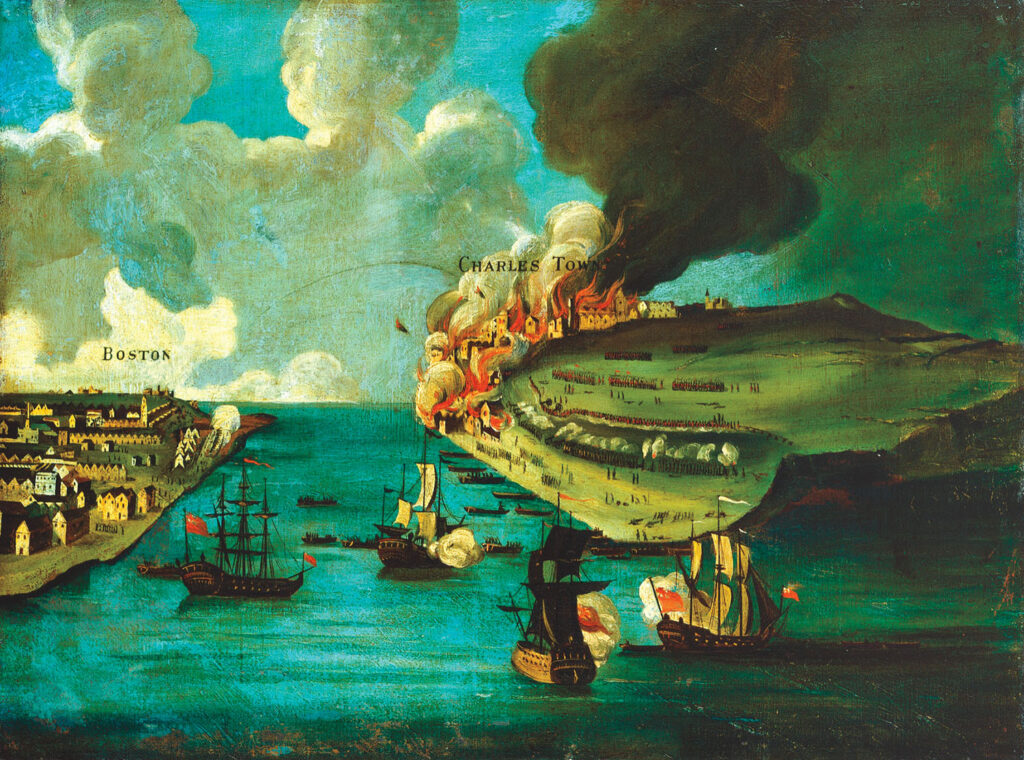
While the battle raged across the hills and fields of the Charlestown Peninsula, smoke began to rise from the shoreline. This was not the result of musket fire, but of hundreds of buildings that were burning. When the British landed near Charlestown, some colonial soldiers took up positions on roofs or in windows and began to fire upon the disembarking troops. Already agitated that the patriots had fortified the hill behind the town, Howe ordered his cannoneers to turn their aim toward Charlestown proper. British gunners loaded their cannons with shot that had been heated to such a high temperature that it glowed red. As the fiery cannonballs landed, everything they touched went up in flames.
Many of Charlestown’s inhabitants had departed over the previous month amid increasing unrest, but those who remained were jolted from their homes. A widow named Relief Ellery and her 20-year-old daughter of the same name were among those who narrowly escaped the bombardment. The younger woman pocketed two valuable silver tablespoons from the kitchen table—the only things she had time to grab. When the pair returned to Charlestown, none of their property remained. “We have records of British troops coming back the next day and setting fire to any building that still stood,” says Bagley. “It was vindictive.” In a matter of hours, one of the oldest settlements in Massachusetts had ceased to exist.
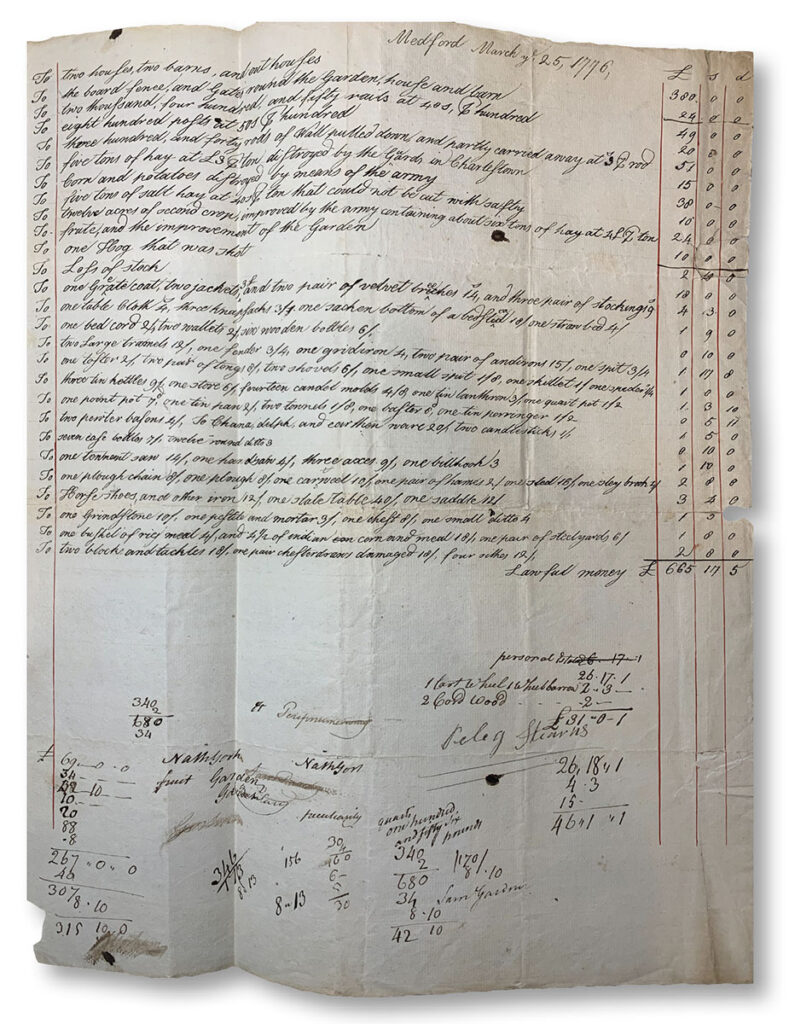
When other residents returned to Charlestown, they, like the Ellerys, soon realized that their homes and everything they contained were gone. Although these residences were lost two and a half centuries ago, researchers have recently gained an unprecedented look at how many of them may have appeared and an understanding of what was inside on the day they were torched. At the urging of a committee of Charlestown residents, more than 450 families submitted inventories of their lost possessions after the battle in hopes of receiving restitution. These handwritten records have been held in the Boston Public Library’s Special Collections for decades, but archaeologists are only just beginning to study them. The documents are revealing tantalizing clues about what was lost to the fire—remains of which may still lie beneath Charlestown’s modern homes.
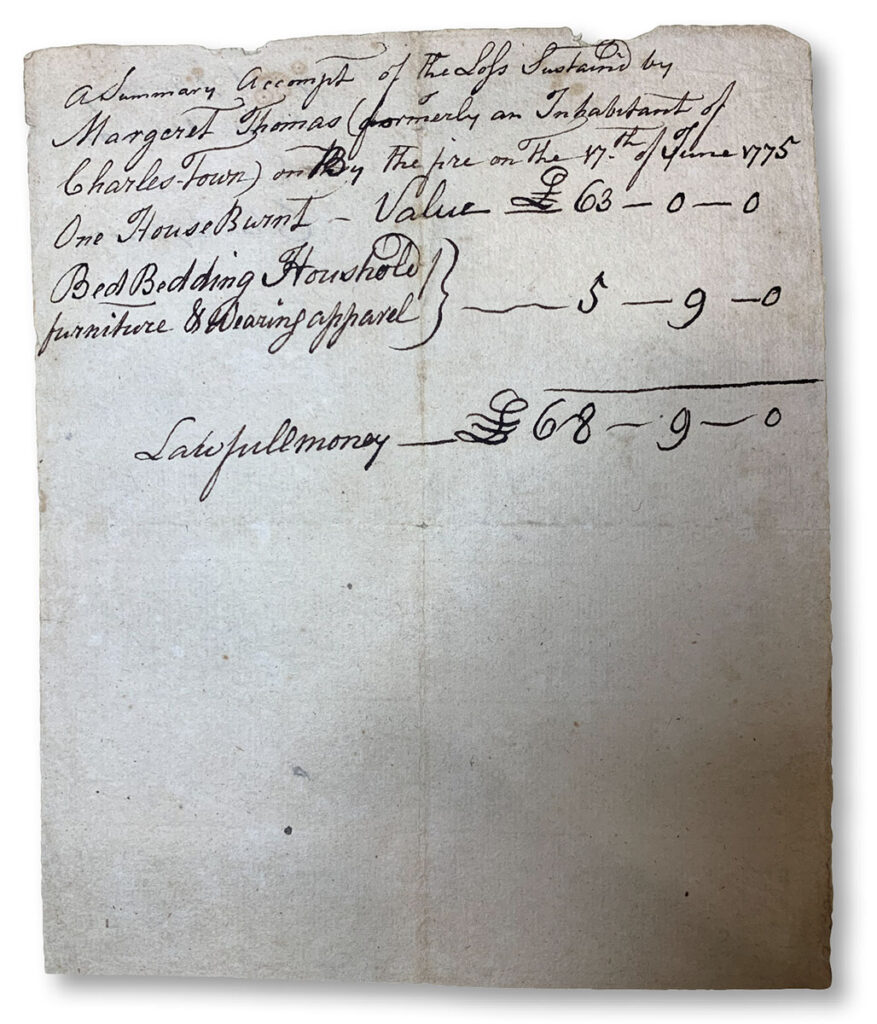
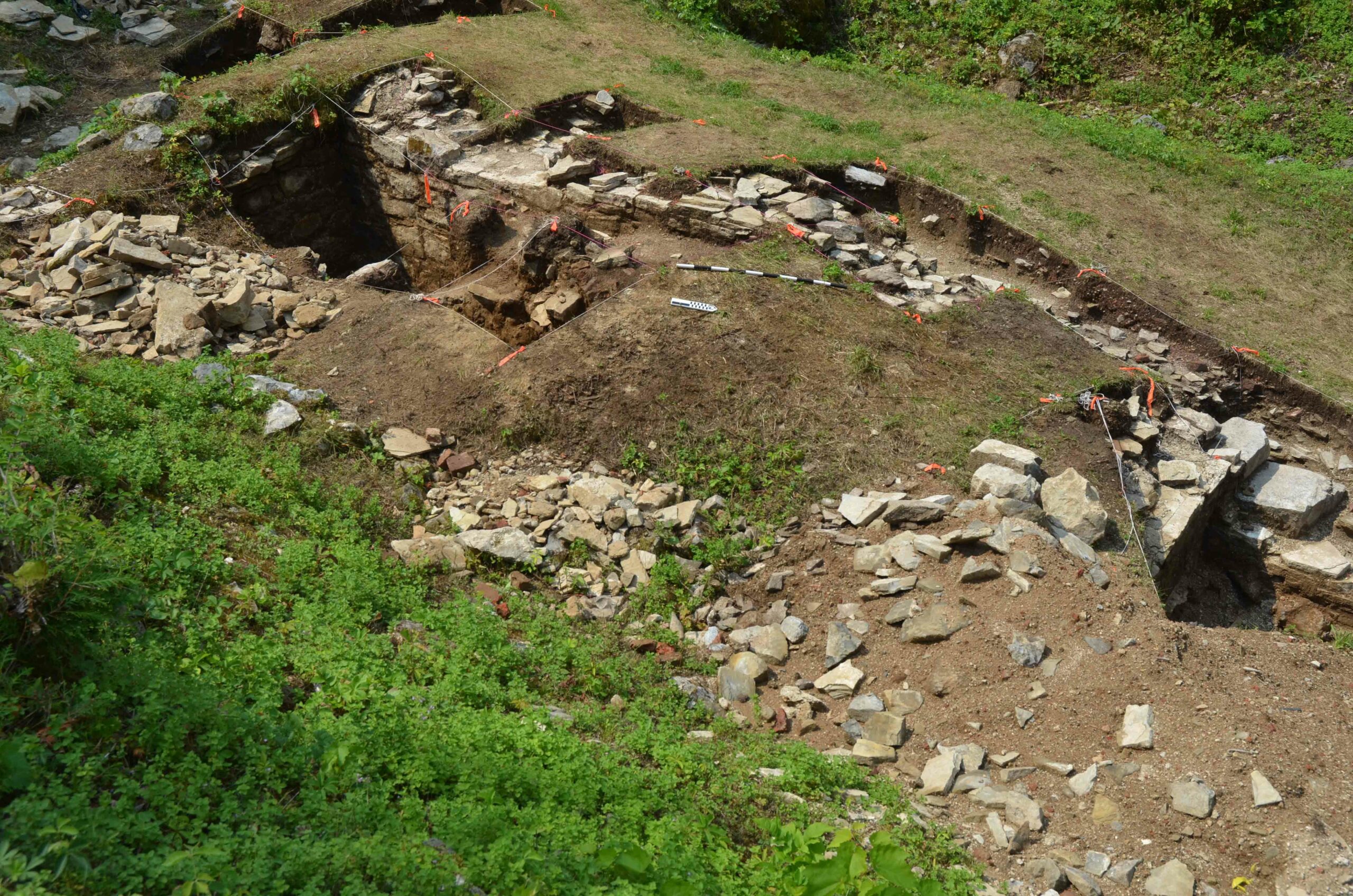
In a way, the existence of these property claims flips normal archaeological protocol upside down. Usually, when archaeologists excavate a residence, they record the artifacts that they uncover during the process. In this instance, they already have a list of everything that was in a house before beginning excavations. They know exactly what they might expect to find buried in dozens of backyards and basements. “It’s kind of like an archaeological cheat sheet,” Bagley says. “They’re literally saying, ‘That burned ruin in Charlestown, here’s everything that’s in it.’” He hopes to use the records to target specific locations for excavation. Even before any substantial digging occurs, the documents have helped researchers reimagine what a house in Charlestown would have contained in 1775. “We could do the archaeology of Charlestown without ever lifting a shovel, just from the claims records,” says Bagley.
The total financial loss claimed by Charlestown’s citizens ran to 117,882 pounds, or around 33 million dollars today. Claims were filed not only by wealthy residents, but also by poor families, widows, single men and women, children, and free Black people. There were educated individuals and those who were barely literate. Some, such as Peleg Stearns, submitted extraordinarily organized paperwork, resembling spreadsheets, while others scribbled only a sentence or two. The most significant monetary loss included in most people’s accounts were their houses, which were valued anywhere from 50 pounds into the hundreds and even thousands. Many sought reimbursement for their barns, fences, and apple, cherry, pear, peach, locust, and oak trees. They also requested payment for crops that had burned, rotted, or been trampled in their fields—corn, potatoes, peas, barley, cabbage, hay, and more.
The most fascinating aspect of the Charlestown property claims is the intimate glimpse they offer into each household, from paintings that once hung on the walls to undergarments stored in drawers. Leather dresser Benjamin Hurd’s claim provides an almost room-by-room tour of his house, including dimensions and ceiling heights, whether the walls were painted or papered, the number of fireplaces, the location of specific pieces of furniture, and even how many panes of glass each window contained. Other people’s filings include items such as mattresses, bedding, tables, chairs, cooking pots, plates, dishes, teapots, kitchen utensils, and candlesticks. Some emphasize the high quality of a lost object. For example, John White was deprived of a “very nice” wheelbarrow as well as a “very handsome” corner cupboard.

When it came to valuing the clothes they had lost, some gave an estimate under the general heading of “wearing apparel,” while others meticulously enumerated every item in their wardrobe. Included among stonecutter Joseph Lamson’s lost garments were two jackets, three cloaks, a pair of breeches, three gowns, two shirts, two handkerchiefs, and a pair of shoes. The widow Relief Ellery may have had one of the fancier closets in town. It held a green damask gown, a brocade gown, two velvet cloaks, a dozen and a half shifts, and two pairs of silk shoes. She also recorded that she had lost four silver teaspoons but only two tablespoons—presumably accounting for the pair that her daughter had escaped with on the day of the battle.
Some items were even more personal. Sisters Mary and Rebekah Sheafe lost family portraits and a coat of arms. Mary Gorham was without her picture of beloved local patriot leaders John Hancock and Samuel Adams, which she valued at six shillings. Many individuals sought to be reimbursed for the cost of their Bibles and psalmbooks. Thaddeus Mason also sought restitution for around 60 volumes from his personal library, among them works by the ancient Roman writers Ovid, Suetonius, and Julius Caesar. Elizabeth Wyer wanted recompense for one glass vase and the flowers it held, while Thomas Russell lamented the destruction of a valuable and rare box of chocolates, costing three pounds, six shillings, and eight pence. Some claims, such as the one submitted by physician Isaac Rand, contain hundreds of items valued altogether in the thousands of pounds, while one of the most basic was submitted by Alice Davis, who simply wrote that she had lost a chest of drawers and chairs worth one pound and four shillings.
In addition to the devastating loss of their homes and personal belongings, Charlestown’s business owners and craftspeople suffered the complete destruction of their shops, storefronts, supplies, and tools. Carpenters, blacksmiths, coopers, pewterers, and hatters all found it extremely difficult to bounce back after the fire. No commercial sector was hit as hard as Charlestown’s once-thriving ceramics industry. Although not well-known today, Charlestown had been among the largest pottery production centers in the northeast. That all changed on the day of the battle. With their workshops burned to the ground, Charlestown’s potters scattered throughout New England. “They lost everything—their kilns, all of their work tools—everything was gone,” says Bagley. “None of them came back.”
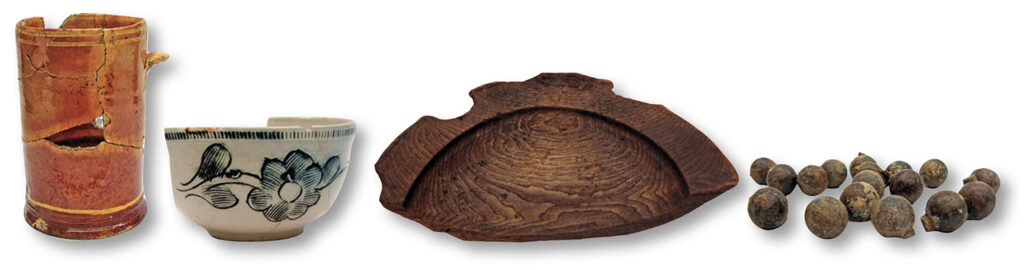
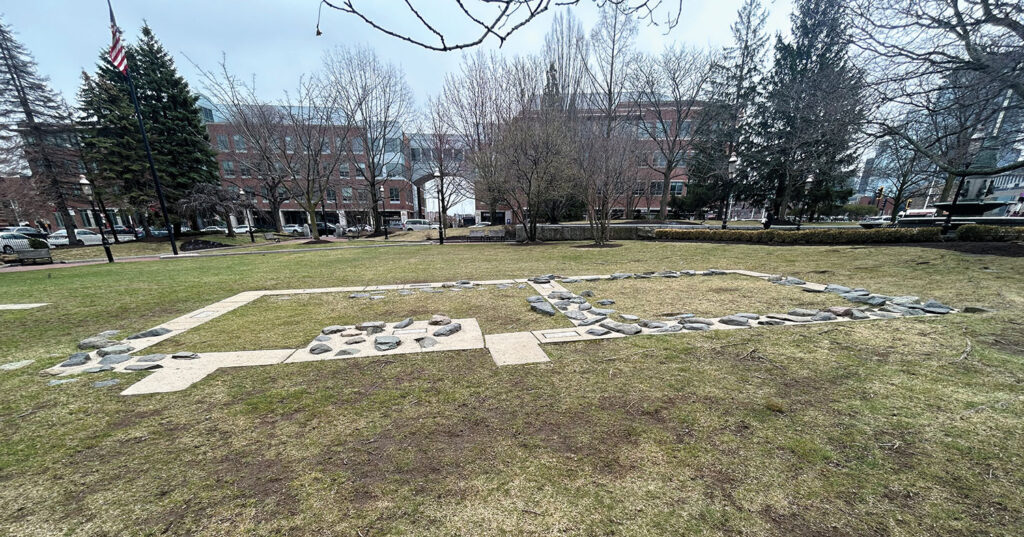
Although Charlestown’s pottery industry vanished 250 years ago, scholars are now beginning to get a better idea of its reach, which extended along the Eastern Seaboard. Charlestown Ware was once shipped to towns from South Carolina to Nova Scotia. The pottery has never been sufficiently studied by specialists, however, thus many archaeologists working at colonial-era sites may fail to recognize it. The team is hoping to change that as they sort through dozens of boxes of colonial pottery excavated from sites in Charlestown more than 40 years ago. One such site is the Three Cranes Tavern, which was the center of community life and occupied the oldest building in Charlestown, having been constructed in 1629. Like every other structure in town, it burned during the battle, but its lot is one of the few that was left vacant, remaining so today. Charlestown’s residents chose not to rebuild in the space as a way to memorialize the loss of the tavern and what it meant to townspeople. The lot is now a city park. The building’s charred contents and debris were buried. In the process, thousands of artifacts were sealed in the ground, leaving them undisturbed for centuries until they were discovered during the 1980s by archaeologists as part of Boston’s Big Dig, a major highway infrastructure project.
Objects such as ale tankards, teacups, wooden serving trays called trenchers, gaming pieces, pipe fragments, and mouth harps unearthed at the site of the Three Cranes Tavern provide a glimpse of social customs in Charlestown at the start of the American Revolution. Musket balls and gunflints found at the site also attest to the ominous day when it all ended in flames. During the Big Dig, archaeologists also recovered around 50,000 sherds of eighteenth-century ceramics from the nearby Parker-Harris Pottery site, the single largest ceramic manufacturer in town. Until recently, only around 2 percent of that assemblage had been studied. A team is now analyzing the vast collection and creating a typology for the different styles of Charlestown Ware. “I think people have this pottery on many archaeological sites and they just don’t realize it,” Bagley says. “By creating this guide, we hope to find out just how broadly distributed Charlestown Ware was and document its impact.”
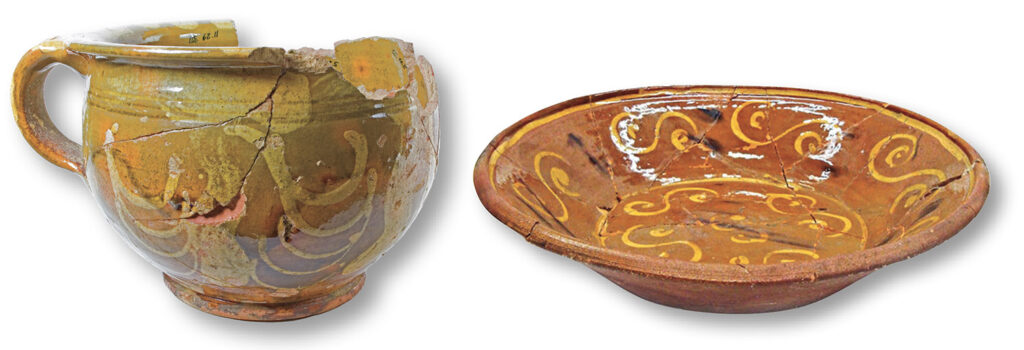
Archaeologists have also learned more about the pottery makers—in particular, two men named Jack and Acton. These highly skilled artisans are among the earliest known named enslaved potters in America. Researchers are scrutinizing pottery from the location where the pair worked to understand more about their contributions to the industry and their distinctive style, which is recognizable by its “bars and swags” decoration.
In the coming months, archaeologists will conduct excavations on the battlefield to confirm the location of the colonial redoubt. They will also begin searching for the approximately 300 soldiers who perished in the battle and remain unaccounted for. Bagley thinks he knows where their mass grave might be and plans to use ground-penetrating radar to investigate that spot in the hopes that, at long last, the soldiers can receive the respect they are due.
For now, archaeologists’ attention remains focused on the civilians whose tales have yet to be told. “One of the best things that archaeology can do is give you a more complete story, one about the folks that aren’t writing the history,” Bagley says. “I’m hoping for the two hundred fiftieth that we can bring these stories to a wider group of people who can relate to them. I think everybody in Charlestown, in Boston today, and beyond can see themselves in their stories.”
The British were finally ousted from Boston in March 1776. Some of Charlestown’s residents trickled back in the years following the battle, although the town remained economically depressed for decades. Many former residents decided to start over in new locations. Silversmith Ebenezer Austin settled in Hartford, Connecticut. Widow Catherine Best moved to Martha’s Vineyard. Margaret Thomas, the free Black woman who had purchased her house in Charlestown just a few years before the battle, was among those who made a fresh start elsewhere. She is likely the same Margaret Thomas who went to work as a laundress in George Washington’s headquarters in Cambridge, Massachusetts, in 1776, and later followed the general to Valley Forge. Thomas purportedly later married Washington’s enslaved personal valet and assistant William “Billy” Lee.
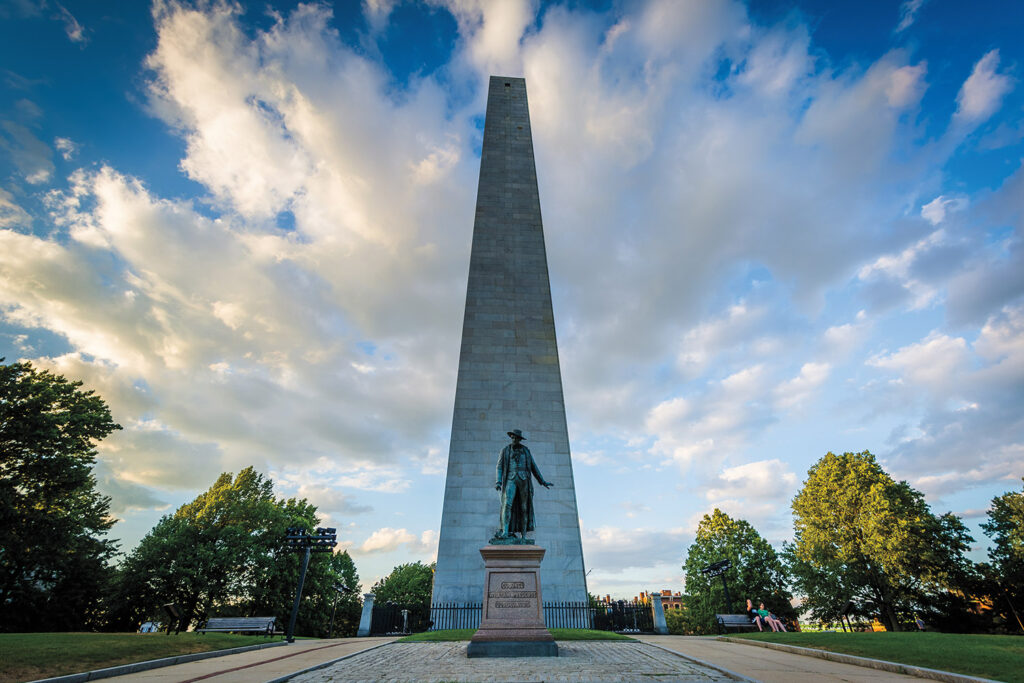
Fifty years to the day after the Battle of Bunker Hill, French hero the Marquis de Lafayette visited Charlestown and laid the cornerstone of a 221-foot-tall stone obelisk that still towers over the site of the battlefield. In attendance were no doubt some of the town’s older inhabitants who had lived through the events of June 17, 1775. These spectators had yet to obtain their sought-after restitution, much less recognition for the incalculable losses they suffered that day. They repeatedly sent appeals to the U.S. government until the 1830s, when they posed their questions to Congress for the final time: “We respectfully ask, ‘Who suffered so much as we and who were more ready to sacrifice all? Who rose in the morning with house and home and all the conveniences of life, and before night knew not where to lay their heads, who in one day lost all?’”
Further Reading
Letter from Lake George: Exploring the Great Warpath
Evidence from forts, hospitals, and taverns in upstate New York is illuminating the lives of thousands of British soldiers during the French and Indian War
Boston 250 Archaeology
The city of Boston’s archaeology department has embarked on a range of projects to shed new light on 1770s Massachusetts. Immerse yourself in its excellent digital info hub
The Jack and Acton Project
Two enslaved craftspeople were part of a rich tradition of pottery at Charlestown. Boston archaeologists are now documenting their work and telling their story