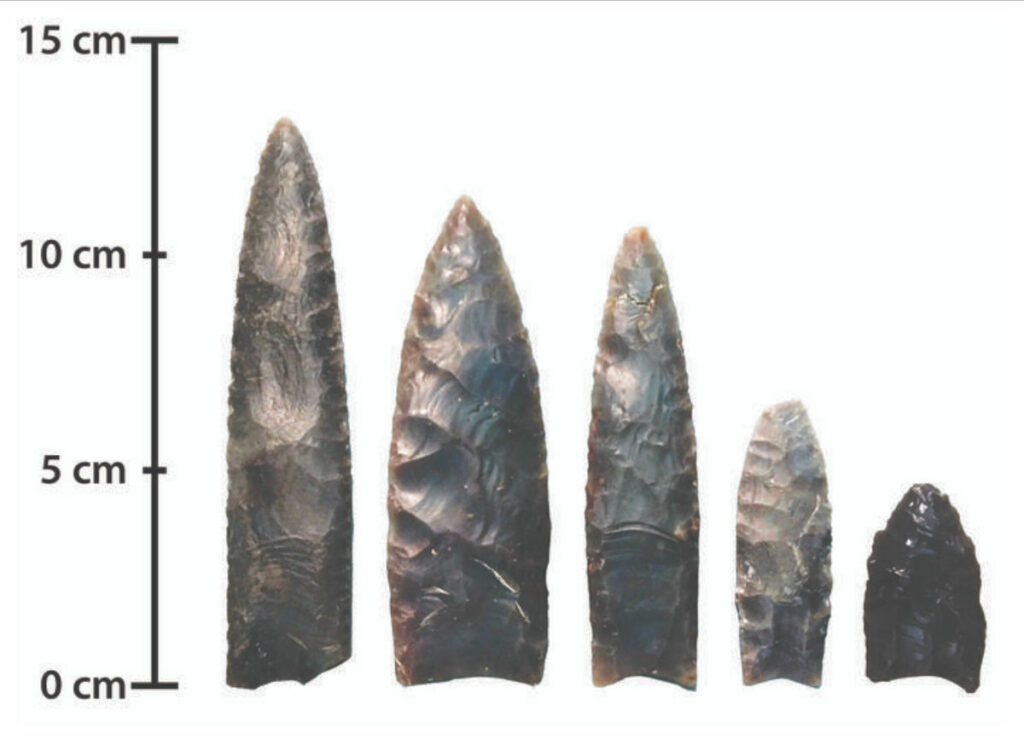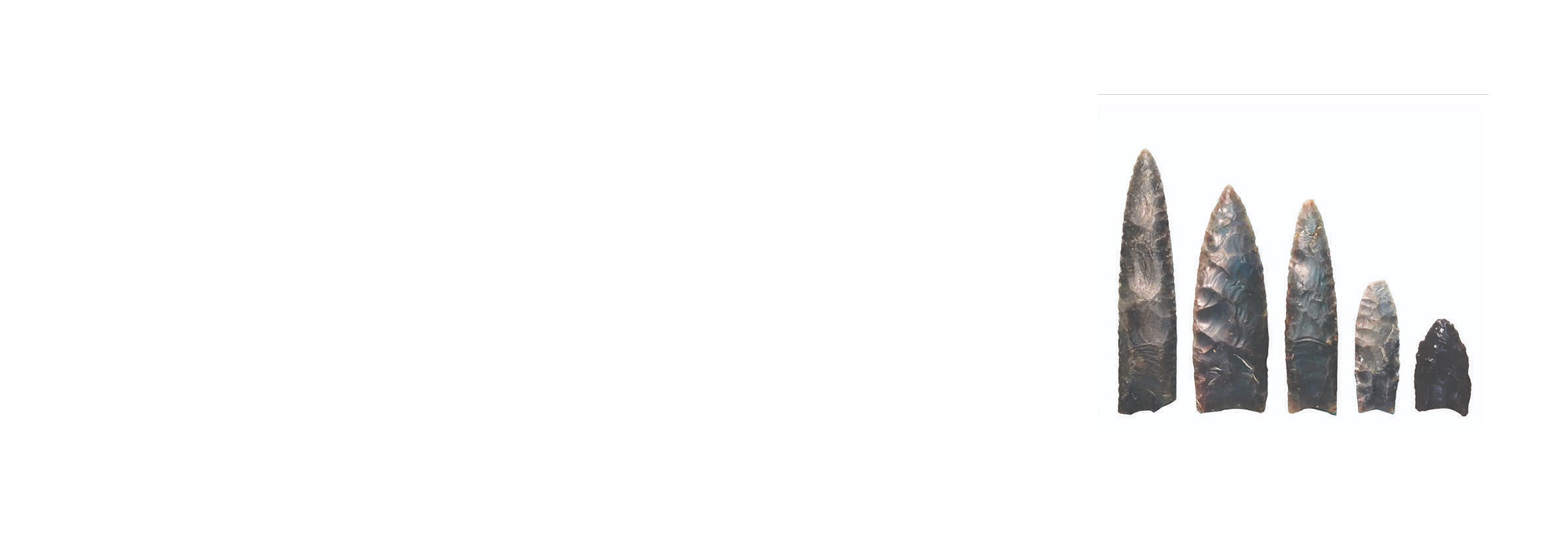
KENT, OHIO—According to a Science News report, Metin Eren of Kent State University and his colleagues reviewed evidence collected at all 15 sites in North America where Clovis stone tools have been found with the remains of mammoths, mastodons, or gomphotheres. “Archaeologists routinely assume these localities represent evidence that Clovis people hunted these multi-ton animals, and in turn invoke that evidence to claim humans had a role in the extinction of these large mammals,” Eren said. But the team's review of the information could not rule out the possibility that Clovis people had scavenged the carcasses of these animals. Microscopic wear patterns found on Clovis points can be caused by hunting, but they can also be produced by butchering or dropping the tool on the ground. Moreover, no Clovis point or point fragment has been found embedded in a bone from one of these animals, Eren added. An earlier chemical study of the bones of the so-called “Anzick child,” an infant who died during the Clovis period and was buried in what is now Montana, found that the child’s mother had eaten enormous amounts of meat. Eren and his colleagues argue that humans cannot digest that amount of protein. Rather, he suggests that the high levels of nitrogen in the infant’s bones could have come from maggots consumed by the mother, which have been shown to have high nitrogen values, Eren explained. “Researchers cannot currently distinguish [hunting from scavenging] archaeologically and thus cannot reliably show how many Clovis proboscidean sites represent hunting versus scavenging events,” Eren concluded. Read the original scholarly article about this research in the Journal of Archaeological Science: Reports. To read more about Anzick boy, go to "First American Family Tree."