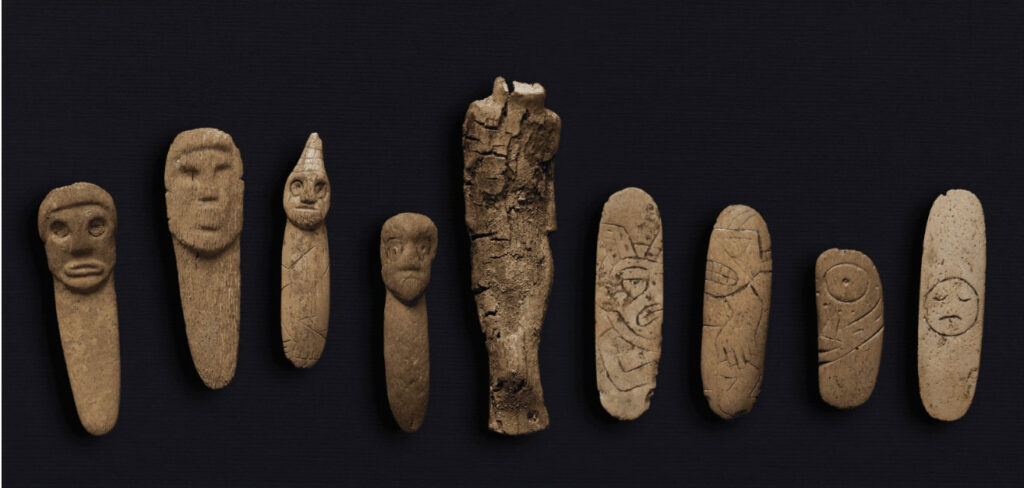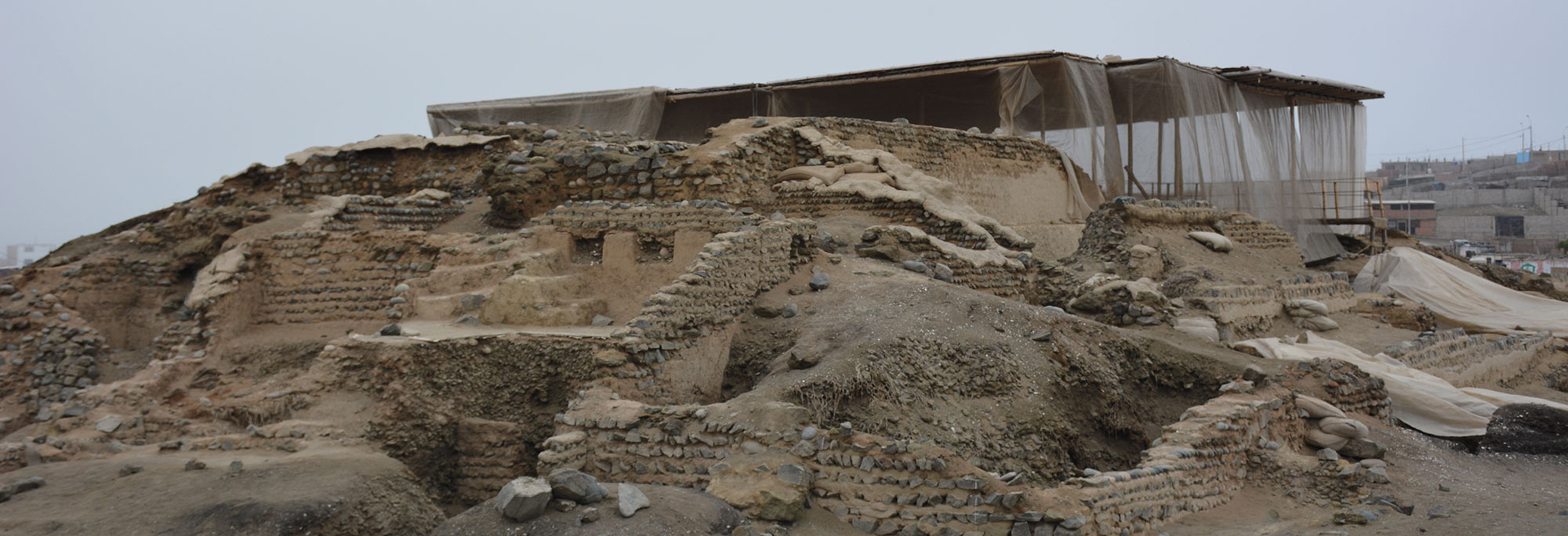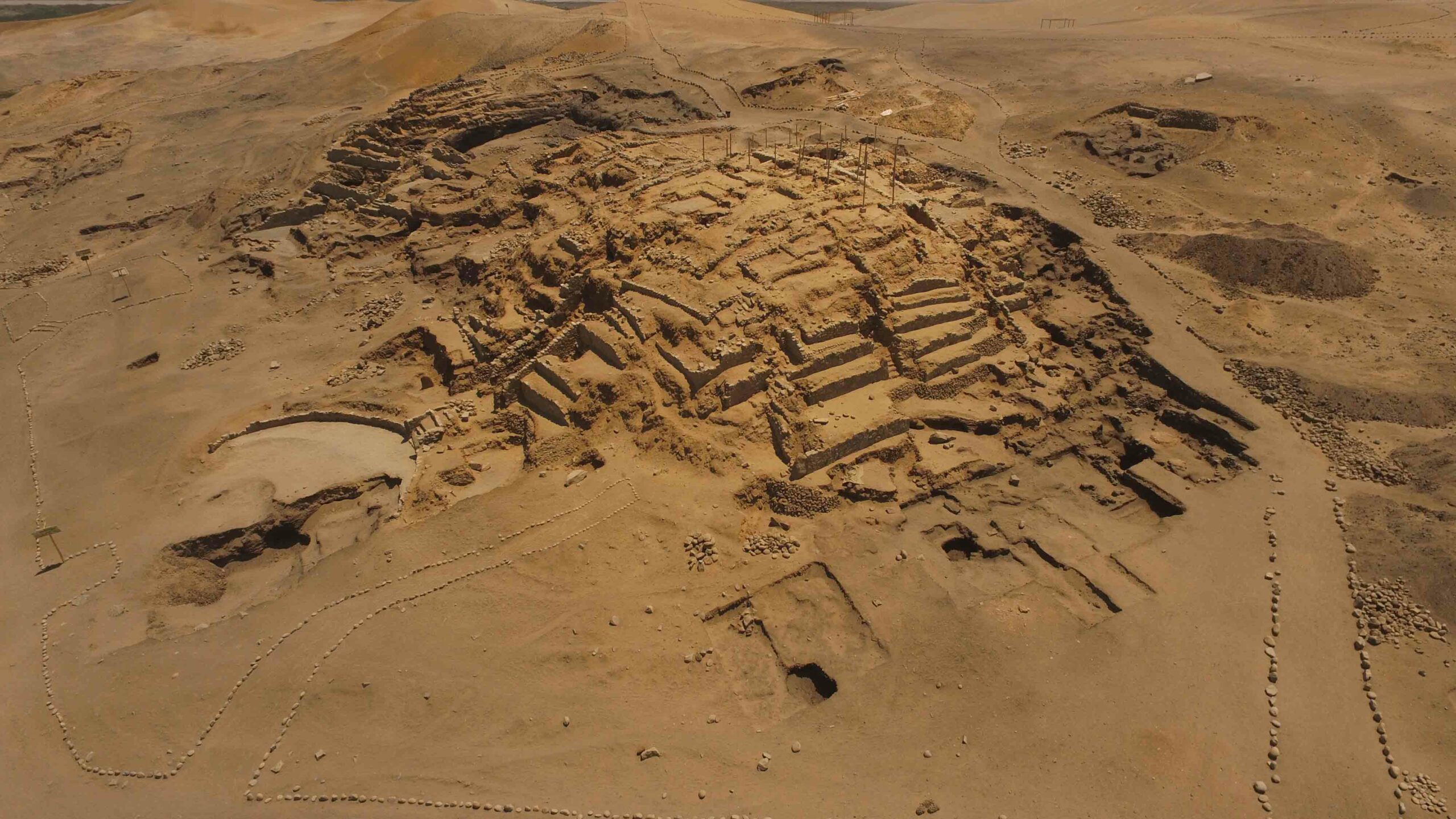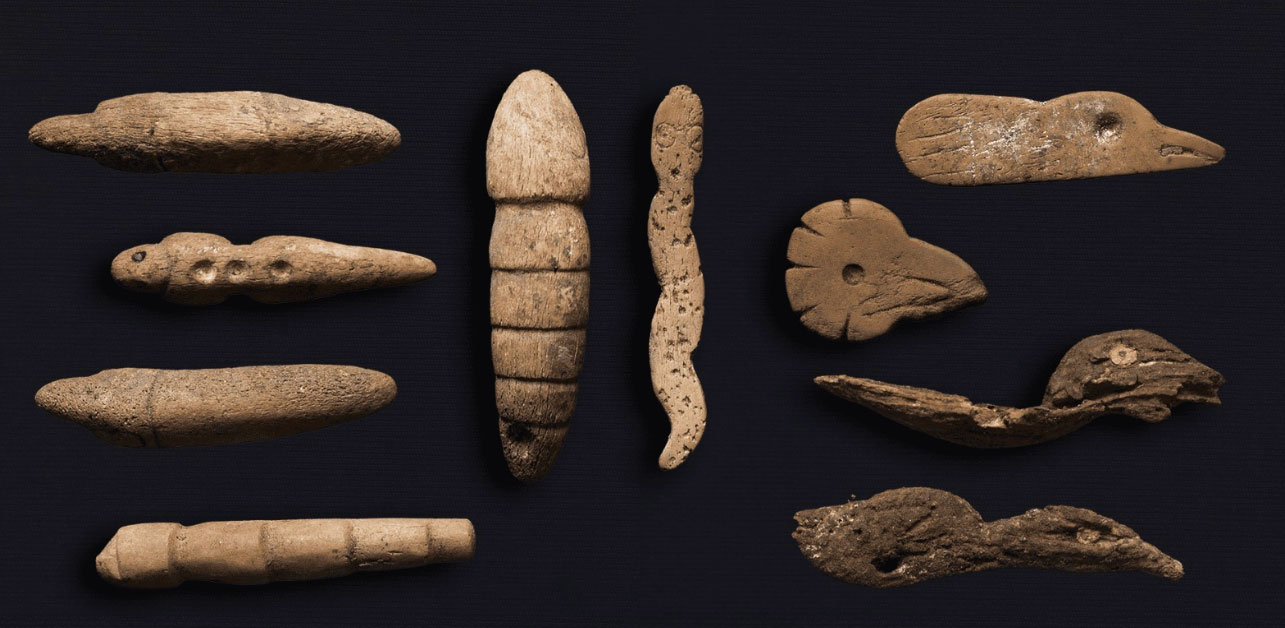
LIMA, PERU—Andina News Agency reports that excavations conducted by a team led by archaeologist Ruth Shady Solís of the National University of San Marcos at the main public structure in Peñico, which is located on the Pacific coast of Peru within the Ministry of Culture’s Caral Archaeological Zone, have uncovered a ritual offering linked to the consecration of a platform some 3,800 years ago. The 43 objects, which are made of wood and bone, had been placed in a small area edged with a semicircle of rounded stones topped with a large stone. Some of the artifacts had been incised with designs and exposed to fire. The sculptures include a woman, possible authority figures, birds, snakes, tadpoles, and geometric and abstract motifs. Cavities in the artifacts are thought to have held inlays of minerals and semiprecious stones, such as nine possible “eyes” made of mollusk shells. Several beads made of blue-green minerals and shells were also recovered. To read more about archaeology in Peru's Huaura Province, go to "Off the Grid: Vichama, Peru."