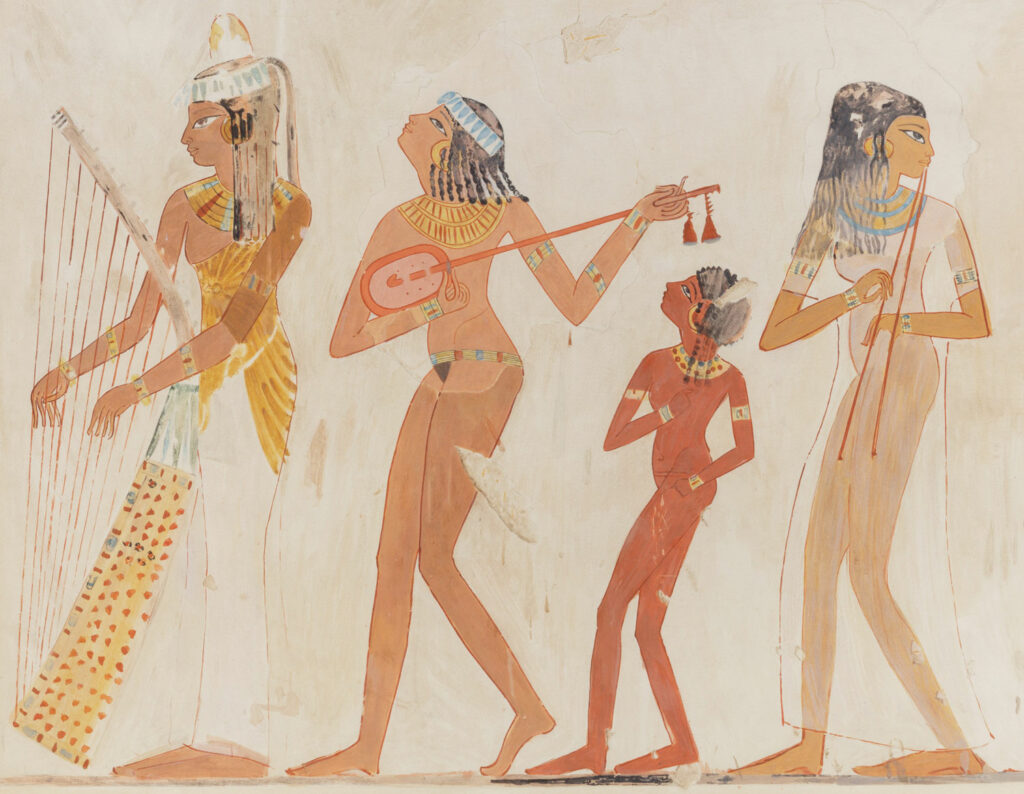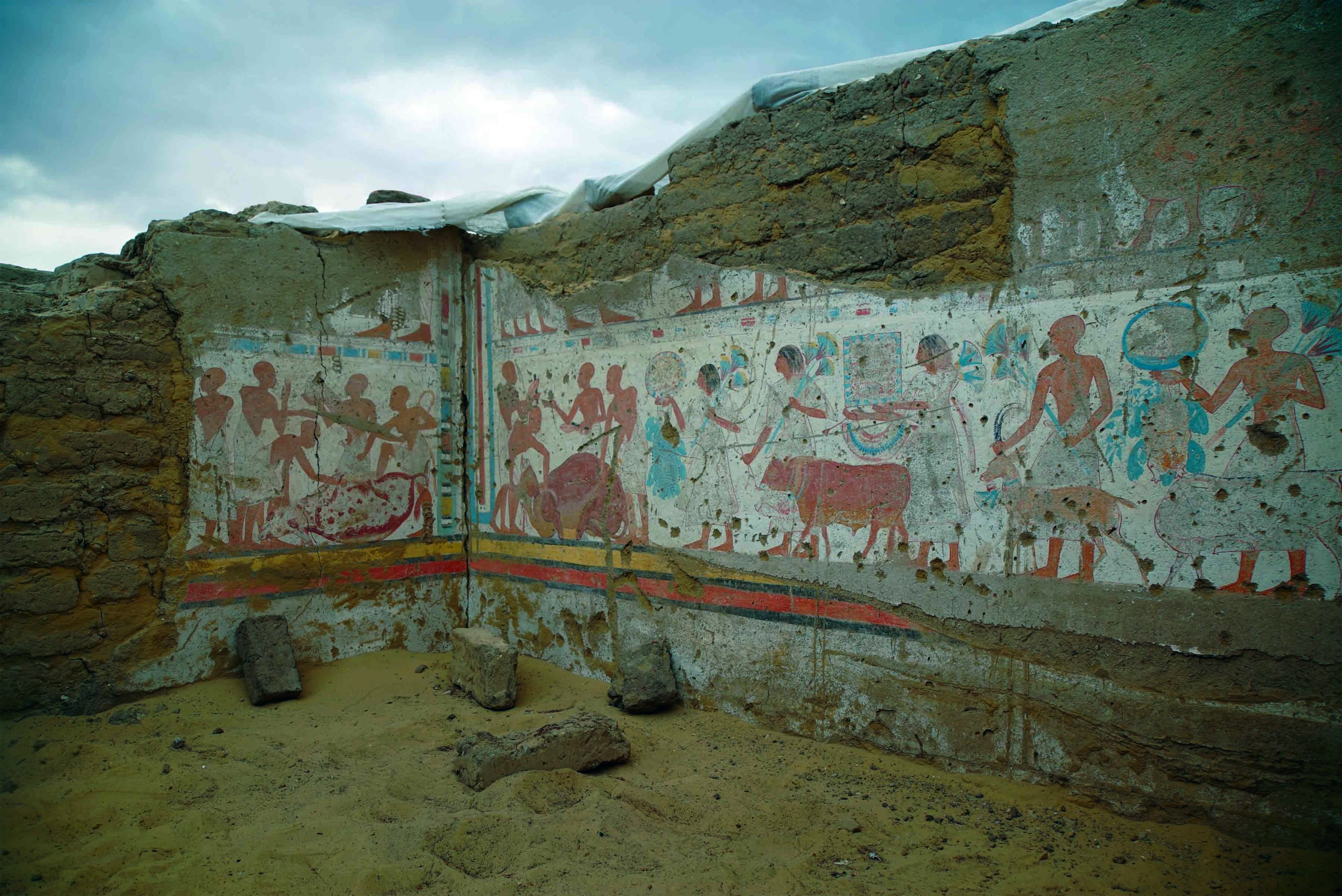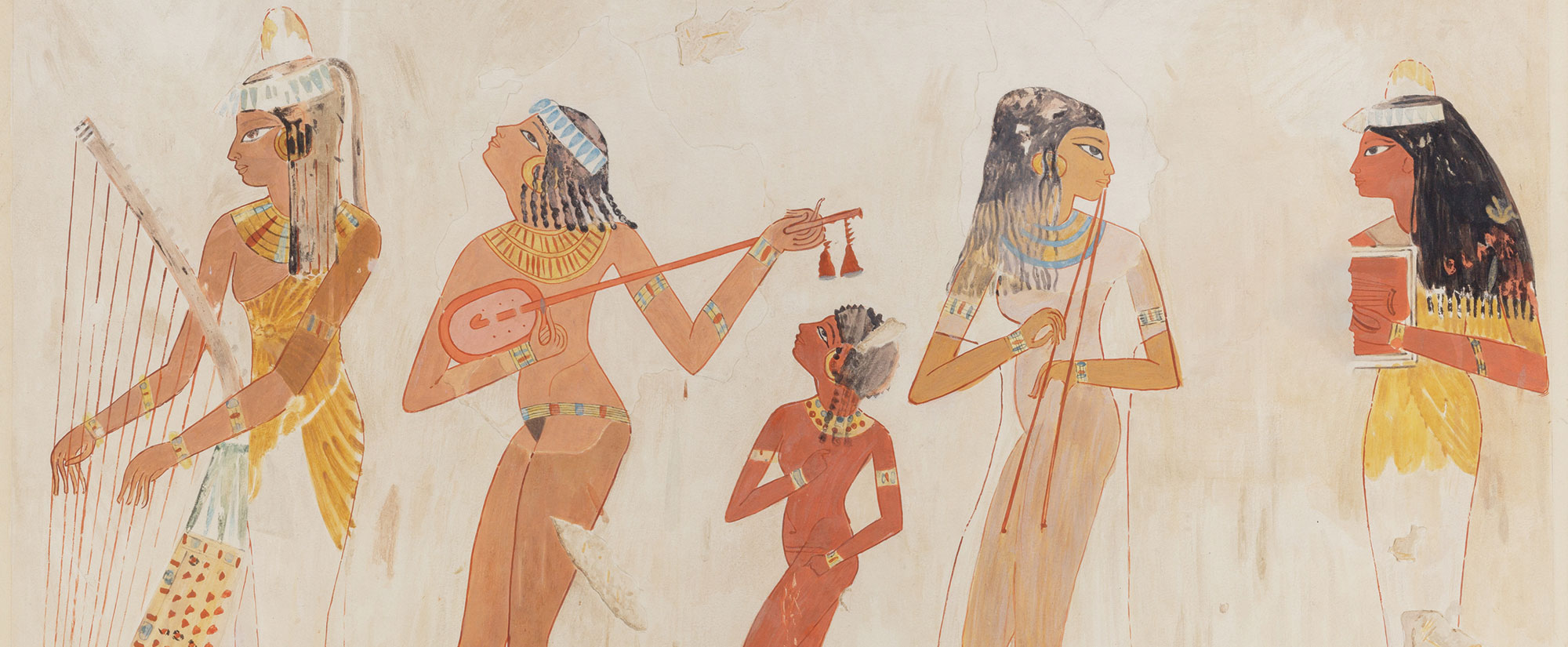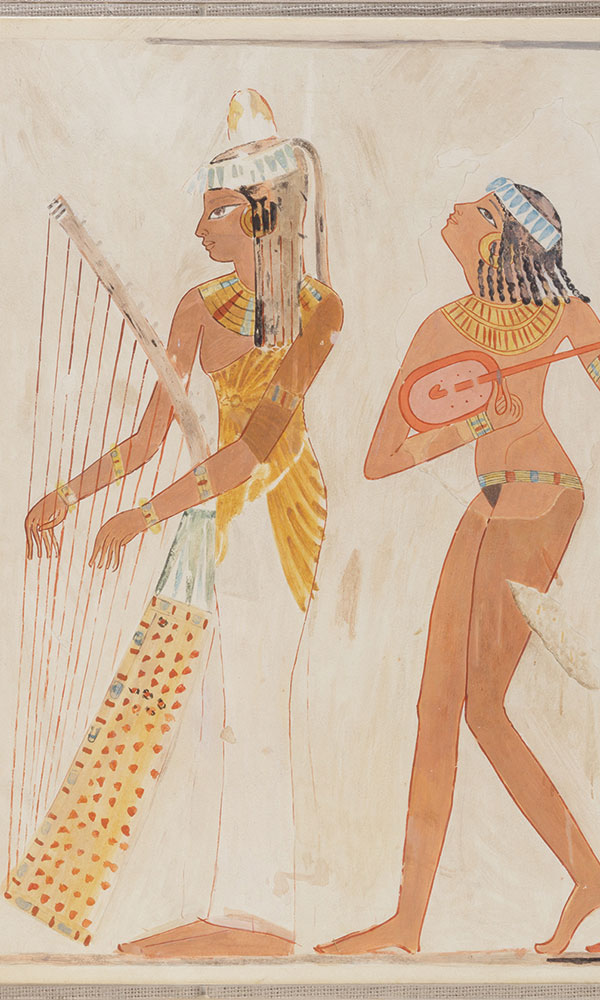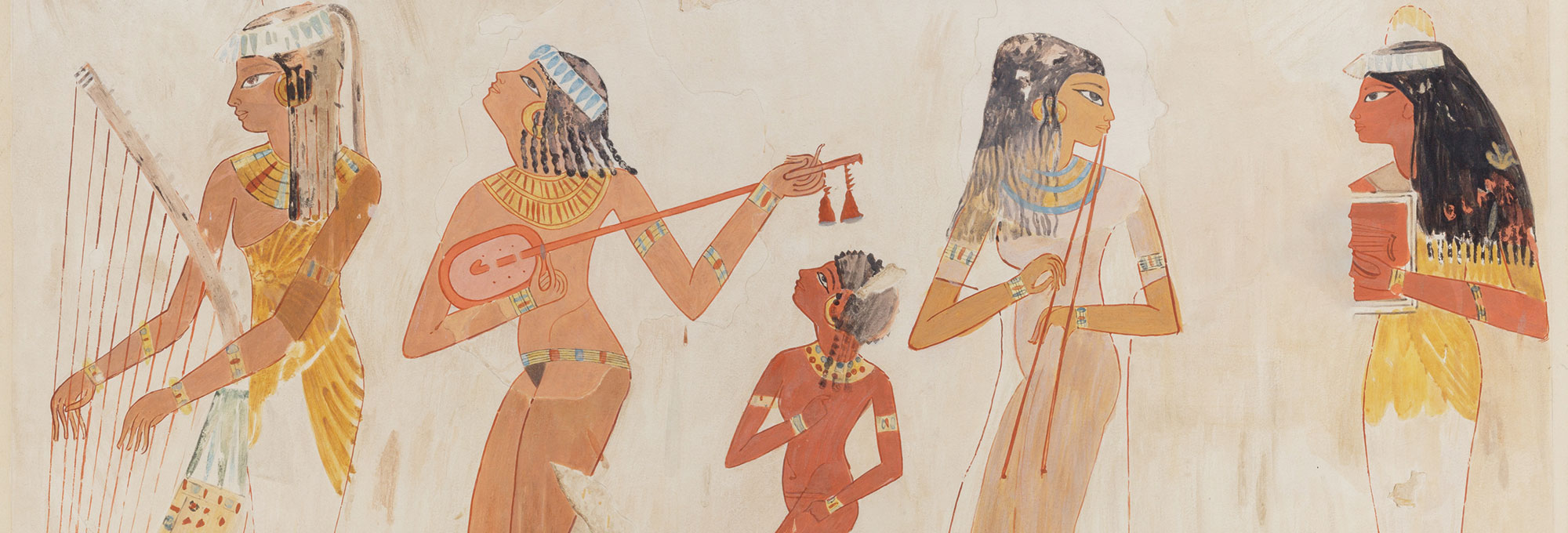
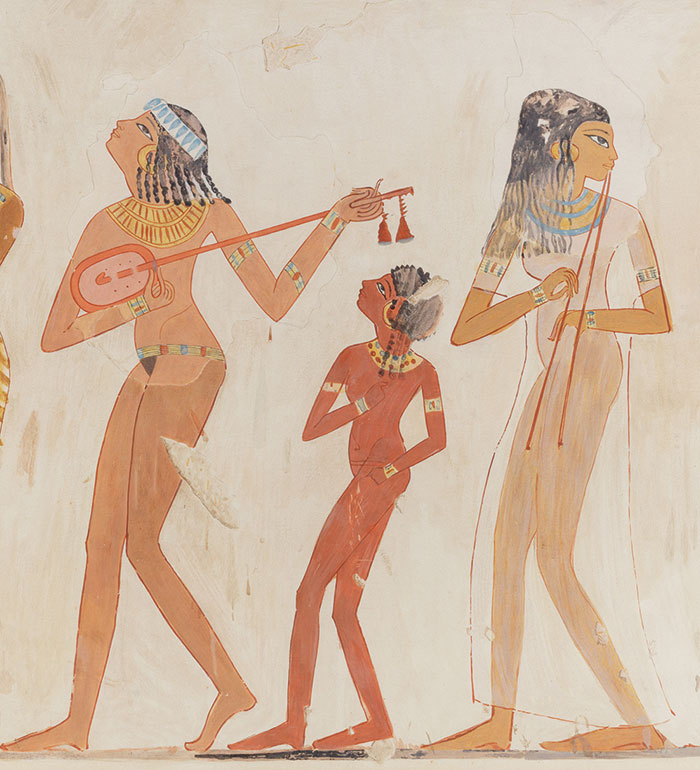
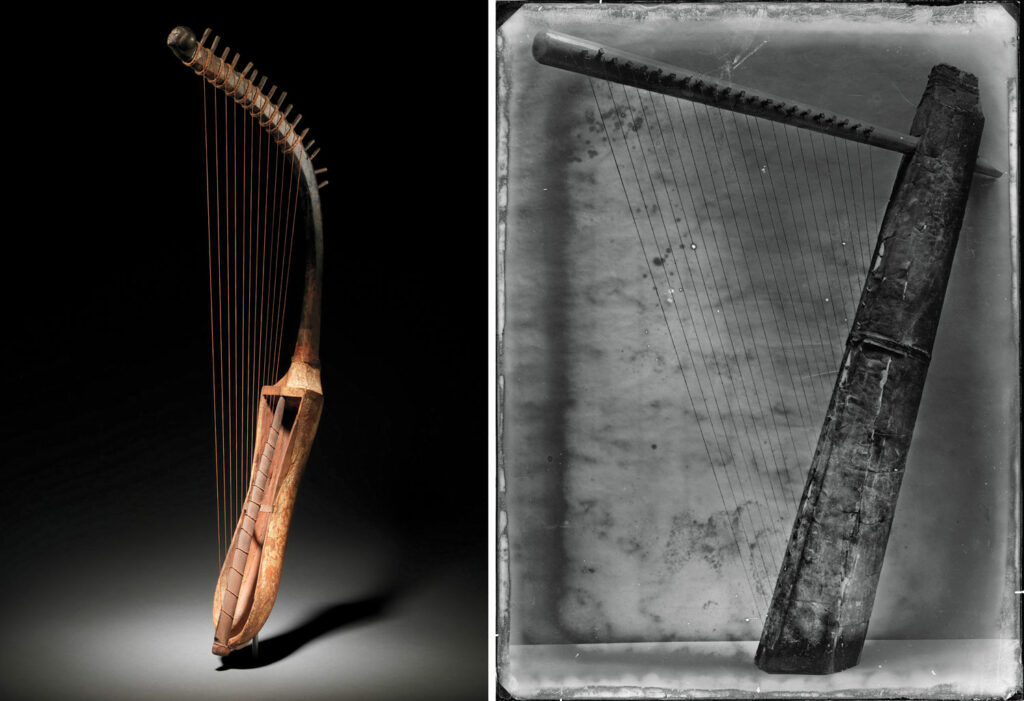
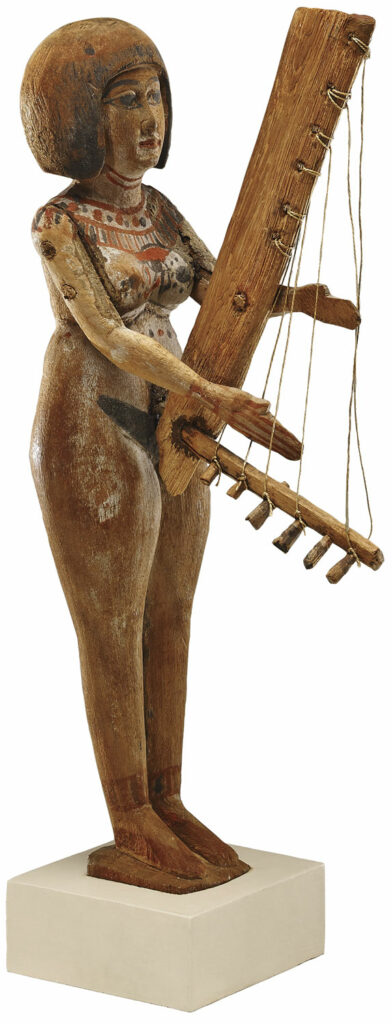
Although the texts of hundreds of ancient Egyptian songs survive—from love ballads and drinking songs to temple chants and funerary dirges—scholars have yet to identify any musical scores to which lyrics were set. More than 100 string instruments, however, have been discovered in tombs dating to the New Kingdom (ca. 1550–1070 B.C.) alone. Paintings and wooden models also found in burial chambers depict musicians playing harps, lutes, and lyres. The practice of burying people with instruments reached its peak in the 18th Dynasty (ca. 1550–1295 B.C.), but an individual interred in a spacious tomb in the necropolis of Saqqara during the 19th Dynasty (ca. 1295–1186 B.C.) journeyed to the afterlife with an unusually rich array of musical accompaniments. Archaeologists excavating this tomb in the early 1900s uncovered wooden castanets shaped like hands as well as fragments of four angular harps of varying size made from cedar. This quartet gave the burial its moniker, the Tomb of the Harps. “In the 19th Dynasty, it’s exceptional to have a single instrument left in a tomb, let alone a whole orchestra,” says Toon Sykora, curator of the Egyptian collection at the Dutch National Museum of Antiquities. “It’s such a rare find that I think the tomb owner was likely a musician.”
Prior to the New Kingdom, musicians played arched harps with at most eight strings. The angular harp represented an exciting musical innovation. The examples from the Tomb of the Harps each feature a hollow, vertical sound box attached to a suspension rim with holes that held one end of the strings. The strings were affixed at the other end to cylindrical pegs in the neck, which was perpendicular to the sound box. “This shape could support many more strings within the frame than the arched harp,” Sykora says. “This gives you a much wider range of music to play.” He believes a support protruding from the bottom of this type of harp enabled musicians to grasp the instrument with one hand while standing or to rest it on the ground and hold it between their legs while seated. The angular harp’s versatility revolutionized Egyptian music. “In iconography dating to nearly a thousand years after the New Kingdom, the angular harp is most frequently depicted,” says Sykora. “It makes sense that this is the type of harp that survived and that was a predecessor to the harp that we have today.”