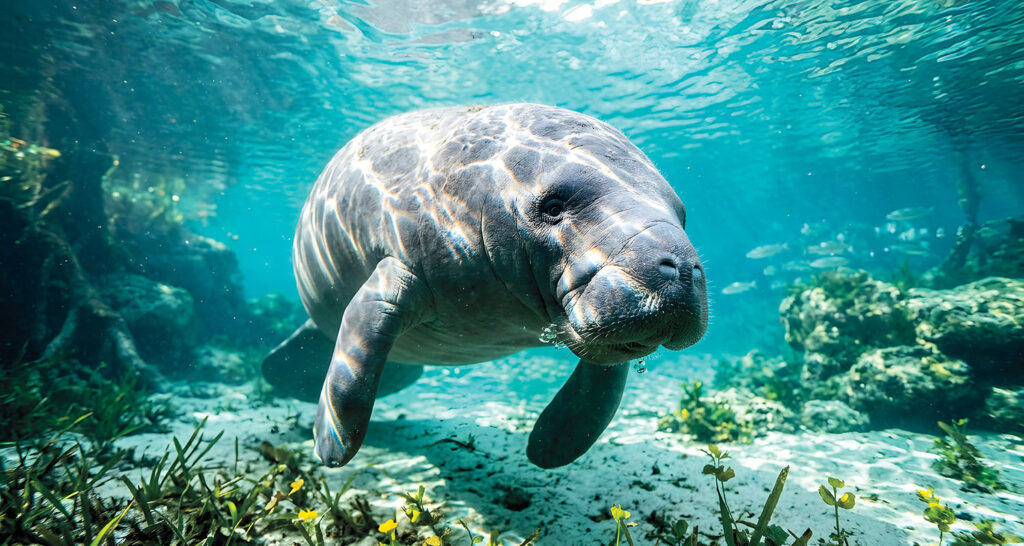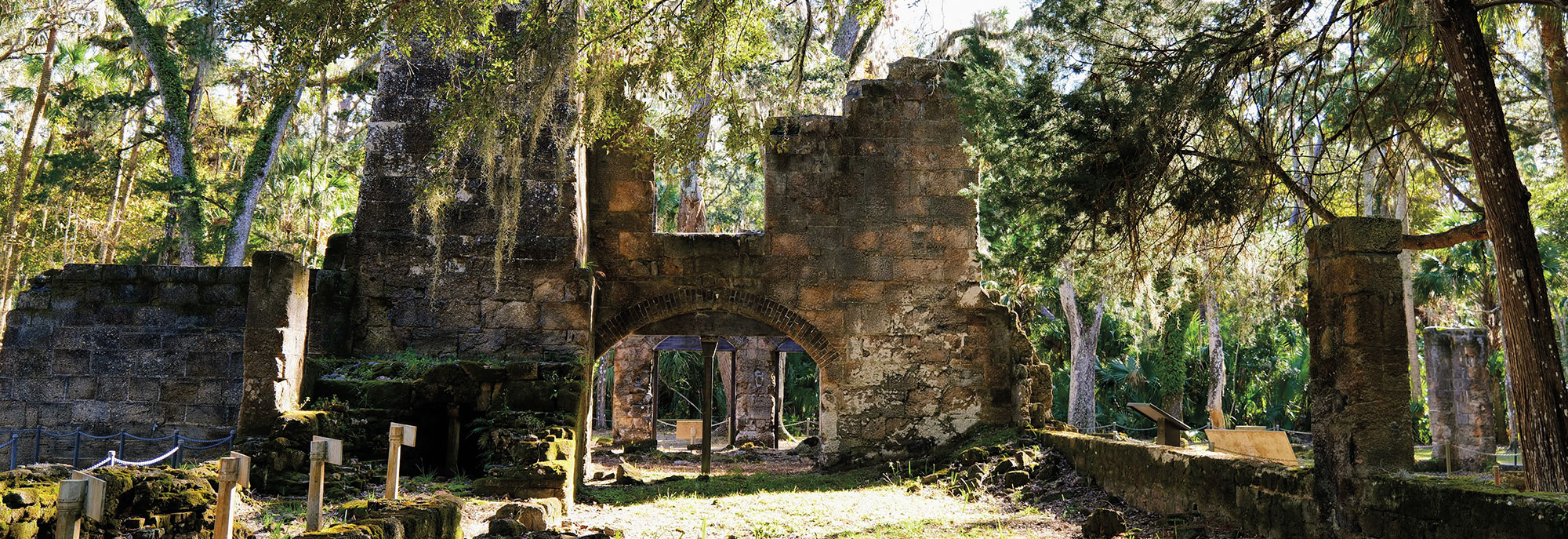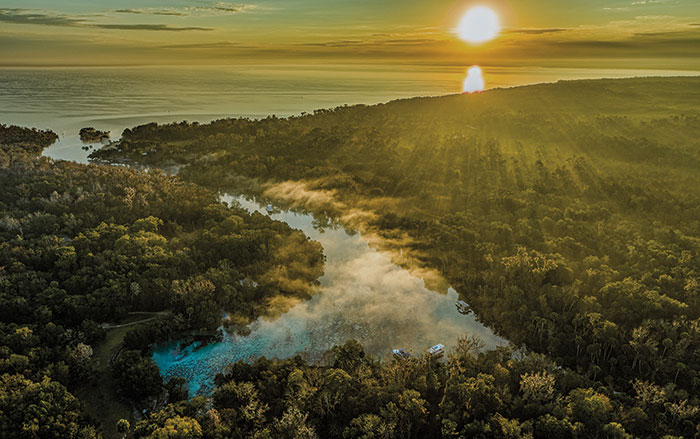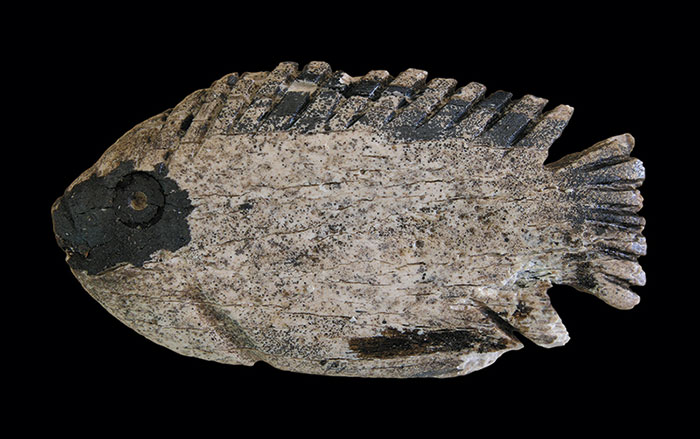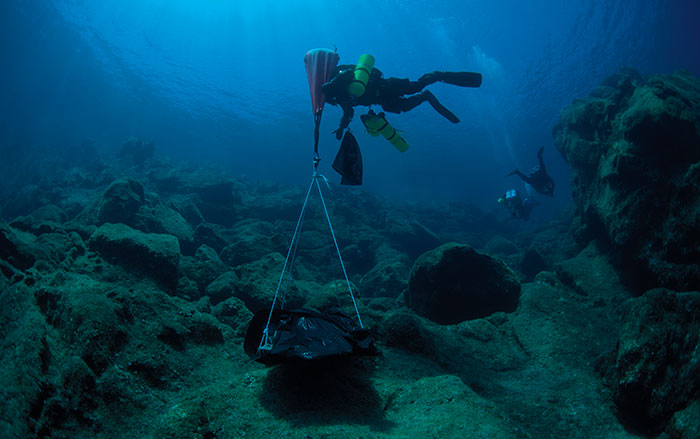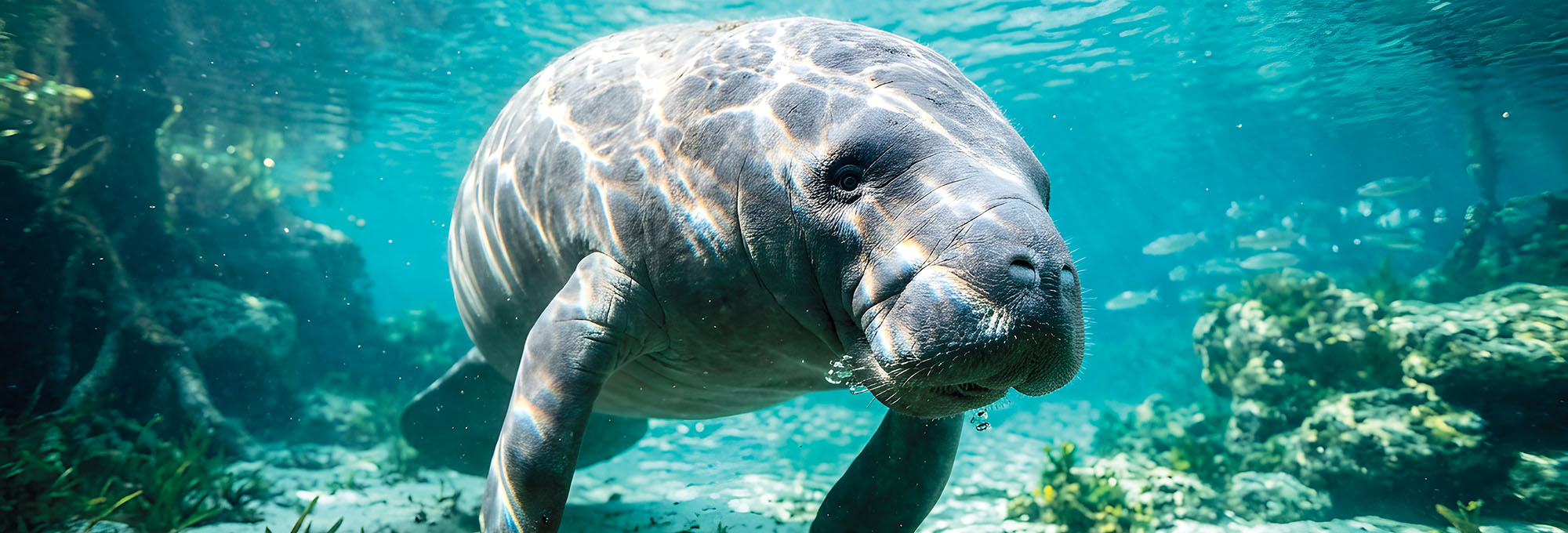
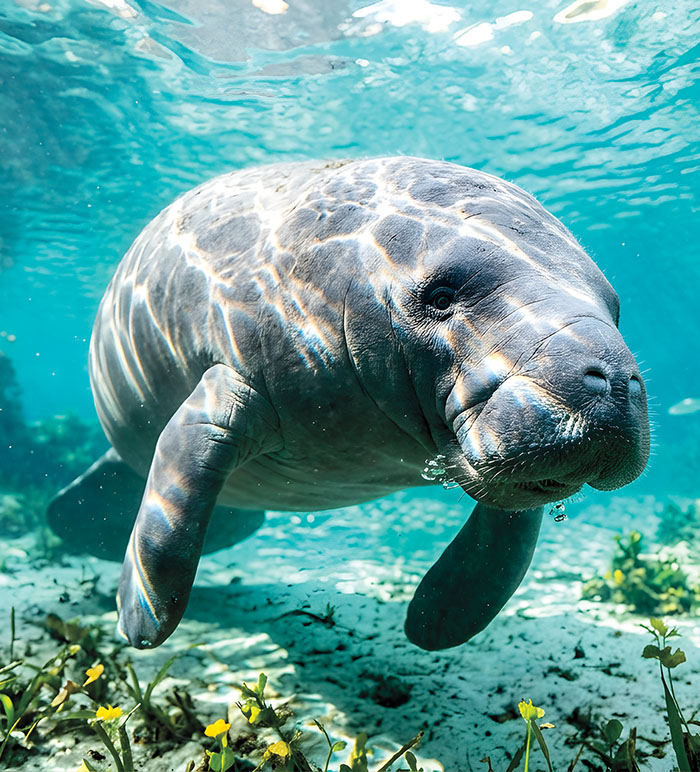
During the winter, hundreds of manatees are drawn to the warm waters of the Crystal River on the Gulf Coast of Florida. Archaeologist Thomas Pluckhahn of the University of South Florida witnessed people greeting the annual arrival of the beloved marine mammals while excavating at a site alongside the river in Crystal River Archaeological State Park, where people ancestral to modern tribes such as the Seminole and Miccosukee lived for some 1,600 years. As he and his team dug, they found numerous bones belonging to animals such as bears, alligators, and panthers—but no manatee remains. His curiosity piqued, Pluckhahn investigated further and discovered that of about two million recorded animal bones from archaeological sites in Florida, there is not a single known example belonging to a manatee. Ancient ornaments fashioned from manatee bones are also vanishingly rare in the state. Pluckhahn was only able to confirm four examples from three sites that were occupied over a period of thousands of years.
Pluckhahn believes that the near-total absence of evidence for the animals in precolonial Florida means that manatees almost never ventured north from the Caribbean, especially during long periods when sea-surface temperatures were much colder than they are today. “It’s possible people went hundreds of years without a sighting,” he says. Pluckhahn notes that manatees have some features that appear otherworldly and some that are strangely reminiscent of humans. “The rare person who saw one must have been awestruck,” he says. “It would have been a powerful reminder to them that there were other, unknown worlds beyond the sea.”