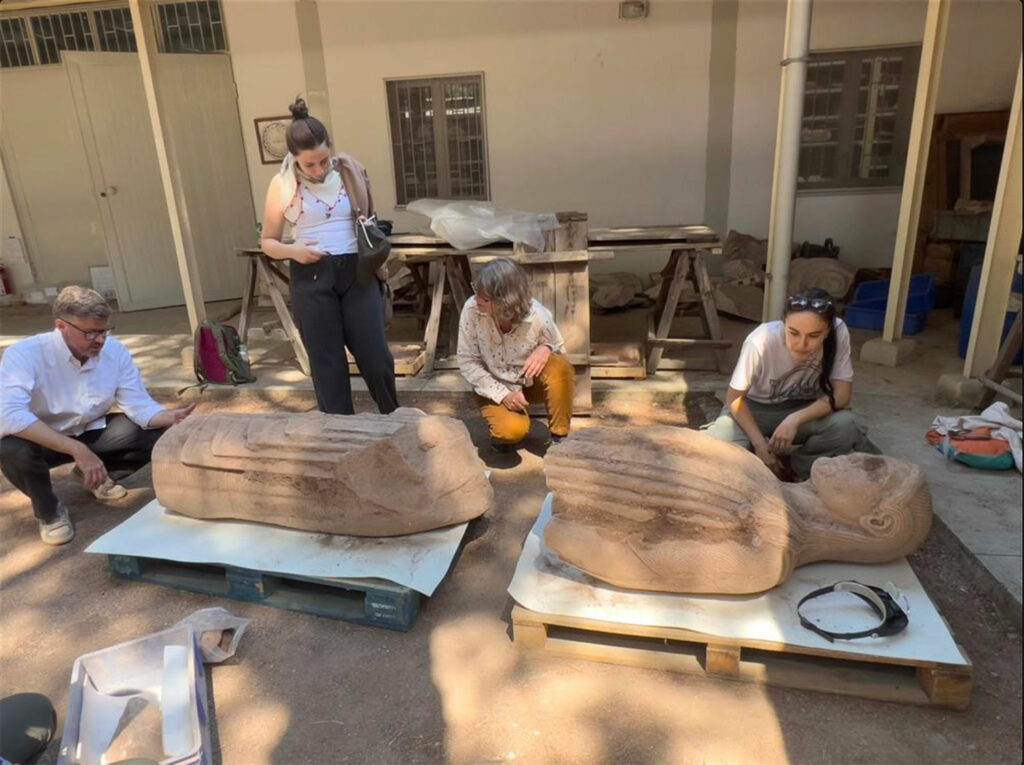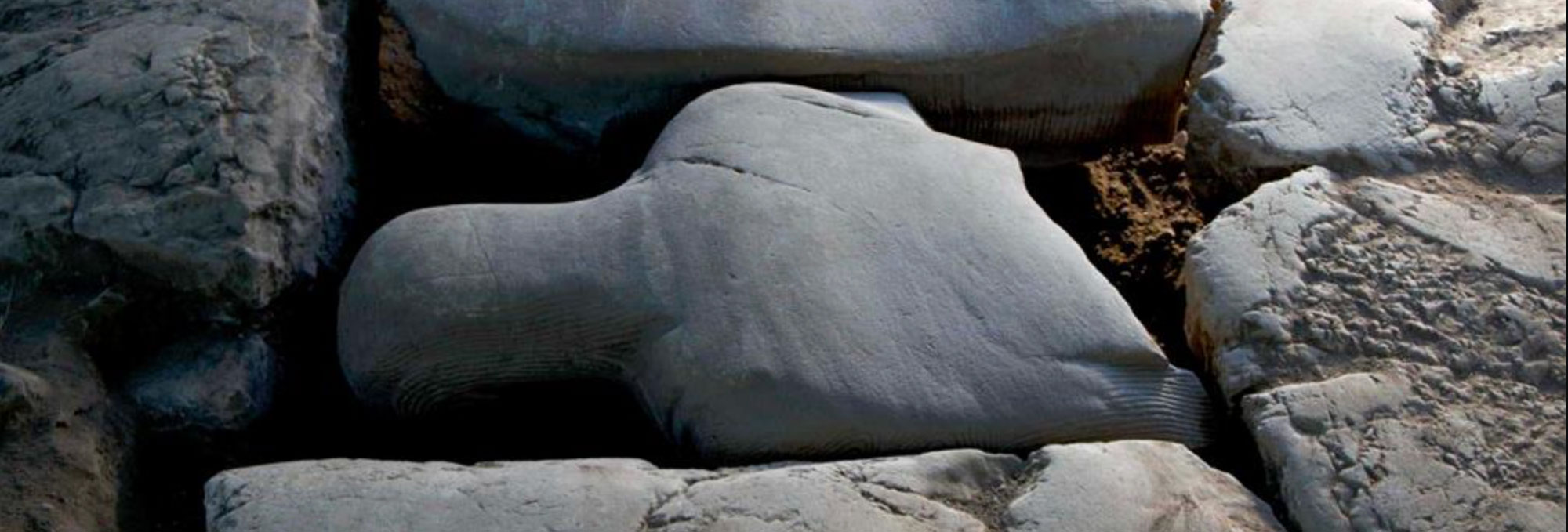
SARDIS, TURKEY—Turkish officials announced that a colossal 2,500-year-old marble statue was uncovered at the ancient Lydian capital of Sardis in western Anatolia, Türkiye Today reports. The larger than lifesize figure—one of the earliest examples of monumental sculpture in the Mediterranean—once stood around seven feet tall and depicts a young man holding a quince in his right hand, perhaps as an offering to a god or goddess. The artwork originally dates to between 470 and 450 b.c., although some aspects of its design, such as its long hair and anatomical posture, more closely resemble an artistic style popular in the previous century. Researchers were particularly intrigued by the figure’s unusual clothing—a Greek-style outer cloak over a tunic-like lighter garment and another item marked by horizontal lines. This combination of garments has not been seen before in other artworks originating in Greece or Anatolia from this time period, and may reflect local Lydian cultural tradition. The statue was not, however, found in its original location. It had been reused centuries later during the Roman period to fill in pavement along a colonnaded avenue. According to Culture and Tourism Minister Mehmet Nuri Ersoy, the sculpture’s monumental scale, well-preserved condition, and unusual details make it a unique discovery. For more on Sardis, go to "The Palace Times."