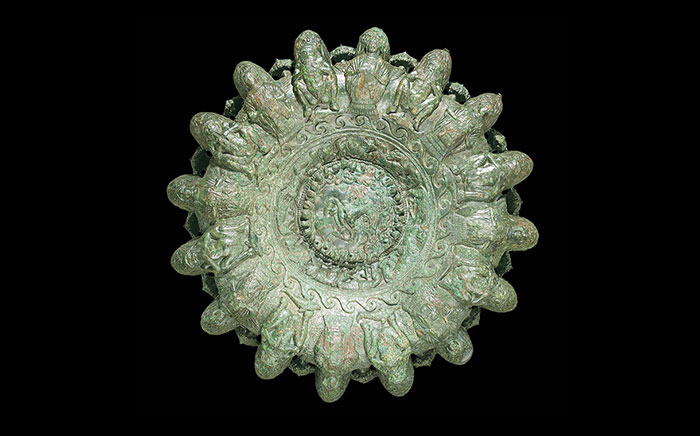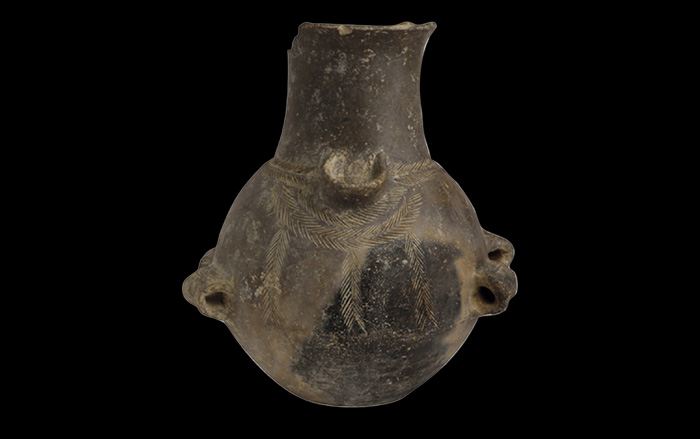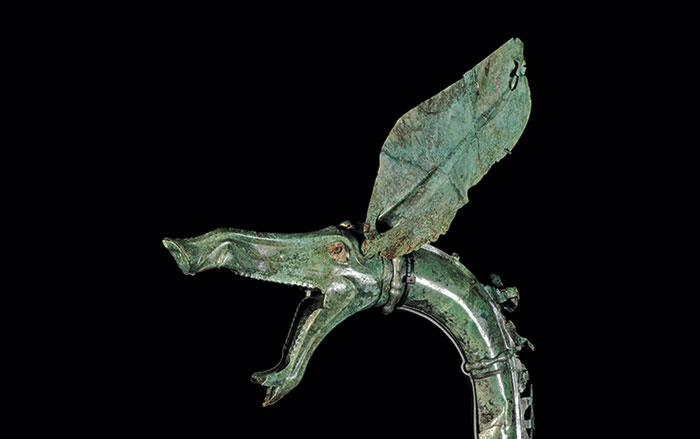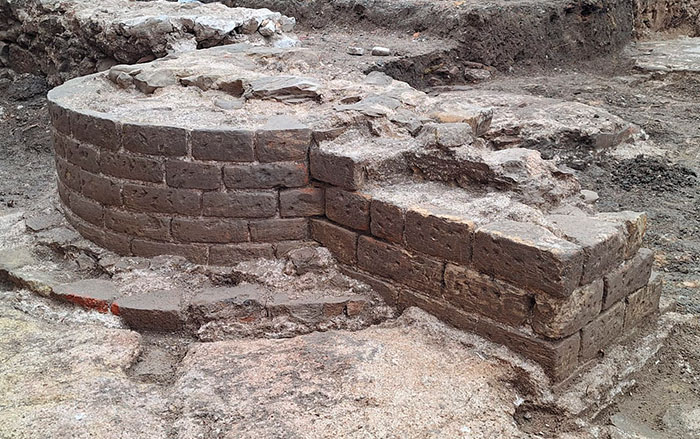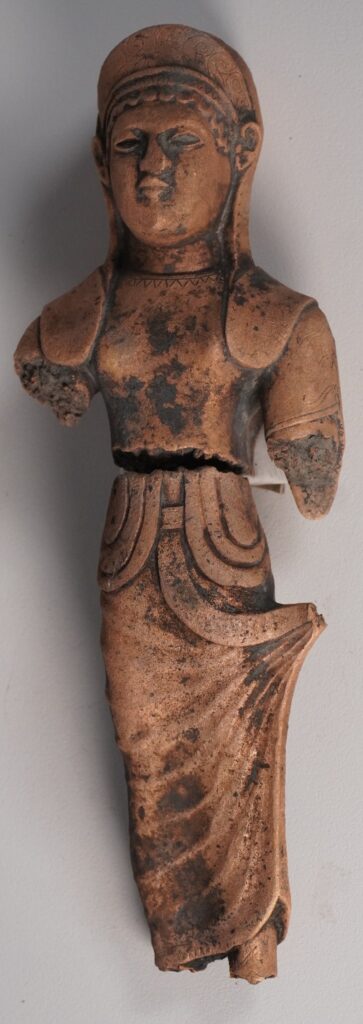
MARZABOTTO, ITALY—According to a Discover Magazine report, a team from University of Bologna found a trove of artifacts, including bronze statuettes, a bronze plaque, and two human skeletons, when they finally reached the bottom of an Etruscan well. The discovery was made at the site of Kainua near Marzabotto, where the university recently completed its 39th campaign. The sacred well was located in the ancient city’s religious precinct near two temples dedicated to Tinia and Uni, the Etruscan equivalent of the Roman god Jupiter and goddess Juno. The well itself was also closely associated with Uni. University of Bologna archaeologist Elisabetta Govi believes that the bronze objects were likely tossed down the well as offerings to ensure a plentiful supply of water when residents first founded the settlement in the late sixth or early fifth century b.c. Dating to a later period, the human remains were seemingly deposited during a ceremonial ritual that marked the official closing of the well. “The results of this excavation campaign therefore enrich our knowledge of the foundation rites of Etruscan cities and Etruscan religiosity with new, precious details,” Govi said. To read about thousands of Etruscan, Roman, and medieval artifacts recovered from a well in Cetamura del Chianti, go to "Fifteen Centuries of Life in Chianti."