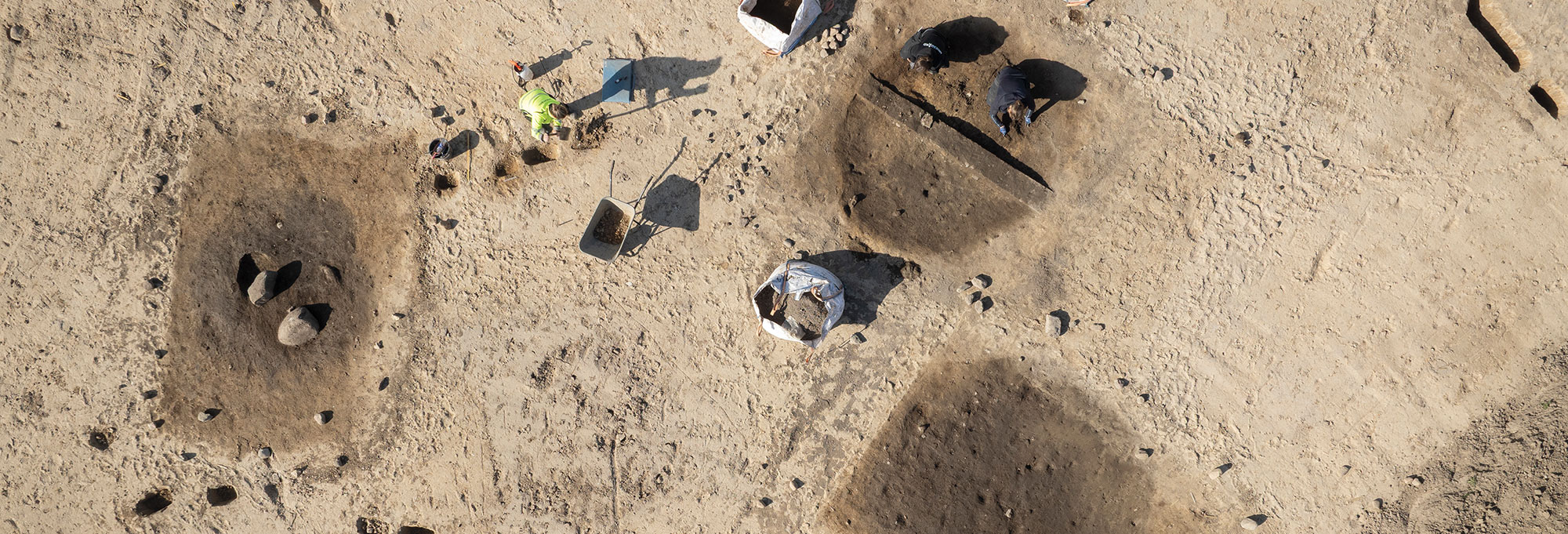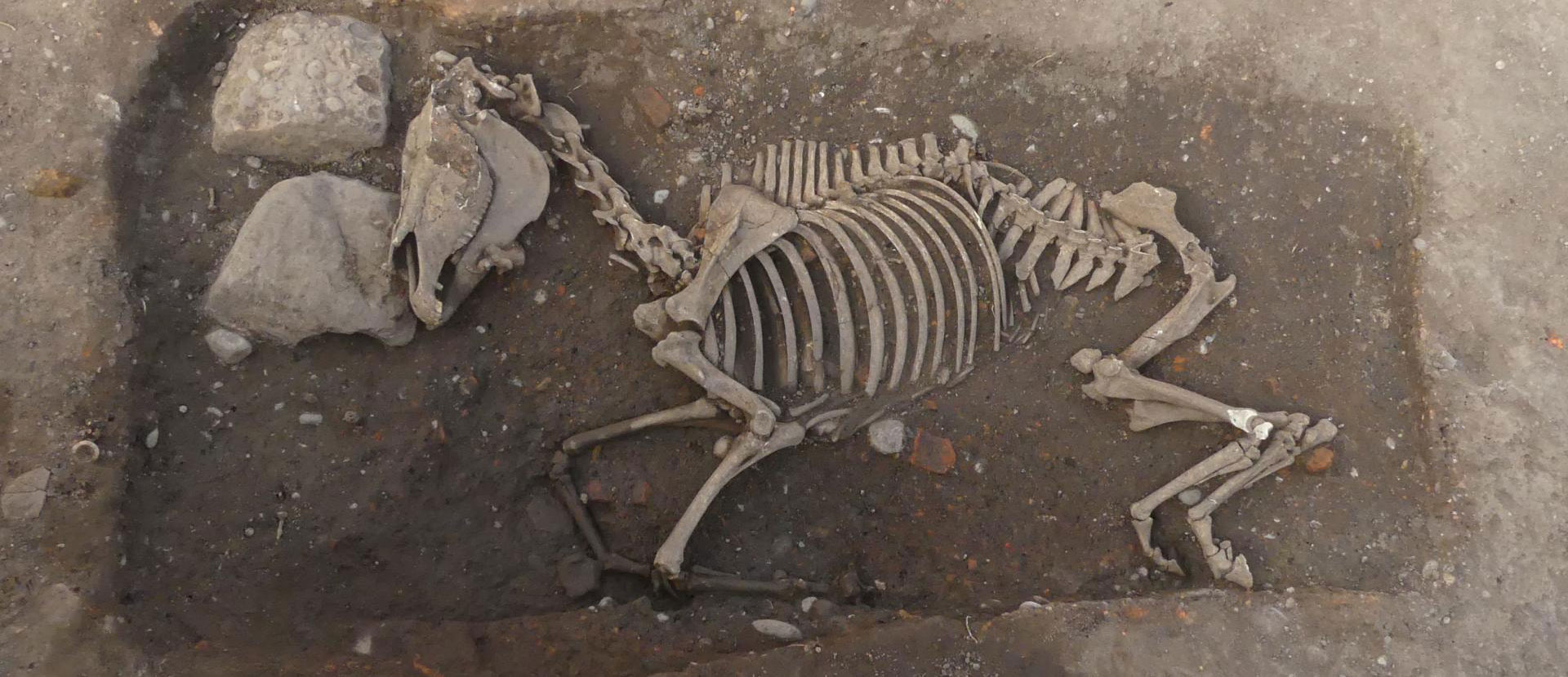
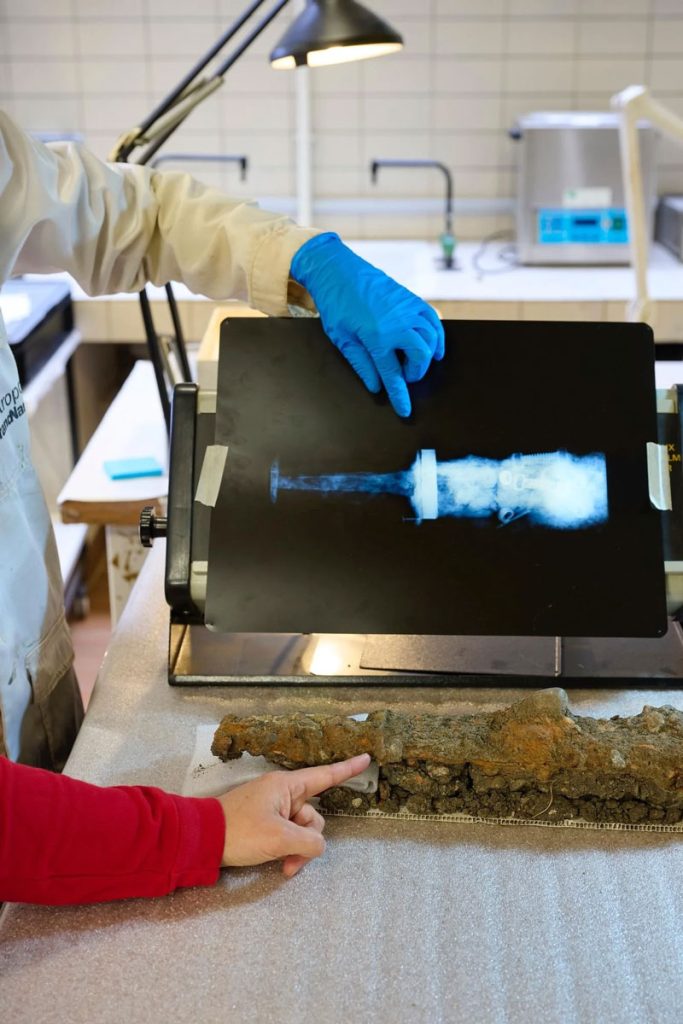
COLMAR, FRANCE—A fifth-century cemetery A.D. has been excavated in northeastern France by archaeologists from the French National Institute of Preventive Archaeological Research (INRAP), Live Science reports. The cemetery was used between about A.D. 450 to 500, around the time of the collapse of the Roman Empire. The graves of 11 adults, three children, and two horses buried with their harnesses have been uncovered. Silver bird-shaped brooches, glass bead necklaces, and a bone comb have been recovered from the women’s graves. A sword, a wooden scabbard, a shield, and a javelin have been unearthed in the men’s burials. A Germanic short sword known as a scramasax, decorated with a gold and garnet accessory, was also recovered from a man’s grave. This type of weapon has been found in the graves of Germanic chieftains or mercenaries. Evidence of stab wounds without signs of healing suggests that two of the men had died quickly and violently. To read about more than 30 horse skeletons dating to between 100 B.C. and A.D. 100 that archaeologists unearthed in central France, go to “Gallic Steeds.”