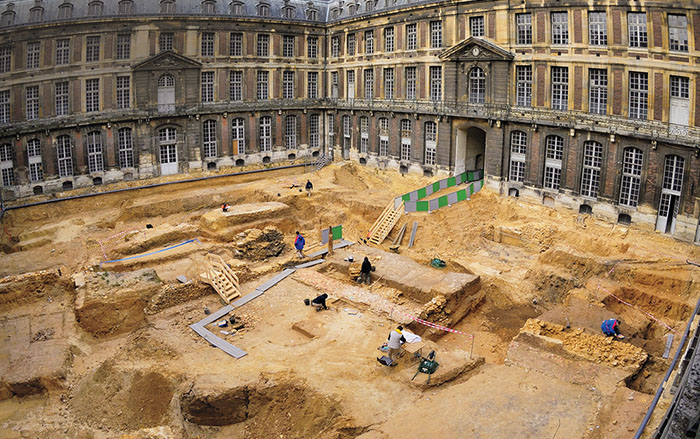
Around 5,600 years ago, the first waves of Neolithic farmers, who came from Anatolia and the Aegean, pushed into what is now central Germany, where they gradually displaced indigenous populations of Late Mesolithic (ca. 7000–4000 b.c.) hunter-gatherers. One Neolithic community, belonging to the Linear Pottery culture, established an outpost along the frontier between the two groups at the site of Eilsleben. Recent excavations there have uncovered burials, pits, and house enclosures, as well as defensive ditches and palisades. These finds suggest the site is the earliest known fortified settlement in the region.
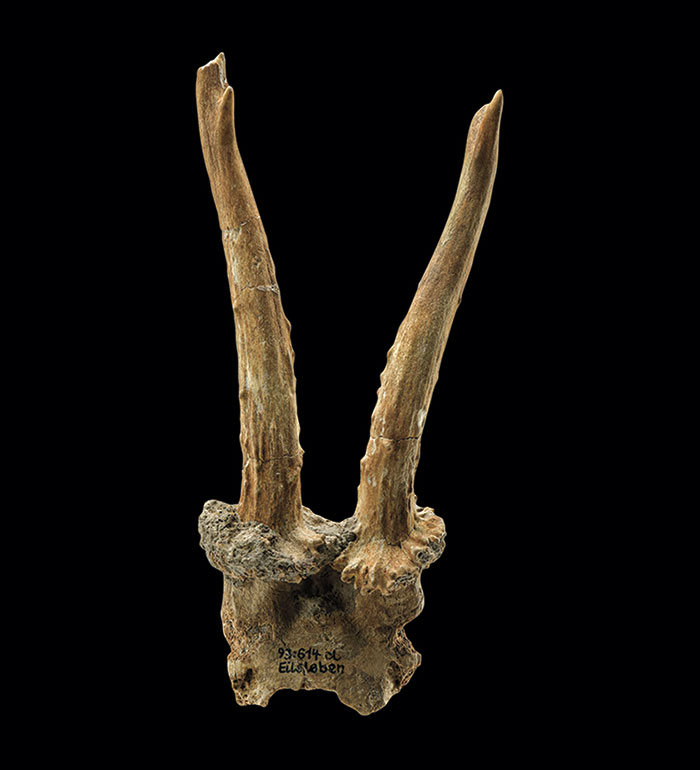
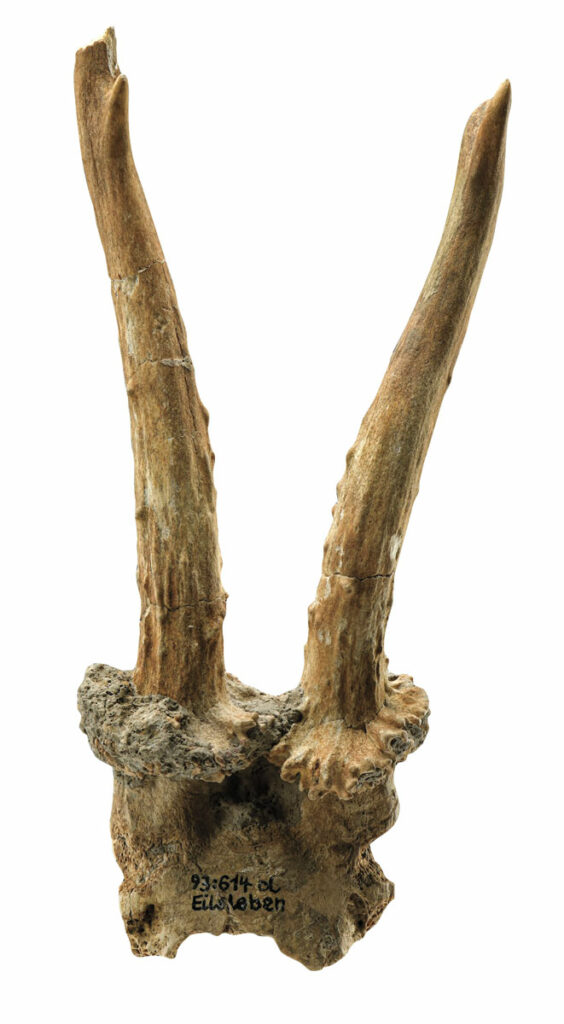
Along with thousands of Neolithic artifacts, archaeologists were surprised to find objects clearly associated with Mesolithic hunter-gatherers, including tools made from deer antler, a material not commonly used by Linear Pottery culture artisans. Most noteworthy is a mask fashioned from roe deer antlers that was likely part of an elaborate headdress. The closest known parallel comes from the grave of a Mesolithic female shaman who was buried at the site of Bad Dürrenberg in Germany around 7000 b.c. The recently unearthed mask sheds light on the relationship between the region’s hunter-gatherers and the newly arrived farmers, indicating that the groups had direct contact and exchanged ideas, goods, and technology. “The roe deer mask is highly unusual,” says Laura Dietrich, an archaeologist at Martin Luther University Halle-Wittenberg. “It suggests contact and transfer not only on a technological level but also within the symbolic or ritual sphere.”