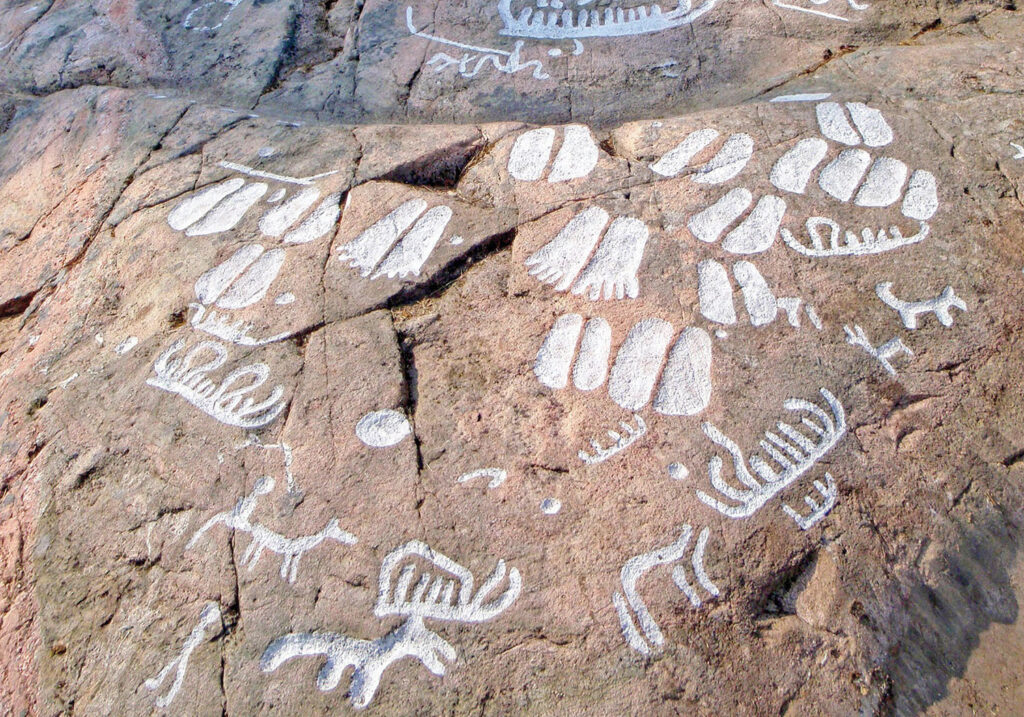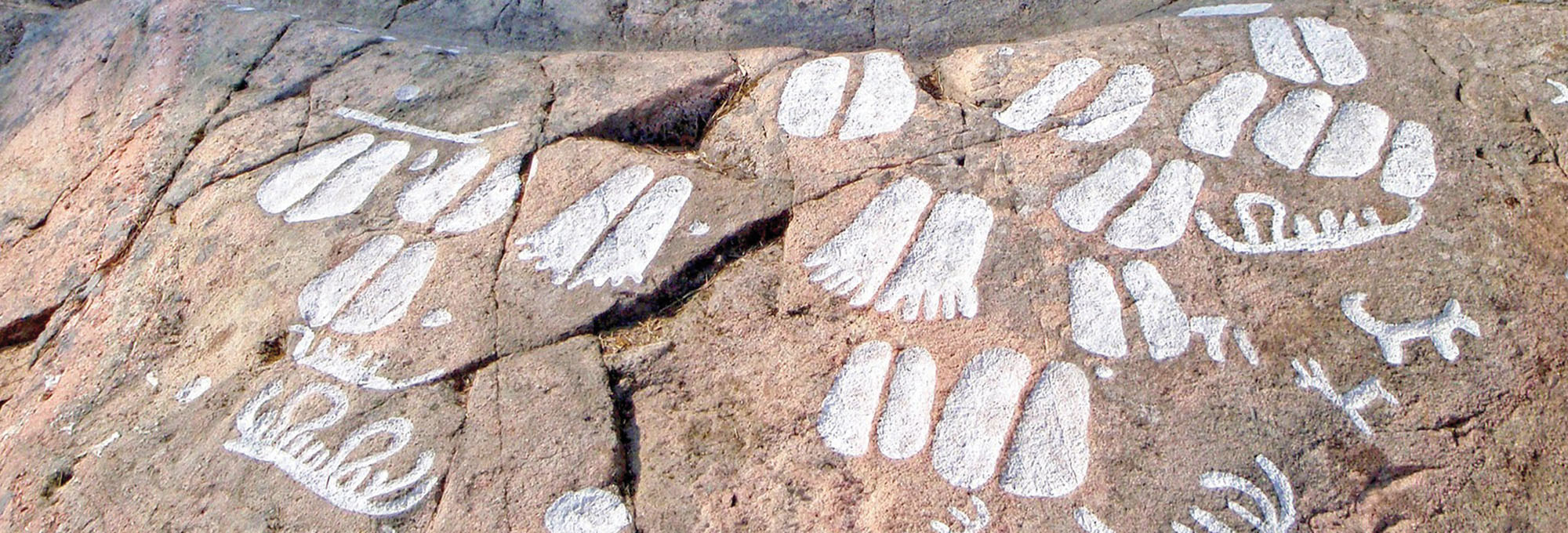
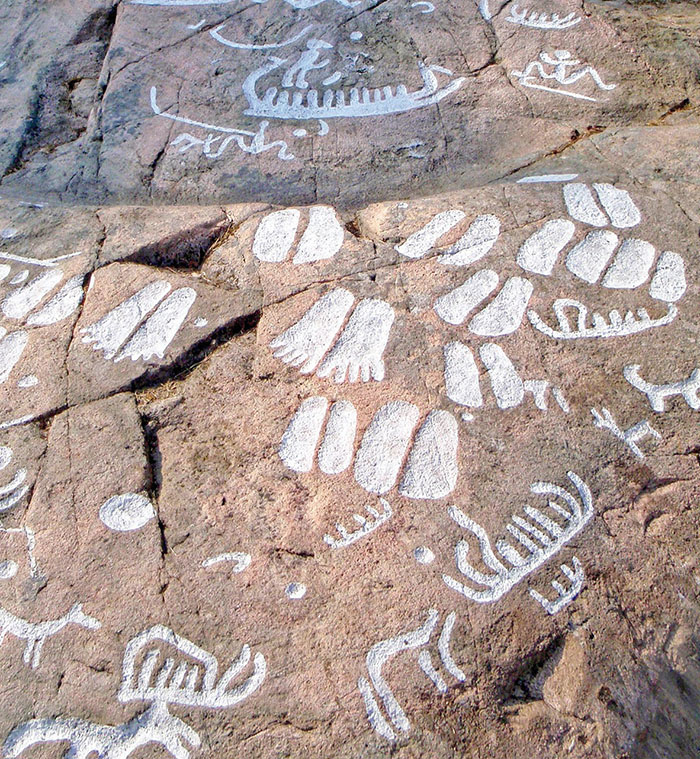
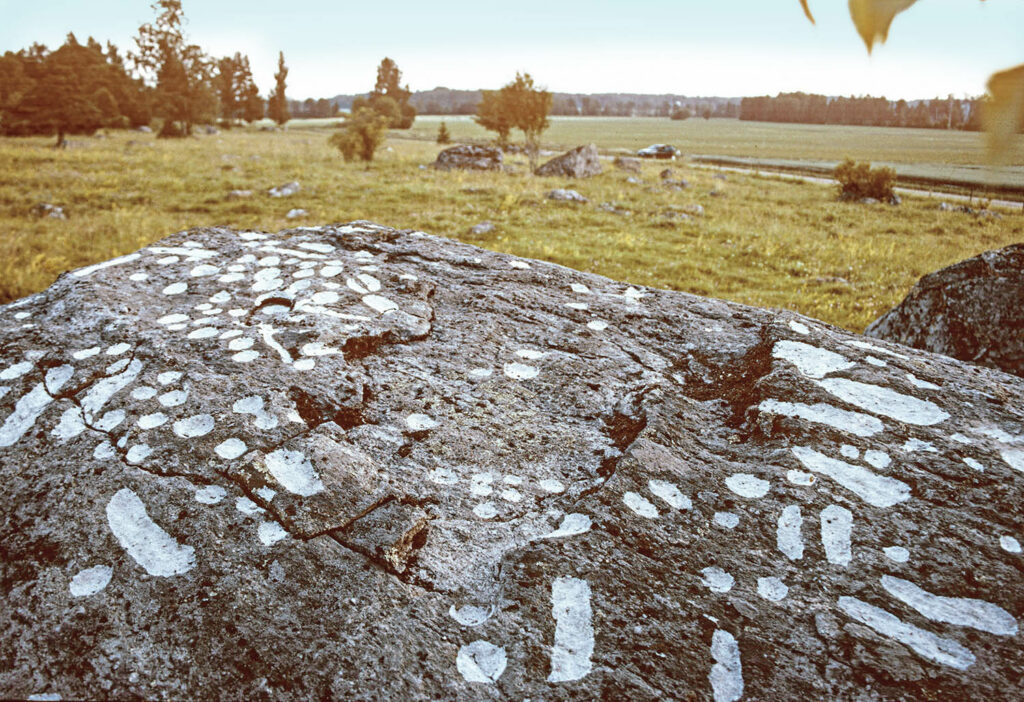
The ancient people of southern Sweden and Norway may have used rock carvings to symbolize connections, transactions, and achievements. Around 1800 b.c., they began making footprint-shaped petroglyphs called podomorphs on rock outcrops. Archaeologist Fredrik Fahlander of Stockholm University examined 627 podomorphs in the Mälaren region of southeastern Sweden and identified some intriguing patterns. He found that the petroglyphs range from 3.5 to 12 inches long, although most are slightly smaller than the average adult foot. Many appear in pairs. Puzzlingly, the paired podomorphs almost never match: They might be different sizes, two right feet placed side by side, or one foot shod and the other bare. “I don’t see any real parallels to this tradition outside Scandinavia,” says Fahlander. “They made something special there for around 1,500 years.”
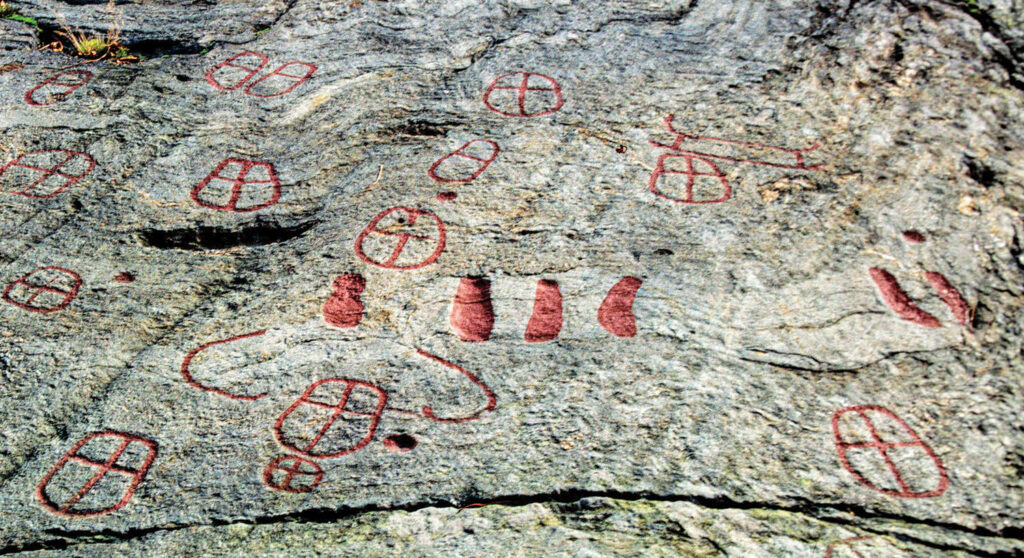
Fahlander believes the podomorphs stood in for individual people. A pair of foot carvings might have communicated an affirmation or a bond. Perhaps each podomorph in a pair belonged to a partner in a marriage or friendship. Or, two feet could have symbolized a votive offering, with one print carved to make a request of a deity and the other added later to signify the plea’s fulfillment. Each footprint might have represented a party to a transaction between maritime traders. Voyagers may have left paired footprints at different moments in their lives. “If you traveled by sea, you made this mark in rock to connect to your home,” Fahlander says. “And when you came back from a successful journey, you did the other foot.”