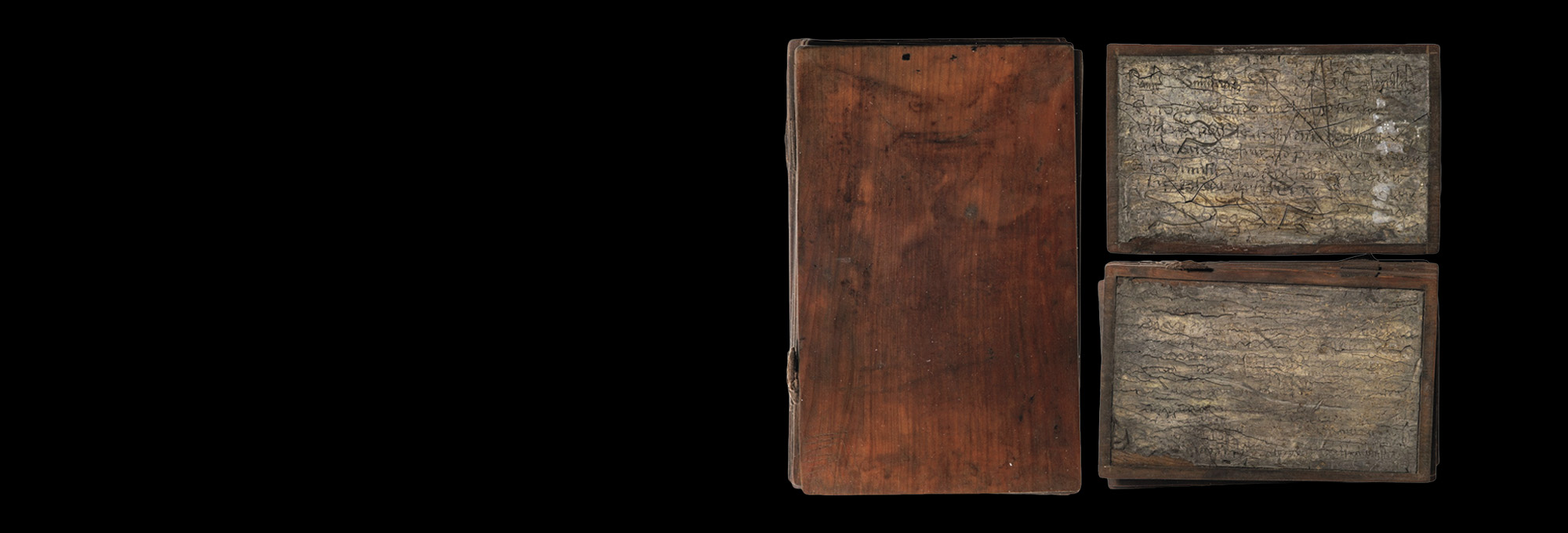
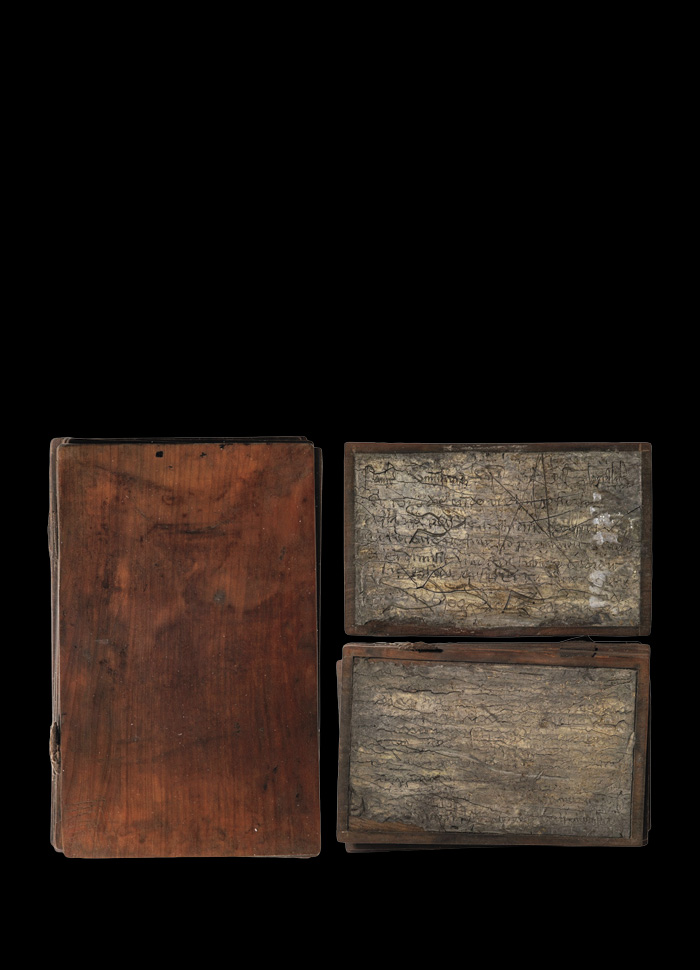
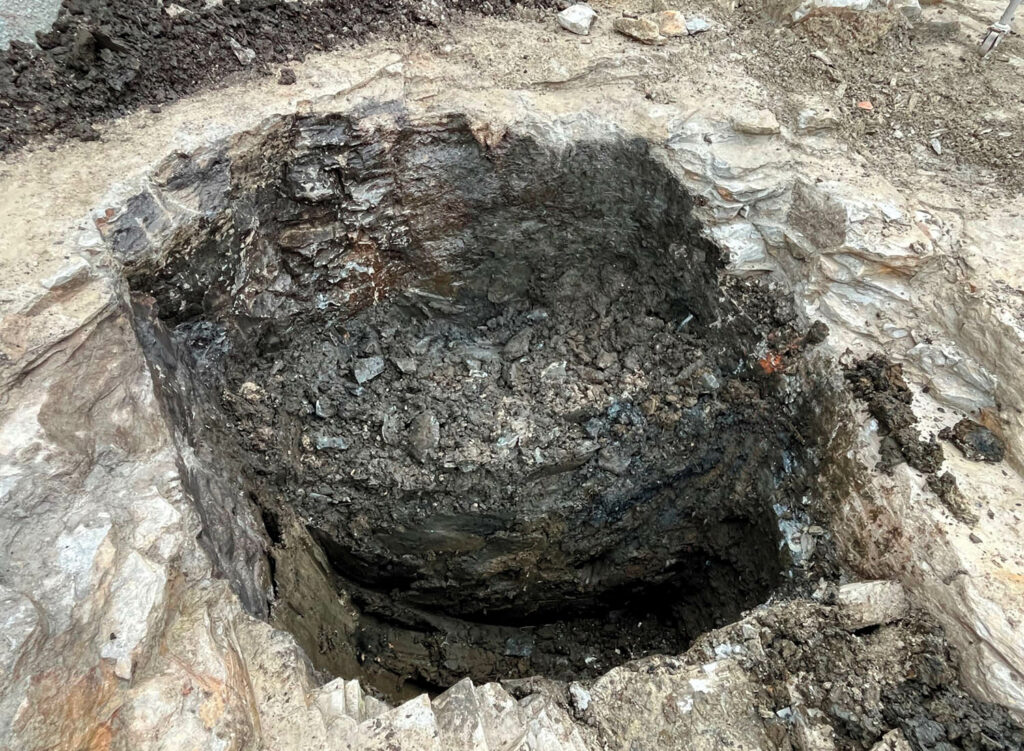
It’s one of archaeology’s great questions: Why do so many interesting artifacts end up in toilets? In the case of a 700- to 800-year-old notebook discovered during excavations in western Germany’s city of Paderborn, the book’s owner likely dropped it and watched in despair as the iPhone-size object slipped into the abyss much like some people in recent years have seen their precious phones sink to the bottom of the bowl. For archaeologists, however, latrines provide favorable conditions for preserving artifacts, especially those made of organic materials such as the notebook. “This latrine provided ideal conditions because it was sealed airtight and the extremely damp environment helped preserve the wood and wax of which the notebook is made,” says Paderborn City Archaeologist Sveva Gai. The notebook was also enclosed in an embossed leather case, further shielding it from centuries of decomposition.
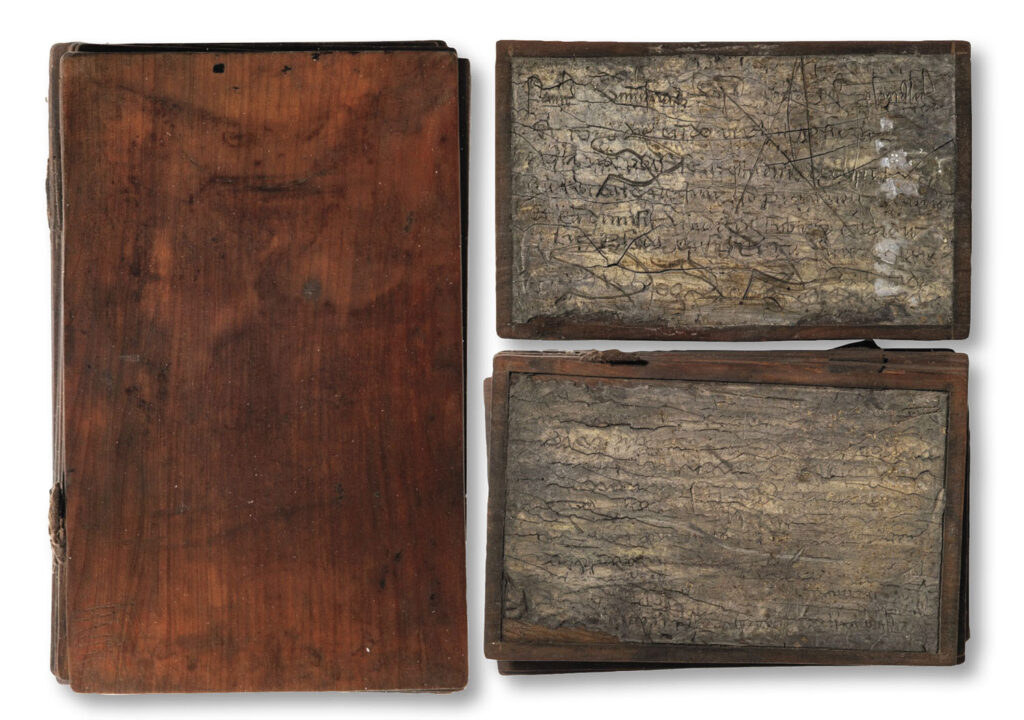
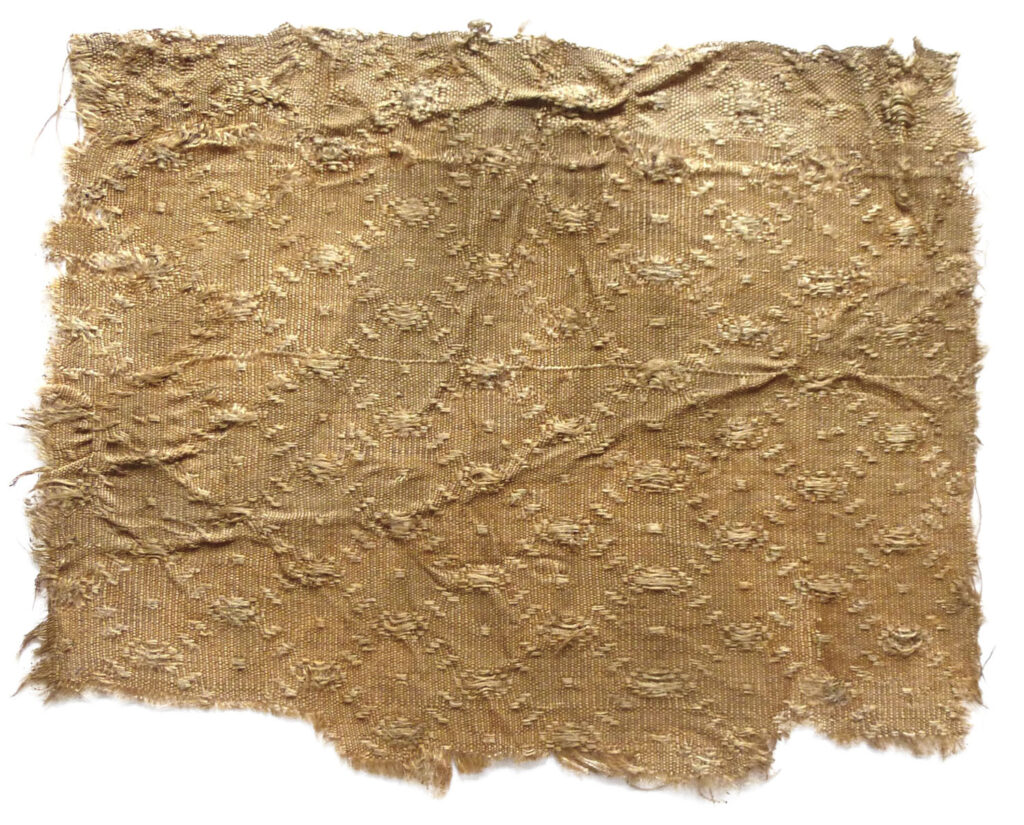
Although the writing on the notebook’s 10 wax-covered pages has yet to be deciphered—transcribing the text and conserving the artifact will take a full year—archaeologists have been able to identify it as Latin. Gai thinks the notebook likely belonged to someone from the upper class, perhaps a wealthy merchant recording transactions or musings, or perhaps a clergyman or young monk associated with the nearby St. Peter and Paul Monastery. “Some of the sentences appear to be writing exercises that could be erased, making it possible to reuse the tablet for information that wasn’t meant to last forever,” says Gai. Along with the notebook, archaeologists found torn pieces of silk, which may have been used as toilet paper, a further indication of the owner’s social and economic standing. Apparently, bargain-priced toilet tissue just wouldn’t do.