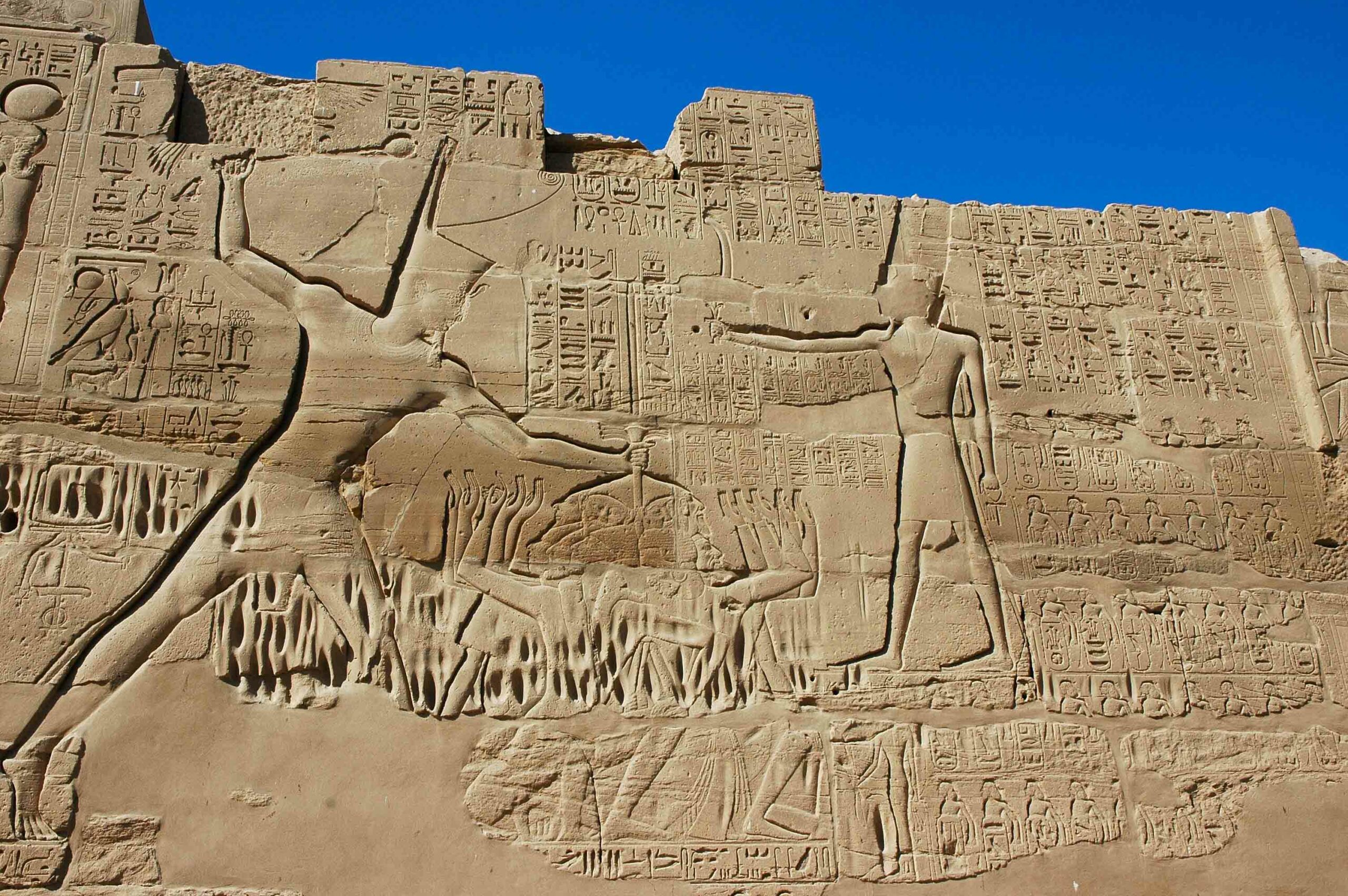
Give praise to the lady of the land, mistress of the Aegean shores, with noble name in all foreign lands, who made the plan for the masses, queen and sister of the sovereign, daughter of a king and mother of a king, noblewoman, learned woman, who takes care of Egypt. She recruited its infantry, she secured it, she took care of its refugees, she gathered its deserters, she calmed Upper Egypt, she drove out its rebels, Queen Ahhotep may she live!—Inscription from temple complex, Karnak, Egypt, ca. 1550 b.c.
From April 1 to November 3, 1867, Paris’ Exposition Universelle, one of the grandest of the world’s fairs held in the nineteenth century, attracted more than 10 million visitors who came to see firsthand the achievements of dozens of countries and their colonies. There were displays of some 52,000 novelties, including an early hydraulic elevator, a submarine, 450 species of exotic plants gathered by a French naturalist in Gabon, and artistic treasures such as woodcuts from Japan—this was the first time the nation had participated in a world’s fair. In the Egyptian pavilions, too, visitors saw something most had never seen before.
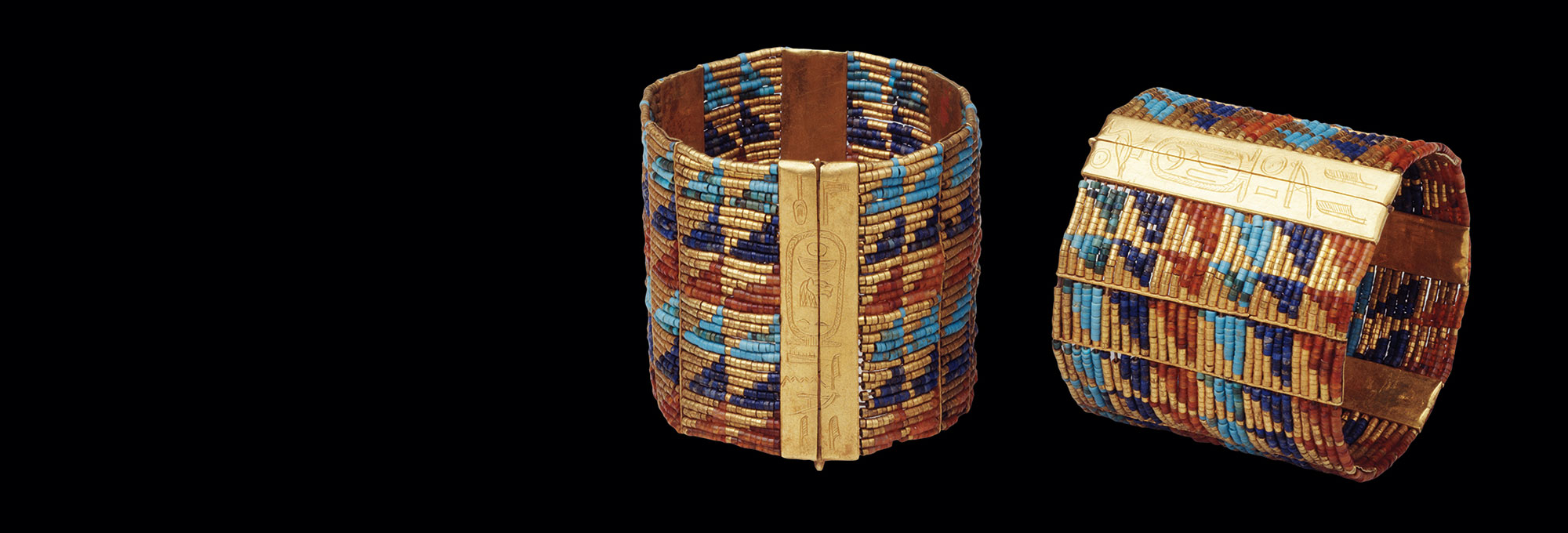
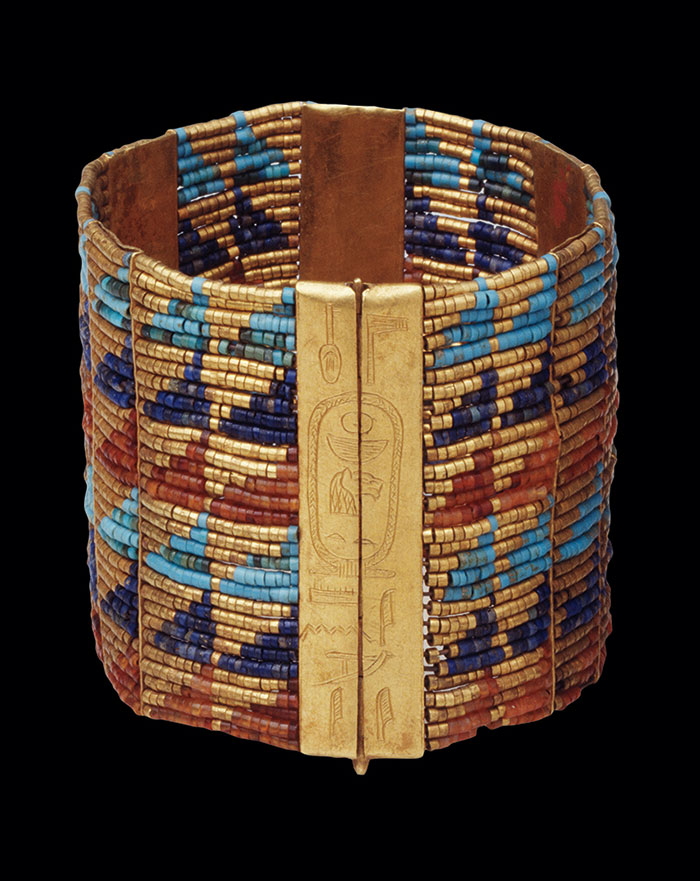
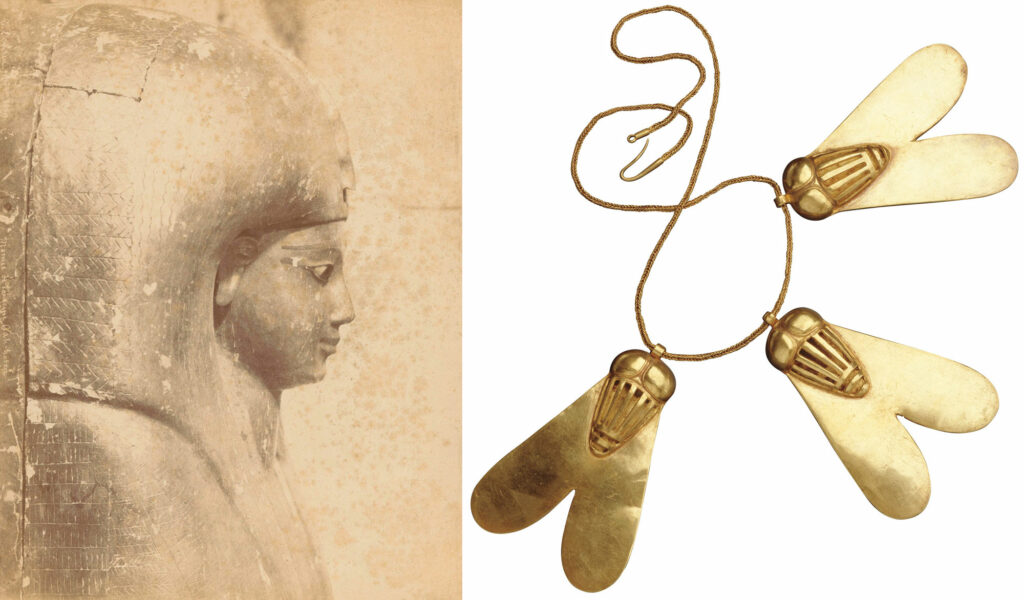
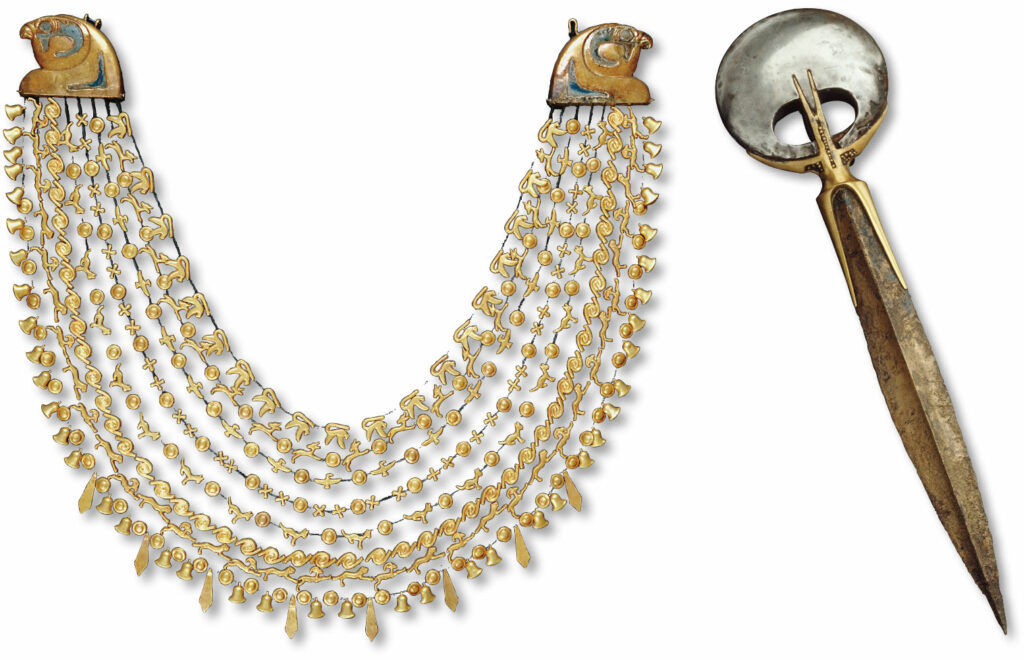
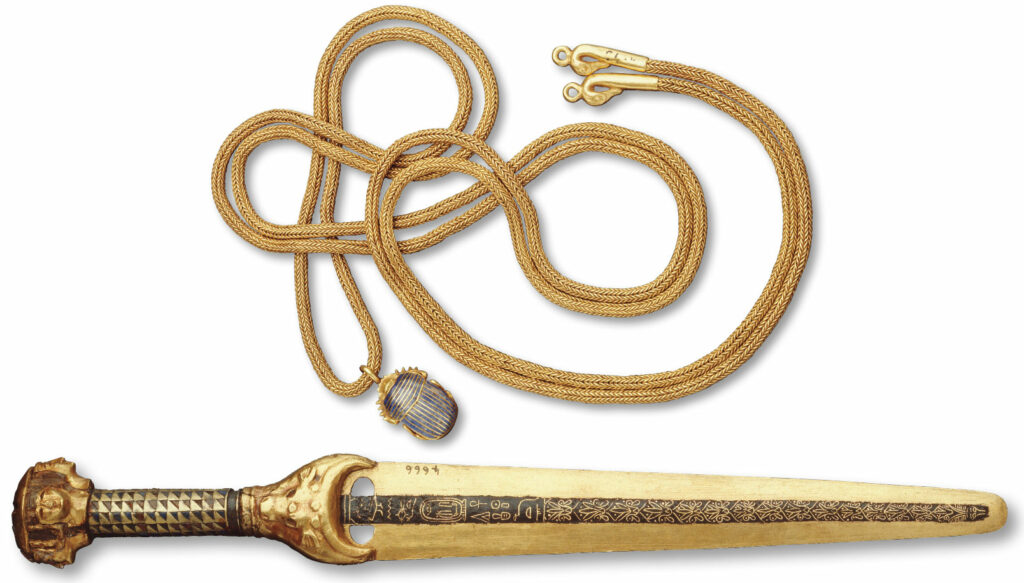
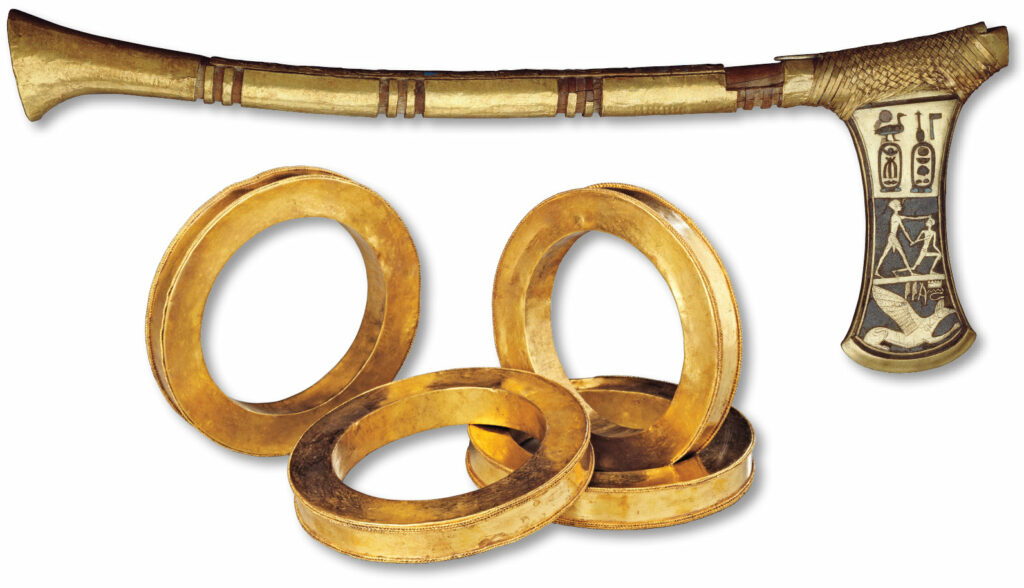
Sprawling across 1.5 acres, these pavilions showcased the richness of Egypt’s culture, including a working model of the Suez Canal; merchants selling traditional delicacies, makeup, perfume, and brightly colored carpets; a barber recommending an “Oriental shave”; and stables housing donkeys and dromedaries. One of the pavilions’ four main buildings was a partial replica of the second-century a.d. Roman emperor Hadrian’s temple at Philae on the Nile. Inside this splendidly decorated structure was a case containing a collection of gold jewelry and weapons said to have belonged to an ancient Egyptian queen named Ahhotep. Among these artifacts were inlaid, enameled, and beaded bracelets, sharp-edged silver and gold daggers, an ornately decorated gold battle-ax, and a heavy gold chain from which were suspended three golden flies each measuring 3.5 inches long. The spectacular objects had been discovered in 1859 in a gilded coffin at the site of Dra Abu el-Naga, in the ancient Egyptian capital of Thebes. These were the early days of scientific Egyptology—it would be more than 50 years before Howard Carter discovered King Tutankhamun’s tomb. Unless someone had been to the new museum in Cairo founded to display the artifacts from Dra Abu el-Naga, few would have seen such treasures. One visitor to the Paris Expo, the French empress Eugénie, wife of the emperor Napoleon III, was so smitten with Ahhotep’s jewels that she asked Egyptologist Auguste Mariette, who had overseen the excavation at Dra Abu el-Naga, if she could have them. Mariette swiftly declined.
In the century and a half since their discovery, both public and scholarly interest in the gleaming artifacts unearthed at Dra Abu el-Naga has waxed and waned. Among Egyptologists, these objects have on occasion been nearly forgotten, whereas at other times they have been the subject of heated debate over who the coffin and artifacts belonged to. Mariette was not present when the discovery was made, and the excavation’s records are woefully incomplete. “We still don’t understand what they actually found because we don’t have any drawings or plans,” says Egyptologist Gianluca Miniaci of the University of Pisa. “For example, sometimes the records describe an 18-foot shaft in the ground with a burial at the bottom, and sometimes they say it’s only three feet underground.” Settling on the identity of the woman in the burial—scholars have always agreed that it was a woman—has been complicated. Her mummified body was discarded, likely soon after it was found, being of little interest at the time, and none of the objects currently in the collection bears her name. “Over the years, some things from the burial have wandered off and ended up in different places,” says Egyptologist Peter Lacovara of the Ancient Egyptian Archaeology and Heritage Fund.
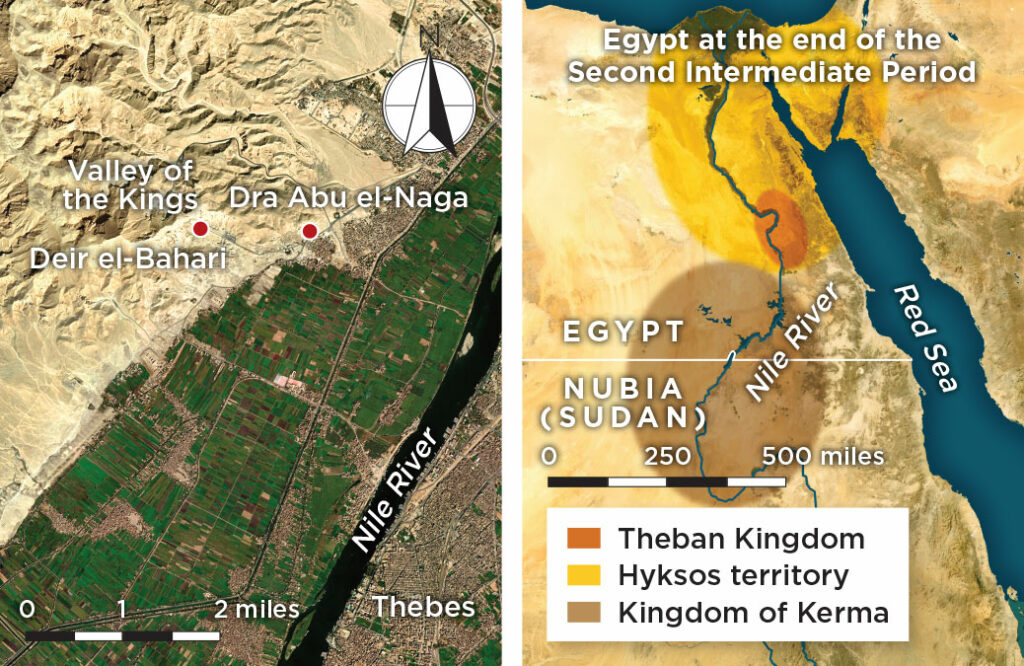
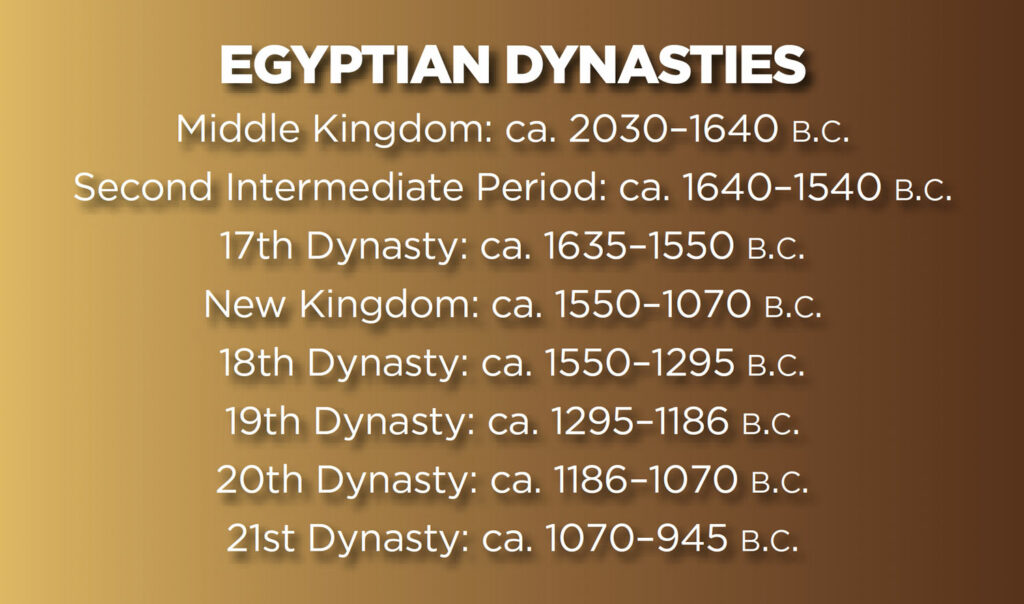
With each resurgence of interest in the Dra Abu el-Naga burial, old disagreements resurface and new interpretations are proposed. Regardless of who scholars believe was buried in the golden coffin, however, the objects supply essential insights into a lesser-studied period of Egyptian history. During the Middle Kingdom, Egypt was a powerful, unified realm ruled from Thebes. But as the end of this period approached, things began to break down, and the kingdom shrank to a small area around the capital. “The Middle Kingdom kind of ran out of steam,” Lacovara says. “The rise of the nobility and the weakness of the pharaoh and the central government in the kingdom’s waning days caused Egypt to fracture.” This left the Thebans vulnerable to the rise of the Hyksos, Semitic speakers from western Asia who came to control parts of Lower Egypt and the Nile Delta in the north during the Second Intermediate Period. To Egypt’s south was the Kingdom of Kerma in Nubia, now Sudan. In the mid-second millennium b.c., Kerma took control of some of the most fertile parts of Egypt along with Egyptian fortresses as much as 100 miles north of their capital.
The artifacts from Dra Abu el-Naga—which scholars agree remain among the greatest discoveries in the history of Egyptology—provide evidence contradicting assumptions that Egypt was a shadow of its former self at the end of the Second Intermediate Period. In fact, the kingdom was closely connected to the greater world and had a significant role in the geopolitics of the time. It was also during this period that the groundwork was laid for the triumphs of the 18th Dynasty rulers. These pharaohs were beneficiaries of the defeat of the Hyksos, which was engineered by Ahhotep and her family, and of the reestablishment of relationships between Egypt and foreign powers that had gone dormant. The 18th Dynasty included pharaohs such as Thutmose III, under whom the empire reached its largest extent; Amenhotep III, its greatest builder; and Akhenaten, leader of a bold yet short-lived religious revolution. It also saw the rise of powerful queens such as Thutmose II’s wife Hatshepsut, Amenhotep III’s wife Tiye, and Akhenaten’s wife Nefertiti. The influence of these women, who sometimes ruled as regents for their sons until they came of age, and in one case, as pharaoh herself, was inescapable. While these queens’ identities are uncontested, that of Ahhotep—who helped resurrect a kingdom that had been in decline—is far more nebulous.
Not long after Mariette’s team discovered the artifact-filled golden coffin at Dra Abu el-Naga in a necropolis where Second Intermediate Period rulers of Egypt were interred, Egyptologists associated the burial with Queen Ahhotep. Their conclusion was based on the presence of the prestigious title “Great Royal Wife” and the name Ahhotep on the coffin, as well as the fact that several of the objects bore the name and image of Ahmose (reigned ca. 1550–1525 b.c.), Ahhotep’s son and the founder of the 18th Dynasty. There were also objects inscribed with the name of the final 17th Dynasty pharaoh, Kamose. Over time, this interpretation seemed to be strengthened by the fact that some artifacts showed stylistic affinities with objects produced by Aegean powers such as the Minoans in Crete and Mycenaeans on the Greek mainland. These similarities in style appeared to echo how Ahhotep is described in an inscription on a stele dedicated by Ahmose in the temple complex at Karnak in the northern part of Thebes. This inscription lauds the queen’s defeat of the Hyksos and calls her “sovereign of the shores of the Hau-nebut,” which is thought to refer to the lands of the Aegean. Furthermore, the golden coffin’s style and dimensions were very similar to those of the coffin belonging to Ahhotep’s husband and Ahmose’s father, Seqenenre Tao II (reigned ca. 1560–1552 b.c.).
However, a discovery in 1881 called the identity of the woman in the Dra Abu el-Naga burial into question. Gaston Maspero, who succeeded Mariette as Egypt’s director general of antiquities, excavated the site of Deir el-Bahari on the west bank of the Nile, about two miles from Dra Abu el-Naga. There, he found a cache of more than 50 mummified bodies and funerary artifacts belonging to some of Egypt’s greatest 17th, 18th, and 19th Dynasty pharaohs, queens, and royal family members. The bodies and the objects had been moved from their original necropolis during the 21st Dynasty to safeguard them. Among the finds in Deir el-Bahari was a wood and cartonnage coffin originally belonging to a queen named Ahhotep and displaying the titles “King’s Mother,” “King’s Daughter,” and “King’s Sister.” It had later been reused to bury a Theban high priest named Pinedjem I.
The existence of two coffins found in different locations both identified as belonging to Ahhotep has led some scholars to assert that there were two queens by that name, one buried in Dra Abu el-Naga with the precious grave goods and the other buried in the wooden coffin that was later reused and found at Deir el-Bahari. “All the gold objects from Dra Abu el-Naga are clearly from the late 17th Dynasty, but not one piece has Ahhotep’s name on it,” says Egyptologist Arlette David of the Hebrew University of Jerusalem. “There’s Kamose, Ahmose, but not her. I would expect that at least some of the objects buried with her would have her name. I’d be very happy to see this treasure as her treasure, but these pieces may not belong to her.” Those on the other side of the debate argue that there was a single queen named Ahhotep, celebrated in the Karnak inscription and buried in Dra Abu el-Naga with a collection of artifacts signaling her familial links and achievements. “There’s no historical attestation of a second Ahhotep,” says Lacovara.
To support the two-queens theory, some scholars point out that the gold coffin from Dra Abu el-Naga would not have fit inside the wooden one from Deir el-Bahari. Lacovara, for one, disagrees. “I don’t think the fact that it may not fit matters because there are plenty of other sets of coffins that don’t fit exactly together,” he says. “I think they made the gold one, and then they made the wooden one, and for whatever reason, they didn’t use it. That’s how it ended up in the Deir el-Bahari cache, not because there were two different burials for two different queens.” Lacovara also insists that each object buried in the Dra Abu el-Naga coffin was likely placed there because it held particular significance for the queen.
Miniaci is one of the scholars who believes that there were two Queen Ahhoteps. “The Dra Abu el-Naga burial isn’t a complete funerary assemblage fit for a queen,” he says. “We don’t even know if the objects were all originally buried in the coffin or if some were added in a later period.” Miniaci thinks that the Ahhotep buried in the wooden coffin was Ahmose’s mother, who ruled for him as regent when he became pharaoh around the age of 10 after both his father, Seqenenre, and his father’s successor, Kamose, died on the battlefield. He suggests there was another Queen Ahhotep who reigned shortly before Ahmose took the throne and who was buried at Dra Abu el-Naga. “Ahhotep is a common enough name,” Miniaci says. “The most important title a royal woman could have is ‘Mother of the King,’ which appears on the Deir el-Bahari wooden coffin but not the golden Dra Abu el-Naga one. You can have lots of wives, but only one mother.”
The debate over the identity of the woman in the golden coffin is no doubt compelling, but its resolution isn’t necessary to appreciate the tremendous significance of the objects it contained. “This is a relatively obscure moment in Egyptian history, yet one that is quite crucial, so the story this treasure tells us is very important,” Miniaci says. “Sometimes you don’t need a definite answer to everything for it to matter.”
EXPAND
The Pharaoh's Fort
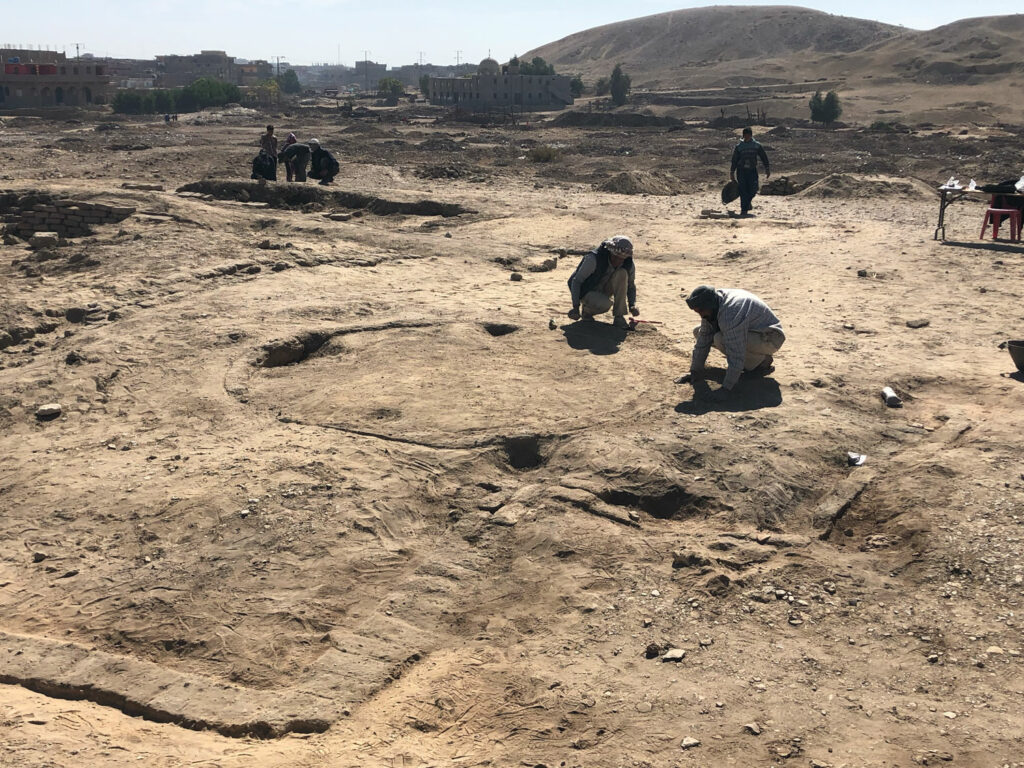
At various times over the last century and a quarter, archaeologists have excavated at Deir el-Ballas, one of the most significant, least known, and most threatened ancient sites in Egypt. Located on the west bank of the Nile in southern, or Upper, Egypt, 19 miles from the ancient capital of Thebes, the site served as a military base for the campaigns to expel the Hyksos from Egypt during the reigns of the 17th Dynasty pharaohs Seqenenre Tao II (reigned ca. 1560–1552 b.c.) and his successor, Kamose, as well as the 18th Dynasty pharaoh Ahmose (reigned ca. 1550–1525 b.c.). A team led by Egyptologist Peter Lacovara of the Ancient Egyptian Archaeology and Heritage Fund continues to work at Deir el-Ballas in order to publish Egyptologist George Reisner’s 1900 and 1901 excavation reports for the first time. The team is also conducting limited excavations while restoring numerous structures and protecting the site from looting.
Lacovara thinks that a collection of clay artifacts that Reisner unearthed outside one of Deir el-Ballas’ palaces are ancient facsimiles of gold and silver objects discovered in a gilded coffin in a necropolis at Dra Abu el-Naga that belonged to the 17th Dynasty queen Ahhotep, who was instrumental in defeating the Hyksos. “Some people see Ahhotep’s treasure as just an odd lot of stuff, but the objects Reisner found are models of exactly the same objects as the Dra Abu el-Naga ones. There are pendants in the shape of flies painted yellow to look like gold, beaded bracelets, daggers, axes, armbands, model boats, all of it,” Lacovara says. “This assemblage was something specific to Ahhotep and was placed as a votive deposit at a site that was absolutely critical to the kingdom where she was queen.” —J.A.L.
The 17th and beginning of the 18th Dynasties was a time when Egypt began to emerge from decades of war with the Hyksos and to reestablish itself as the power it had once been. “The objects from Dra Abu el-Naga reflect the cosmopolitan nature of Egypt at the outset of the New Kingdom, when contact with foreign cultures brought many new influences to the fledgling empire,” Lacovara says. “It’s a dynamic period of innovation in terms of art, technology, settlement patterns, and society, especially with the rise of the warrior pharaohs beginning with Seqenenre. Even though at the start they’re still limited to Thebes, it’s really when the Egypt that most people think of as Egypt begins to evolve.” At this time, the horse and chariot were introduced to Egypt by the Hyksos. From the Aegean came new shapes and decorative styles of weapons, as well as animal motifs previously unknown in Egyptian art. This was also when the Book of the Dead, a collection of spells that guided the deceased to the afterlife, took shape, as well as when tombs began to be furnished with all the provisions needed for the afterlife.
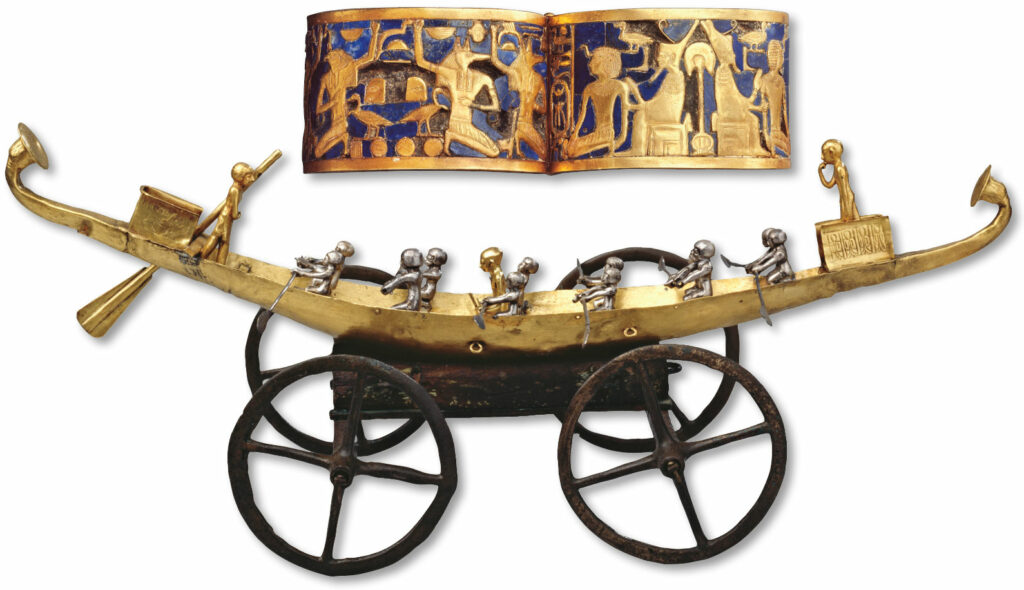
Some of the best evidence of Egypt’s renewed relations with the broader world are three weapons in the Dra Abu el-Naga coffin. One is a type of dagger known from the Aegean that has a hafted handle and is finished in niello, an alloy of silver, copper, or lead with sulfur. Niello was used in Lebanon as well as the Mycenaean world to decorate metal objects. The artists who made the dagger used a mix of Egyptian and imported motifs, including Ahmose’s name, Egyptian-style palmettes, and a lion chasing a bull at full gallop, a familiar Aegean motif. A gold battle-ax from the coffin is also decorated with niello and inscribed on one side with Ahmose’s two royal names, a scene of a pharaoh smiting an enemy, and an Aegean-style winged griffin. On the other side, the ax is adorned with a sphinx and symbols of a unified Egypt including a cobra, vulture, lotus, and papyrus. “Why didn’t the Egyptians use the sphinx, their own type of griffin, both times?” says David. “Because Aegean things are in fashion, they’re trendy, and they’re prestigious, and the Egyptians are ready for this type of exchange.” The third weapon is a dagger of a Middle Kingdom style, an indication that Egyptian artisans continued to be inspired by traditional types of weapons.
Two extraordinary ship models found in the golden coffin, one gold and the other silver, also show elements of local and foreign influences. “A tradition of metal ship models existed in the Aegean,” says archaeologist Shelley Wachsmann of the Institute for Nautical Archaeology, “but these are the only two ship models from ancient Egypt made in metal.” The gold boat is modeled after a type of wooden-planked Egyptian boat and appears to date to the reign of Kamose, whose cartouches appear on its sterncastle. The form of the silver vessel, however, has a very different origin. “There’s no known Egyptian type of boat to serve as a source for this model, and although it appears to have been made by Egyptian artisans, it’s actually a model of a Minoan boat,” Wachsmann says. “A ship model copying a Minoan watercraft would hardly be out of place in Ahhotep’s burial considering the Aegean influences on the queen’s dagger and battle-ax.” The coffin contained a wooden cart to carry the boats in the shape of a chariot resembling those brought to Egypt by the Hyksos. Wachsmann suggests that the ship models were war booty that Kamose seized from the harbor of the Hyksos capital of Avaris, in the Nile Delta. On a stele found in Thebes, Kamose reports that he plundered “hundreds of ships of fresh cedar filled with gold, lapis, turquoise, bronze axes without number, over and above the morgana oil, incense, fat, honey, willow, boxwood…I have confiscated it all.”
The artifacts from Dra Abu el-Naga also reveal Egypt’s renewed ability to import materials that had been inaccessible during most of the Second Intermediate Period. “For a long time, there was no wood from Lebanon and no copper from the Aegean,” Miniaci says. “With no copper, you have no bronze for weapons, so you can’t fight, and with no ships you can’t build a navy or go anywhere to trade. All the resources that were unavailable, they have them again, and this is the moment their destiny starts to change.”
The Thebans were not trading just with the powers of the Aegean and the Near East, but also with their foes to the south in Kerma. “We tend of think of Kerma as a monolith and as the Egyptians’ enemies,” Lacovara says, “but what we don’t see as well as we might is that the Egyptians were playing different Kerma states off one another in this conflict and reaping the benefits.” Both Lacovara and Miniaci believe that the gold flies suspended from a gold chain found in the Dra Abu el-Naga coffin are emblematic of this contentious yet advantageous relationship with Kerma. Flies made of gold, silver, and copper have been found in Kerma warrior burials and were widely known in antiquity as emblems of martial achievement. Ahhotep’s Egyptian-made symbols of valor, Lacovara says, were buried with the queen to recognize her achievements as a military leader in the defeat of the Hyksos. For those who believe there was more than one Ahhotep, the owner of the flies is less important than what they represent. Says David, “The objects in the coffin offer a concentrated view of a whole period.”
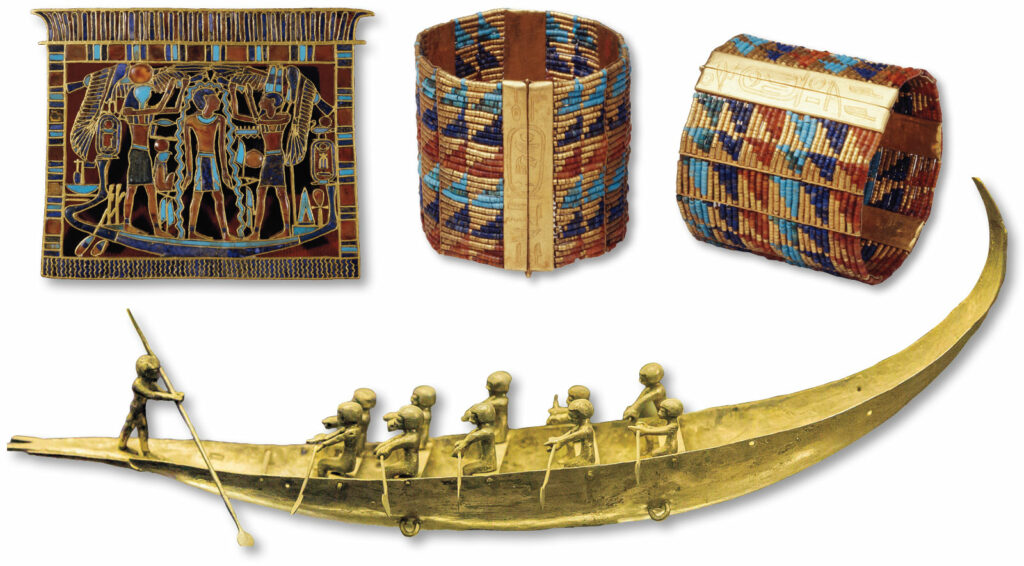
The ultimate survivor, Ahhotep outlived her son Ahmose and was thought of as a great leader and respected ancestor during her life. “The Karnak stele makes clear that Ahmose considered her an inspiration during difficult times,” David says. Another stele dating to the tenth year of the rule of Ahhotep’s grandson Amenhotep I (reigned ca. 1525–1504 b.c.) mentions the queen’s high steward Kares and includes the phrase “Ahhotep, may she live.” Scholars interpret this as evidence that the queen was still alive and remained powerful at this time.
Even after her death, Ahhotep was remembered throughout the 18th Dynasty and beyond. “The Egyptians saw her as the mother of the renaissance after the Hyksos,” says David. Ahhotep is depicted in a tomb painting at the site of Deir el-Medina dating to the 20th Dynasty that shows her with other ancestors of the early New Kingdom pharaohs. A small painted wooden figure identified as the queen unearthed in a tomb dating to between 1479 and 1459 b.c. further testifies to her legacy. These dates coincide with the reign of Hatshepsut, who, upon the death of her husband, Thutmose II, ruled for 20 years, first as regent for her stepson, who would become Thutmose III, and then as co-pharaoh. “Ahhotep is one of the queens who starts to show that she was equal to the pharaoh,” Miniaci says. Lacovara echoes this sentiment. “All the New Kingdom queens, including Tiye, Nefertiti, and Hatshepsut,” he says, “they all hark back to Ahhotep’s pioneering role in ruling Egypt.”
Further Reading
A Nubian Kingdom Rises
Excavations at a city on the Nile reveal the origins of an ancient African power
Rediscovering Egypt’s Golden Dynasty
How King Tutankhamun’s family forever changed the land of the Nile
The Rulers of Foreign Lands
Was a new regional power, once thought of as a bloodthirsty invading force, actually a catalyst for ancient Egypt’s most prosperous era?
Inside a Pharaoh’s Coffin
Using CT scanning, archaeologists can finally see the man buried in one of Egypt’s most splendid sarcophagi
The Treasure of the Egyptian Queen Ahhotep and International Relations at the Turn of the Middle Bronze Age (1600–1500 BCE) by Gianluca Miniaci and Peter Lacovara in Middle Kingdom Studies 11
Archaeologists take a fresh look at one of the most important—and puzzling—discoveries in Egyptology