Girsu’s Enigmatic Construction

Features January 1, 2020

(D. Tagen, Tello-Girsu Project, Iraq Scheme, The British Museum)
SHARE:
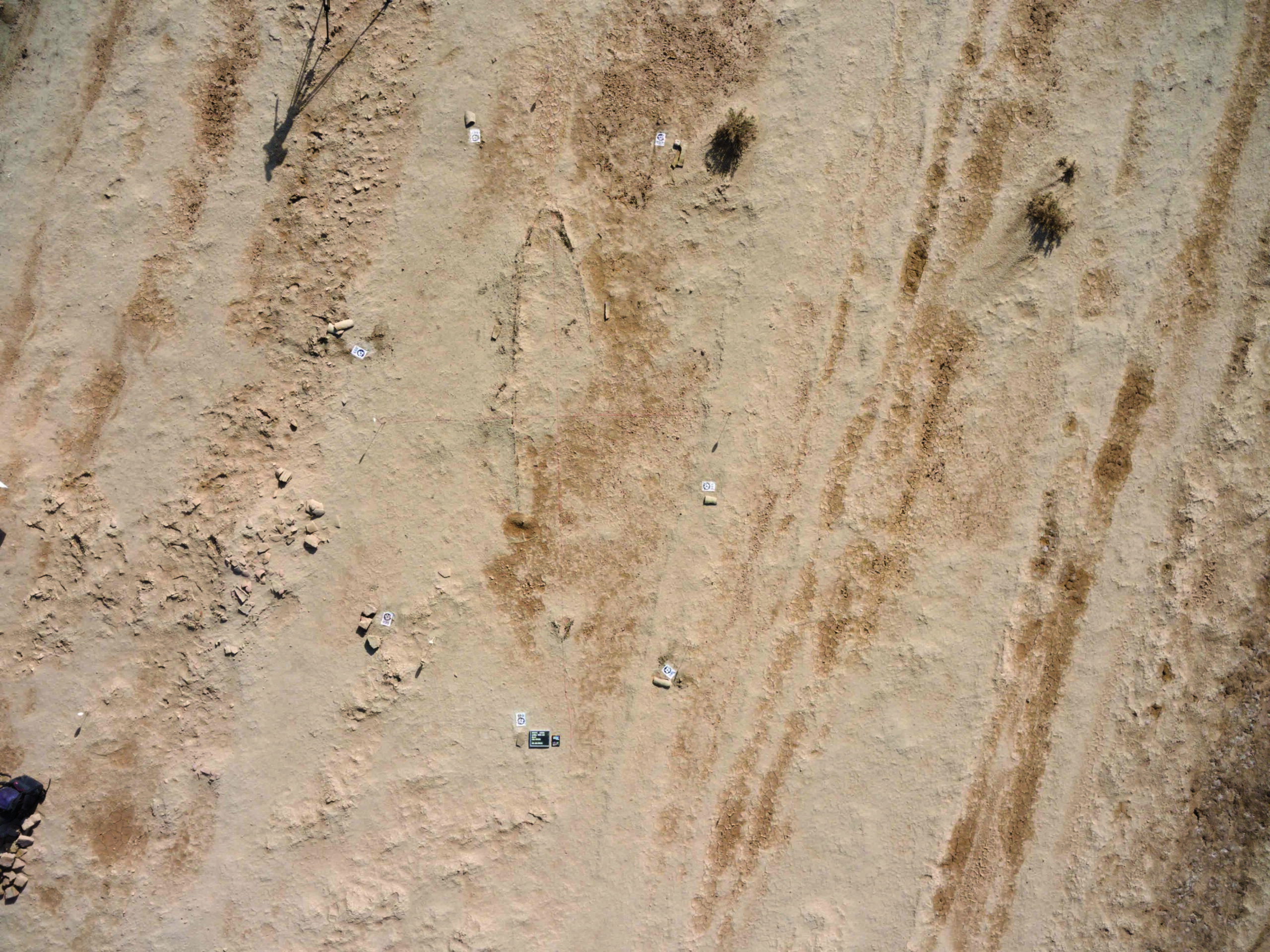
Girsu Iraq Bridge Foundations
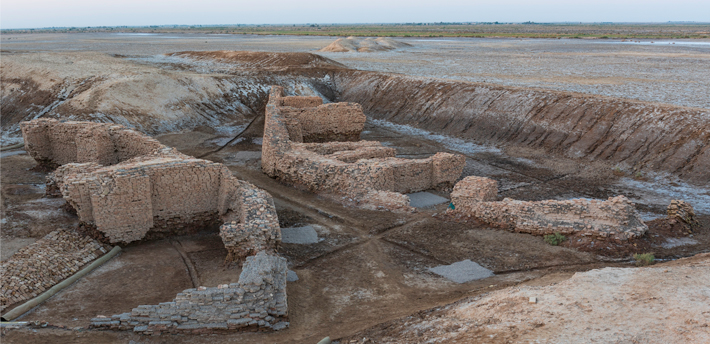
A brick structure unearthed by early 20th-century archaeologists at Girsu in southern Iraq once served as the foundation of a bridge that spanned an ancient canal.(D. Tagen, Tello-Girsu Project, Iraq Scheme, The British Museum)
Girsu Iraq Bridge Bricks
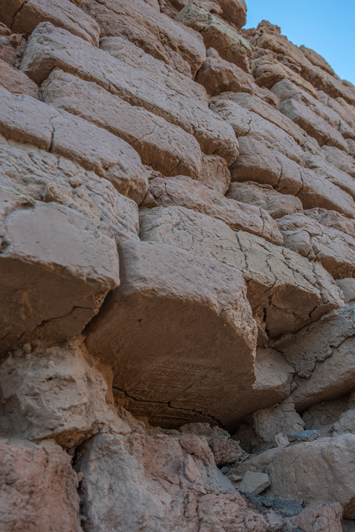
An inscription on the underside of a brick that is part of the bridge foundation dedicates the structure to the god Ningirsu and mentions a ruler of Girsu named Ur-Ningirsu.(D. Tagen, Tello-Girsu Project, Iraq Scheme, The British Museum)

In the 1920s and early 1930s, French archaeologists at Girsu excavated a monumental brick structure measuring up to 130 feet long by 33 feet wide, with 11-foot-high walls, that resembled a pair of parentheses. Unsure of its purpose, they termed it the “enigmatic construction.” Based on satellite imagery and excavation of the landscape surrounding the structure, British Museum archaeologist Sebastien Rey identified traces of an ancient canal that had once passed directly through the structure. The canal was some 100 feet wide, and Rey concluded that the structure had served as a bottleneck to reduce its width to around 12 feet, narrow enough to be spanned with the planks of a bridge.

The bridge’s foundation was built of fired bricks coated with bitumen to make it sturdy and watertight. On 15 of these bricks, Rey’s team has identified inscriptions dedicating the structure to the god Ningirsu and naming Ur-Ningirsu (r. ca. 2110 B.C.), the king Gudea’s son and successor as ruler of Girsu. All of these inscriptions faced down lest the god’s name be trod upon.

Standing about a third of a mile to the east of Gudea’s great temple, the bridge would have been the main entrance to Girsu’s sacred precinct, crossed by pilgrims who traveled to the city for religious festivals held several times each year. “That’s why the bridge was so monumental,” says Rey. “It had the same significance as the temple or a city gate or a city wall. It was built by a king and was meant to be visible in the landscape.”
  • Features May/June 2026

    Pioneers of Lakefront  Living

    Why Neolithic and Bronze Age farmers in the Alps built their villages on stilts

    Read Article
    Modern replicas of Bronze Age houses in Lake Constance
    © APM/Frank Müller
  • Features May/June 2026

    The Last Maya Kingdom

    On the shores of a lake in Guatemala, the Itzá people defied the Spanish for nearly 200 years

    Read Article
    Flores Island, Guatemala
    Courtesy Timothy Pugh/Itzá Archaeological Project
  • Features May/June 2026

    Art for the Ages

    A surreal style of painting endured for 4,000 years in the canyonlands of West Texas

    Read Article
    Shumla Archaeological Research and Education Center Archive
  • Features May/June 2026

    Bridge to the Past

    The Yellow River brought both prosperity and calamity to China’s dazzling medieval capital By Ling Xin

    Read Article
    Henan Provincial Institute of Cultural Heritage and Archaeology