 | 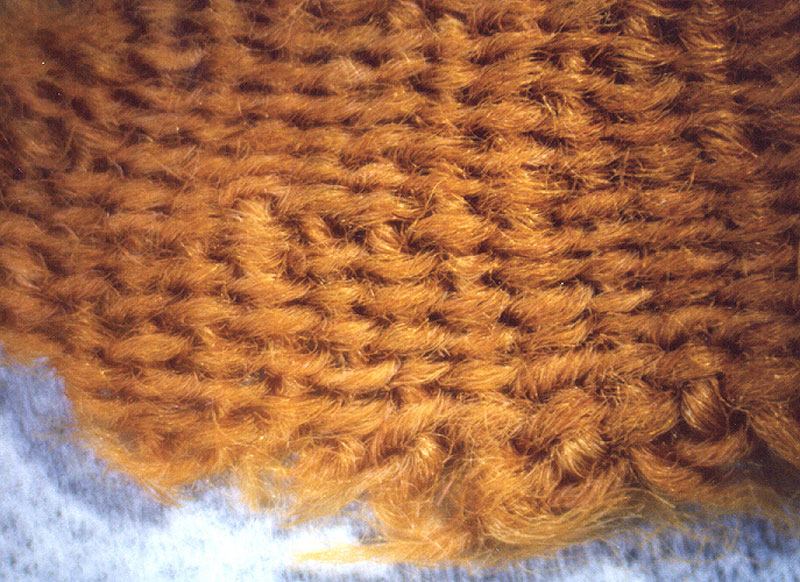 |
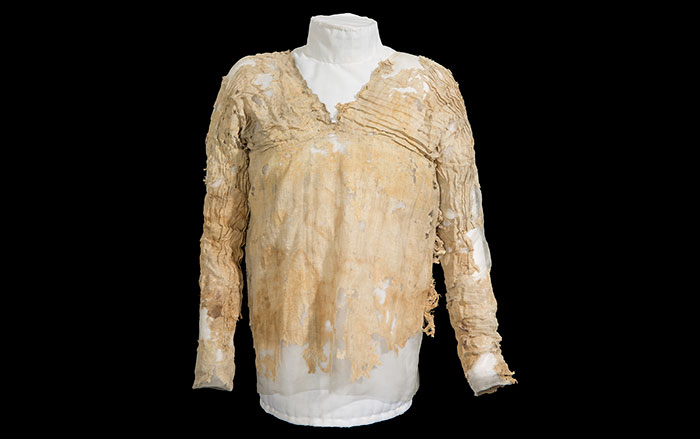
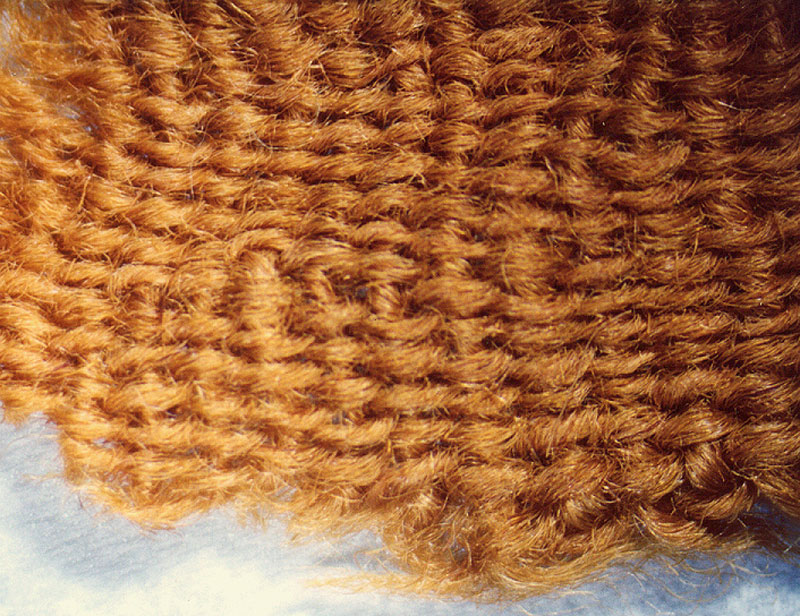
| A 1,350-year-old Egyptian weaving before dating... | ...and after (Courtesy Marvin Rowe) |
Precisely dating archaeological artifacts is not as easy or harmless as it might seem. The most common method, radiocarbon dating, requires that a piece of an organic object be destroyed—washed with a strong acid and base at high temperature to remove impurities, and then set aflame. The resulting release of carbon dioxide is fed to an accelerator mass spectrometer, which measures the decay of radioactive carbon 14—the more the carbon 14 has decayed, the older the object is.
Over the past 20 years, chemist Marvin Rowe of Texas A&M University has developed a nondestructive method for carbon dioxide extraction. In his process, an object is placed in a vacuum chamber and a supercritical fluid—a hybrid gas/liquid—is applied as a solvent (as in dry cleaning). Next, Rowe passes plasma—an "electrically excited ionized gas"—over the artifact, which selectively strips carbon from the sample. "It's essentially like slowly burning the sample, so we can just oxidize a little off the surface and collect that carbon dioxide," explains Rowe. This year he further refined the method so it will work on objects coated in sticky hydrocarbons, such as the resins that cover Egyptian mummy gauze.
Thus far, he's dated samples of wood, charcoal, animal skin, bone from a mummy, and ostrich eggshell. "Everything so far that we've tried to do with the nondestructive technique has agreed statistically with regular radiocarbon dating," Rowe says, "and you basically don't see any change in the sample." R. E. Taylor, a radiocarbon expert at the University of California, Riverside, says Rowe's technique may have limitations, as items older than 10,000 years will have impurities that the technique may not be able to purge. Archaeologists, meanwhile, are hailing the discovery as one of the most important in decades, particularly for issues surrounding the repatriation of human remains from Native American burials, which modern tribes don't want to see harmed.
Rowe's refinement of carbon dioxide extraction dovetails with an update to the radiocarbon calibration curve, which increases the accuracy of radiocarbon dating by accounting for past fluctuations in carbon 14. According to researchers at Queen's University of Belfast, the new curve doubles the accuracy of dating as well as the age of artifacts on which it can be used, from 25,000 to 50,000 years.